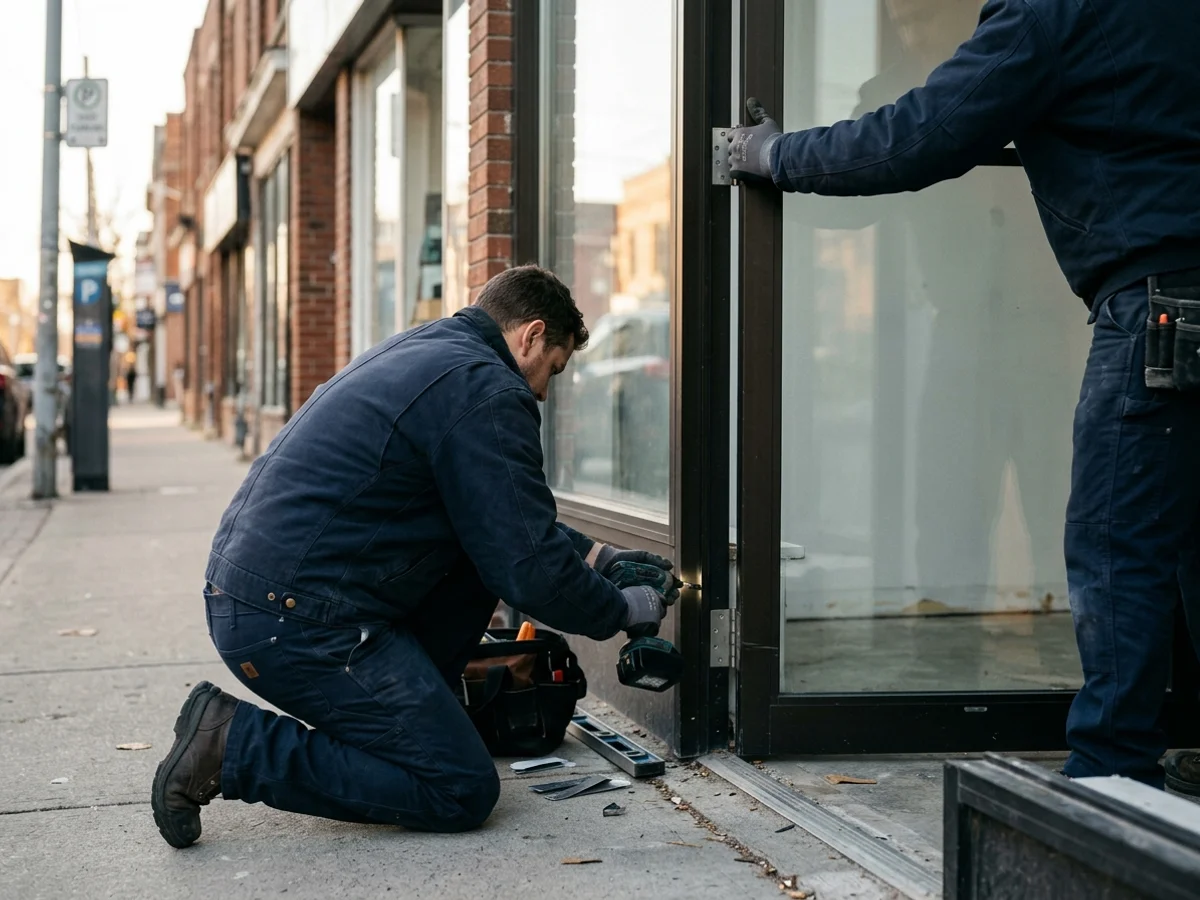
What Is Storefront Door Repair?
A storefront door is the aluminum and glass entrance most retail units, restaurants, salons and clinics open onto the street. In Toronto that usually means a Kawneer, YKK AP or Vistawall system: an aluminum door with a full lite of safety glass, hung on offset pivots or a continuous hinge, controlled by a concealed overhead closer and locked with an Adams Rite deadlatch or MS1850S deadbolt.
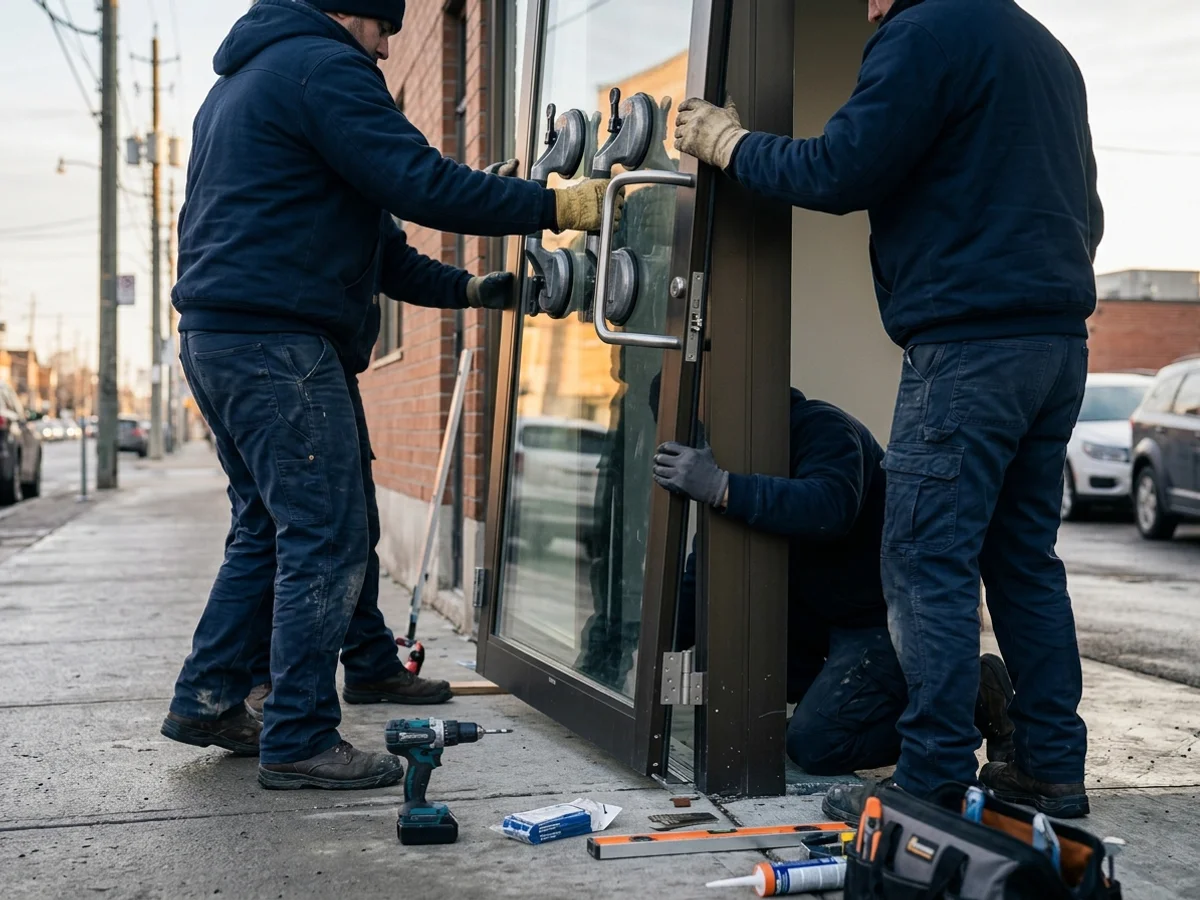
Storefront door repair fixes the parts that fail on those systems. Our two-person crews replace pivots, service and replace concealed closers, re-time Adams Rite cylinders, clear thresholds and re-seal draft perimeters so the door latches flush in January. Most calls are finished in 4 to 6 hours. Storefronts are the most common opening in our Toronto commercial door repair work.
Why Storefront Doors Take the Most Abuse
No commercial door works harder than a busy storefront. It cycles hundreds of times a day, gets pushed with carts and strollers, catches wind off the street and freezes and thaws all winter. Aluminum stiles are light by design, and narrow stile doors in particular leave very little room for hardware.
That combination means storefront doors fail in a predictable order. The bottom pivot wears first. The door drops. The closer starts fighting the drop and begins to leak. The deadlatch no longer meets the strike, so staff force it at closing, and eventually the bolt shears.
The Parts We Repair Most Often
Offset and intermediate pivots
Pivots carry the weight of a storefront door. A worn bottom pivot is the single most common storefront call. We replace pivot sets and, on doors that keep failing, recommend a continuous geared hinge conversion.
Concealed overhead closers
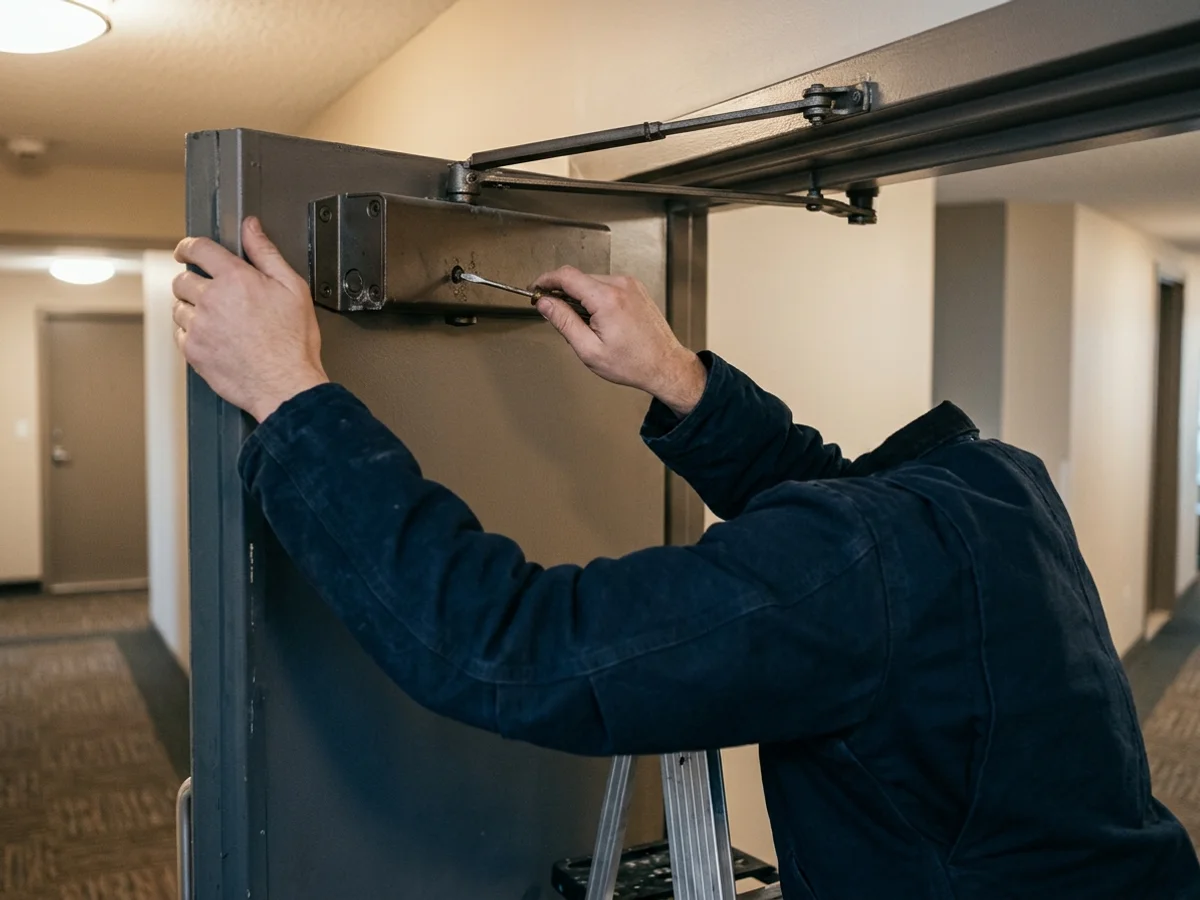
Closers such as the Dorma RTS88 sit in the header. We adjust sweep, latch and backcheck, set the door for wind load and replace closers that leak. Surface-mounted closers are covered on our commercial door closer repair page.
Adams Rite locks and cylinders
Narrow stile doors depend on Adams Rite deadlatches and MS1850S deadbolts. We replace sheared bolts, re-time cylinders so the key turns cleanly and re-align strikes so the door locks every night.
Thresholds, sweeps and perimeter seals
A door that drags or leaks cold air needs its threshold cleared and its perimeter re-sealed. This is often the last step after a pivot repair, and it is what makes the door latch flush.
Storefront Repair Costs in Toronto
| Repair | Typical range (CAD) |
|---|---|
| Closer adjustment and threshold clearance | $650 - $900 |
| Pivot set replacement | $750 - $1,300 |
| Adams Rite deadlatch or deadbolt plus cylinder timing | $700 - $1,200 |
| Concealed closer replacement | $1,100 - $1,800 |
| Multi-part repair on one entrance | $1,200 - $2,200 |
Ranges, not quotes. Stile type, hardware brand and after-hours timing move the final number. Your written CAD scope confirms it first.
When Repair Stops Making Sense
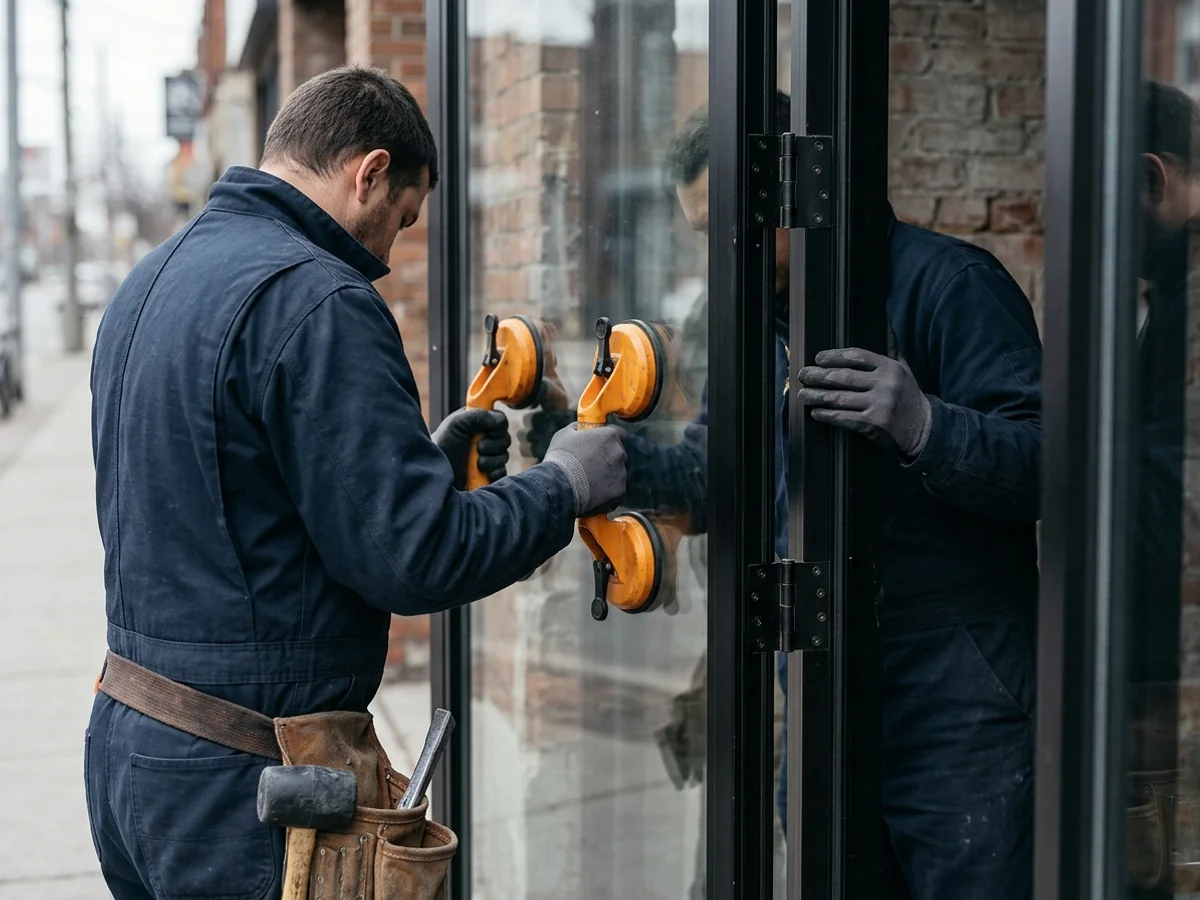
Storefront doors can be repaired many times, but not forever. If the stiles are cracked, corners have separated, the frame is corroded or the same door has needed three repairs in a year, a storefront door replacement is often the better spend. A full-lite panel swap reuses the existing frame, so it costs far less than rebuilding the whole storefront.
We will tell you honestly which side of that line your door is on, and put both options in writing.
After-Hours Storefront Repair
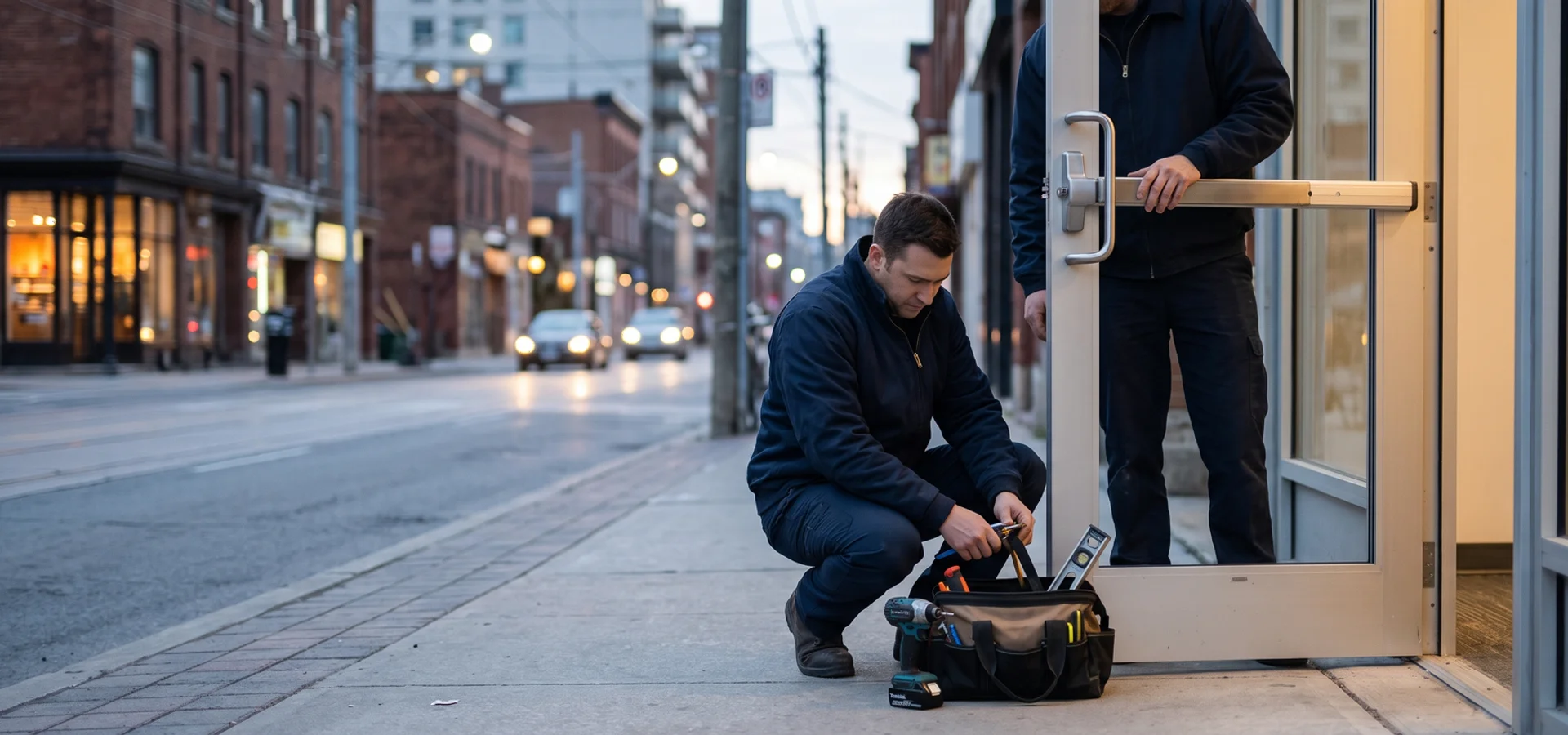
Retail cannot close for a door. Most of our storefront repairs are scheduled before opening or after close, and evening emergency calls are routine. On one Queen West boutique, the bottom pivot failed on a Friday evening and the door could not lock. The tech arrived at 7:30pm, re-hung the panel, replaced the pivot set and timed the Adams Rite cylinder. The store was secured before closing.
If your storefront is broken after a break-in or the glass is gone, call our emergency commercial door repair line. We board up the same night and come back with permanent parts.
Accessibility and Storefront Entrances
Heavy storefront doors are a common AODA complaint, especially for older customers and anyone using a mobility aid. A properly adjusted closer reduces opening force. Where that is not enough, a low-energy operator with a push plate can be added to the existing door. See our handicap door operator installation page for details.
Keeping Storefront Doors Working Longer
A quick adjustment twice a year catches most pivot and closer wear before it becomes a lock failure. Plaza owners and property managers often bundle every storefront entrance into a maintenance contract so the whole strip gets checked on one visit, with a written report for each unit.