Commercial Door Installation for New Builds and Fit-Outs
On a new build, a major renovation or a tenant fit-out, doors are rarely the biggest line item, but they touch almost every room and every inspection. A door contractor who shows up late, misreads the hardware schedule or installs a fire door wrong can hold up drywall, occupancy and final payment.
We install commercial doors as a full Division 8 contractor. That means one crew handles the doors, frames, hardware and, where needed, the glazing on aluminum entrances, from the first submittal to the last key. After handover, the same team handles commercial door repair in Toronto and the GTA, so warranty and service calls go to people who know the building.
What Is Division 8?
Division 8 is the openings section of a construction specification. It covers:
- Hollow metal doors and frames
- Wood doors
- Aluminum entrances and storefronts
- Fire-rated door assemblies
- Finish hardware: hinges, closers, locks, exit devices, stops and seals
- Glazing in doors and frames
On most projects the hardware schedule lists every opening, its door and frame, its fire rating and every piece of hardware on it. Reading that schedule properly, before anything is ordered, is where good door installation starts.
Our Installation Process
Submittals and shop drawings
We review the specification and hardware schedule, check each opening for conflicts between frames, hardware preps and ratings, and prepare shop drawings and product data for approval. Catching a closer that will not fit a frame at this stage costs nothing. Catching it on site costs days.
Frames set before drywall
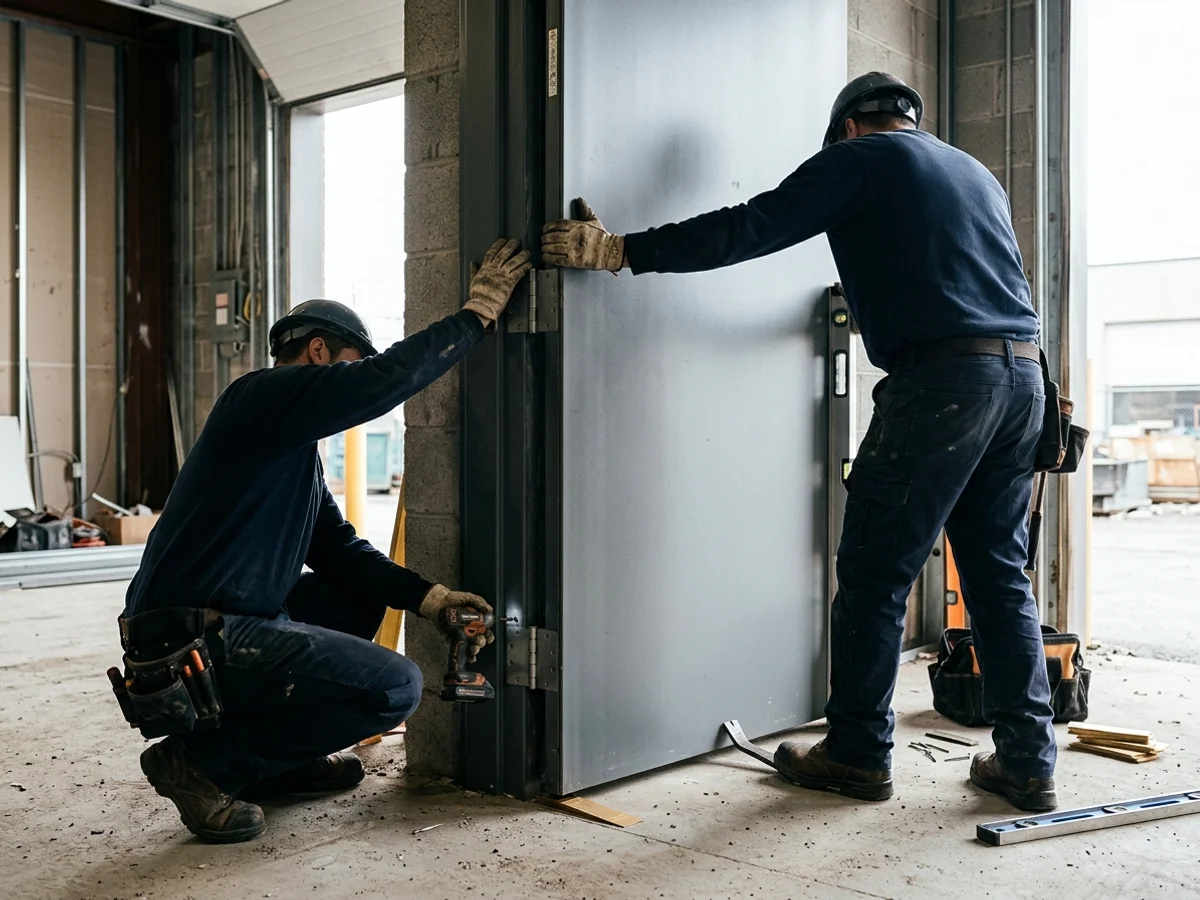
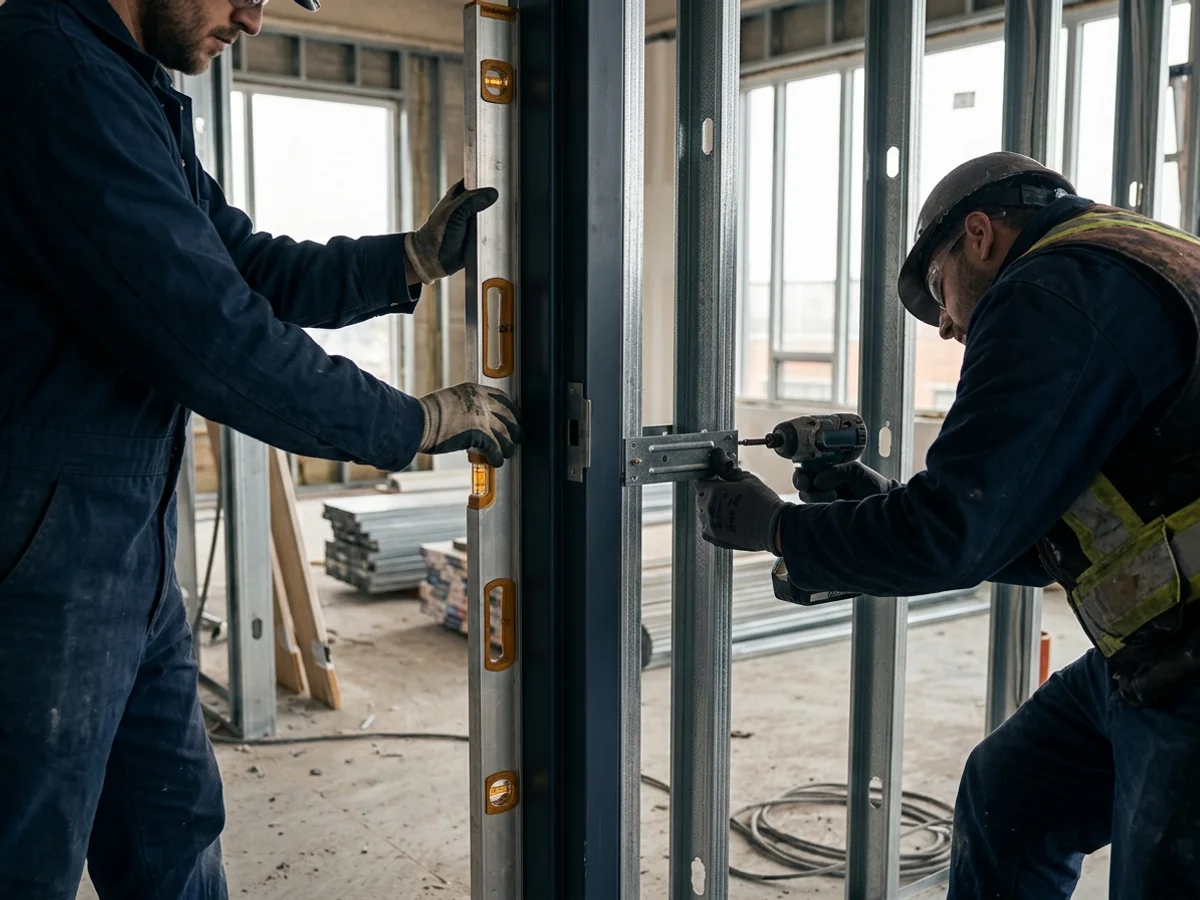
Hollow metal frames are set, plumbed, anchored and grouted where required while the walls are open. Aluminum entrance frames are anchored and sealed to the rough opening. Getting frames in on time is the single biggest schedule factor we control.
Doors and hardware after paint
Once finishes are done, doors are hung and hardware installed per opening. Every door is adjusted for clearances, closing speed and latching. Fire doors are checked for self-closing and positive latching.
Deficiency walk and closeout
We walk every opening with the GC, clear deficiencies and hand over keys, warranties and closeout documents. The goal is one walk, not a month of callbacks.
Typical Installed Opening Costs
| Opening type | Typical range (CAD, installed) |
|---|---|
| Hollow metal door and frame, standard hardware | $1,800 - $3,000 |
| 60 or 90-minute fire-rated assembly with exit hardware | $2,500 - $5,000 |
| Aluminum entrance door with glazing and closer | $3,800 - $6,500 |
| Opening with electrified hardware for access control | $3,000 - $6,500 |
Projects are priced per opening on a written CAD scope. Volume, ratings, hardware grade and site access all affect the final number.
Fire-Rated Openings on New Work
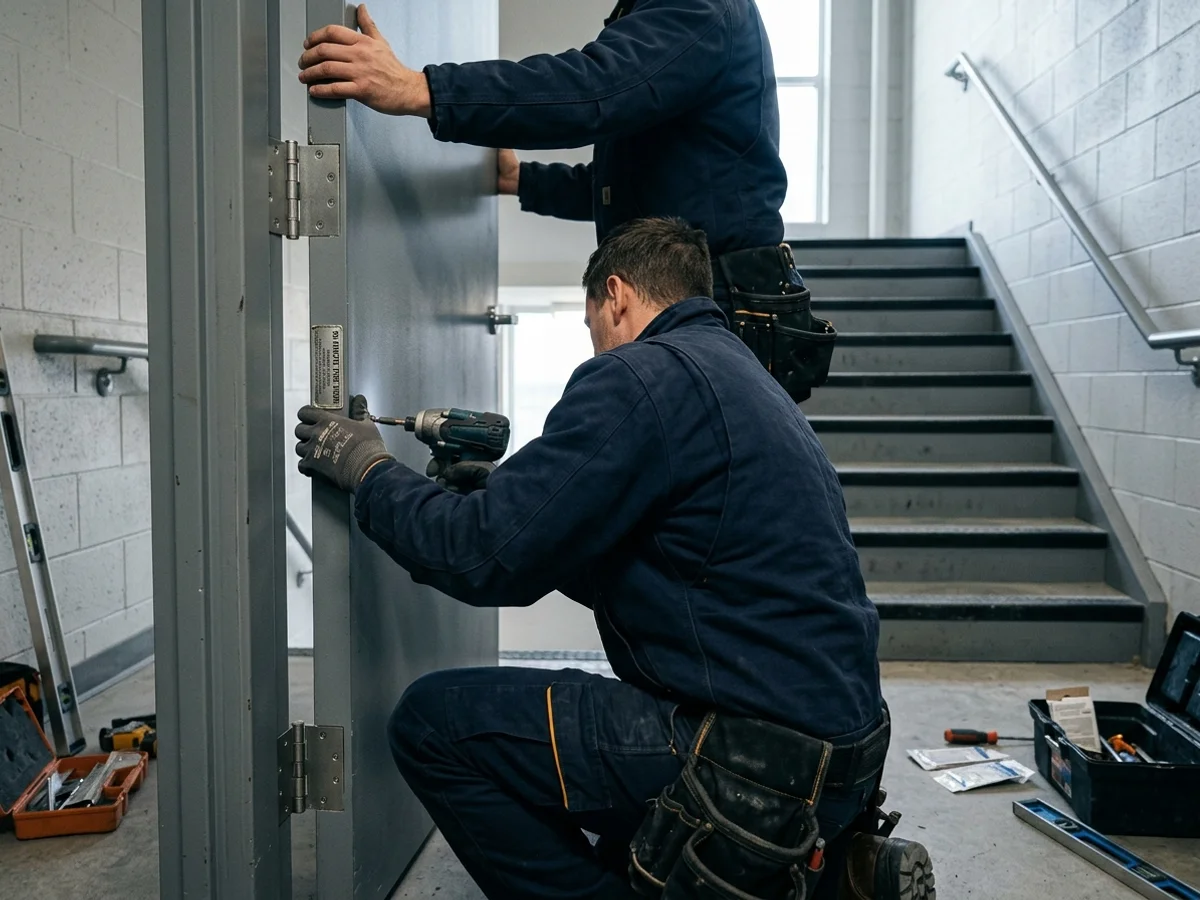
Stairwells, corridors, suites and service rooms often need rated openings under OBC Part 3. We supply labelled doors and frames tested to CAN/ULC-S104 and install them per NFPA 80 with listed hinges, closers and fire exit hardware. Field modifications that would void a label are avoided, and inspectors get documentation for each opening. See fire-rated door installation for details.
Hollow Metal and Aluminum Packages
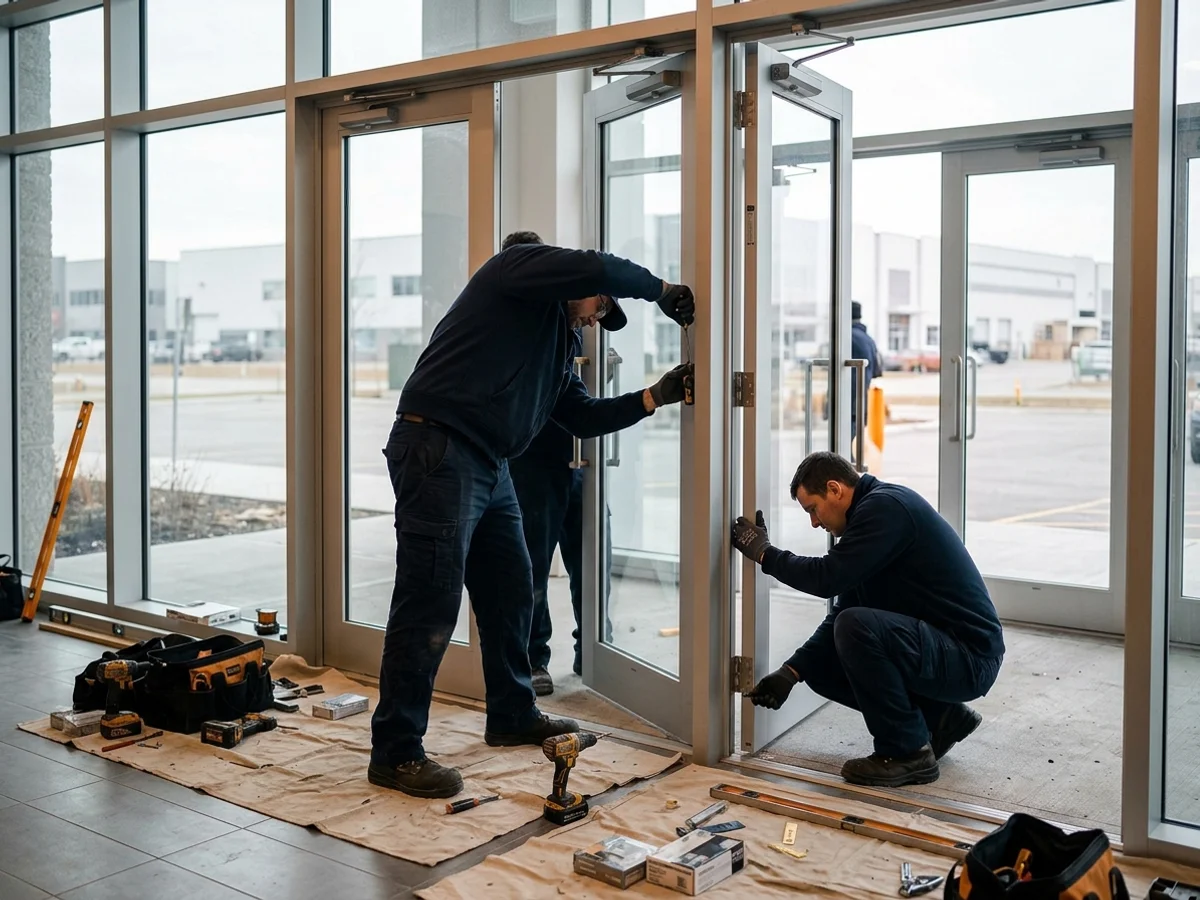
Back-of-house, stairwell and mechanical openings are usually hollow metal. See hollow metal door installation for gauges, cores and frame types. Lobbies and tenant entrances are usually aluminum. See aluminum commercial door installation for Kawneer, YKK AP and Vistawall systems.
Why GCs Use One Door Contractor
Splitting doors, frames and hardware across several trades creates gaps nobody owns. A single Division 8 contractor carries the coordination risk. On one Markham medical office fit-out with 34 openings, including six 60-minute fire doors and an aluminum entrance, frames were set in week two of framing, doors were hung after paint and the hardware schedule was closed out in one deficiency walk. The GC kept the same crew lead from first submittal to final keys.
Accessibility and Access Control
New openings often need AODA-friendly operators or electrified hardware for card access. We install power operators, push plates, electric strikes, mag locks and power transfer hinges as part of the same scope and coordinate with the electrician and security vendor so the opening is commissioned once.