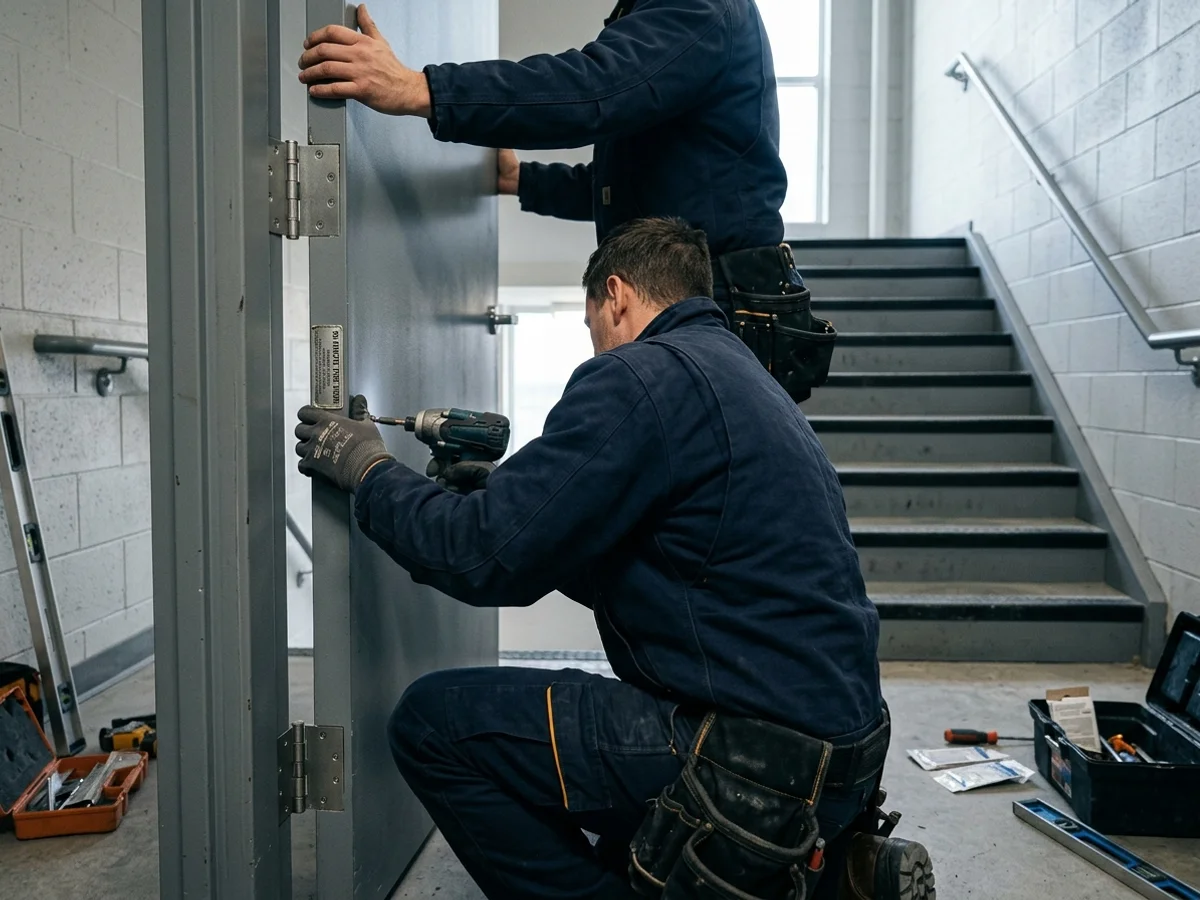
What Makes a Door Fire-Rated?
A fire-rated door is not just a heavy door. It is a tested assembly: a labelled door, a labelled frame, listed hinges, a closer, latching hardware and, where fitted, fire-rated glazing, all installed to work together. Change one part the wrong way and the whole assembly can lose its rating.
In Canada, fire door assemblies are tested to CAN/ULC-S104 and frames to CAN/ULC-S105. The test result appears as a label on the door and frame showing the rating, typically 20, 45, 60 or 90 minutes. Installation and maintenance follow NFPA 80, which is referenced by the Ontario Fire Code and OBC Part 3. Fire door work is a core part of our commercial door repair and installation service in Toronto, and every rated opening we touch is checked against its label.
Where Fire Doors Are Required
- Stairwells and shafts: often 60 or 90-minute assemblies
- Corridors and suite entrances: often 20 to 45-minute assemblies
- Service, electrical and storage rooms: rating depends on the separation
- Condo corridors and garbage rooms: common inspection targets in residential towers
The required rating comes from the fire separation the door sits in. We read the drawings or the existing label and match it.
What NFPA 80 Inspectors Look For
- Labels on door and frame present and legible
- Clearances within limits at the head, edges and bottom
- Door self-closes from any open position
- Latch engages positively every time
- Hinges, closers and exit devices are listed for the door
- No holes, unlisted hardware or field modifications
- Glazing, if present, is fire-rated and properly installed
- No wedges, kick-downs or unapproved hold-opens
Every install and inspection we do runs through these points, and the results go into a written NFPA 80 compliance report.
Fire Door Installation Cost Guide
| Assembly | Typical range (CAD, installed) |
|---|---|
| 20 or 45-minute door in existing labelled frame | $2,500 - $3,800 |
| 60-minute hollow metal door and labelled frame | $3,500 - $5,500 |
| 90-minute stairwell door with fire exit hardware | $4,500 - $7,000 |
Rated glazing, pairs, electrified hardware and access conditions affect the final number. Your written CAD scope confirms it.
Responding to a Fire Order
Toronto Fire Services and other GTA fire departments issue orders when fire separations are not maintained. Typical findings are painted labels, oversize gaps, missing or failing closers and doors that do not latch. The faster you respond, the easier the re-inspection.
On one North York office tower, the PM received a fire order listing 11 stairwell doors. The crew replaced five non-compliant doors with labelled 90-minute assemblies, corrected gaps and closers on the rest and delivered a written NFPA 80 report. Tenant stair access stayed open throughout and the order was closed on the first follow-up visit.
Why DIY Repairs Fail Fire Inspections
Well-meaning fixes cause many fire door failures: a hole drilled for a new lock, a gap filled with wood trim, a residential closer swapped in, a kick-down stop added to prop the door. Each one can void the label. NFPA 80 limits what can be done in the field. When a door is damaged beyond permitted repairs, it is replaced with a labelled assembly.
Fire Exit Hardware and Closers
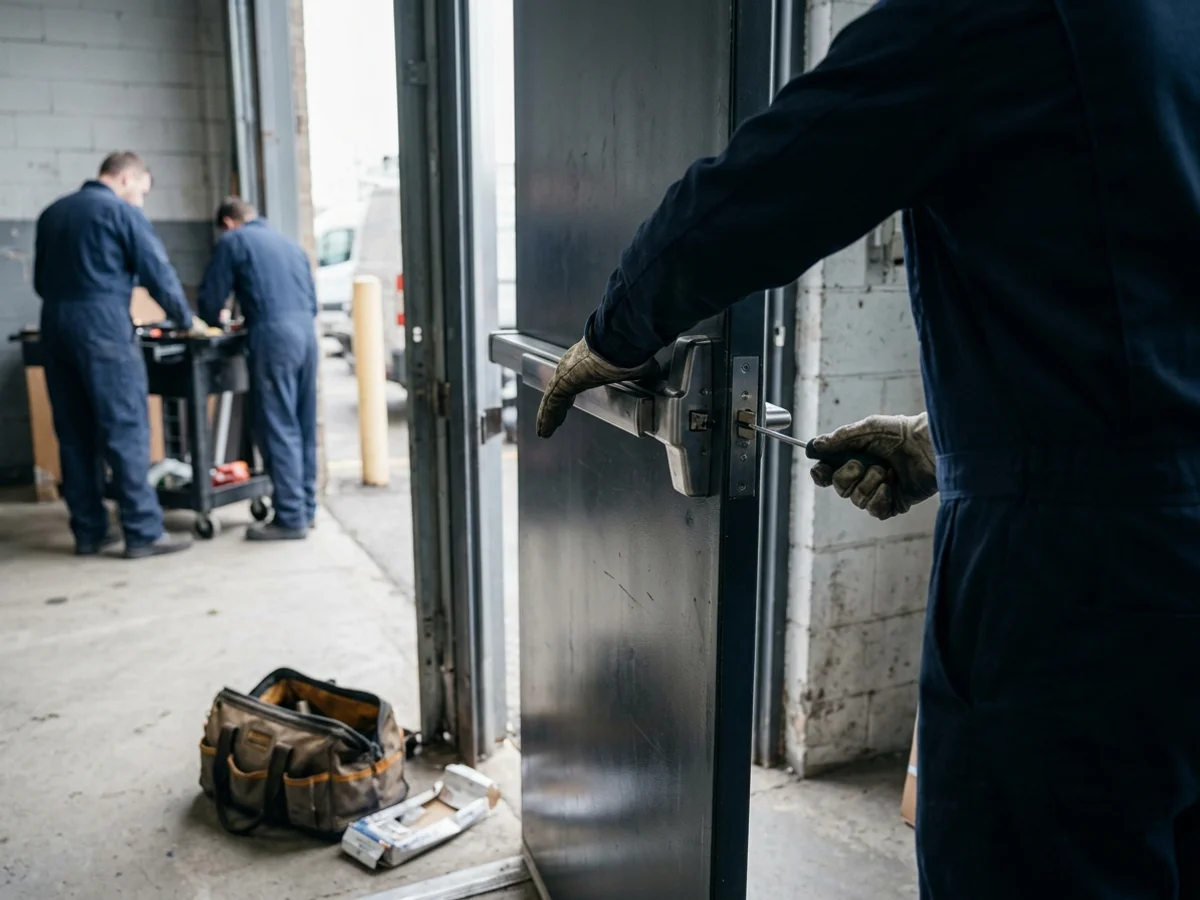
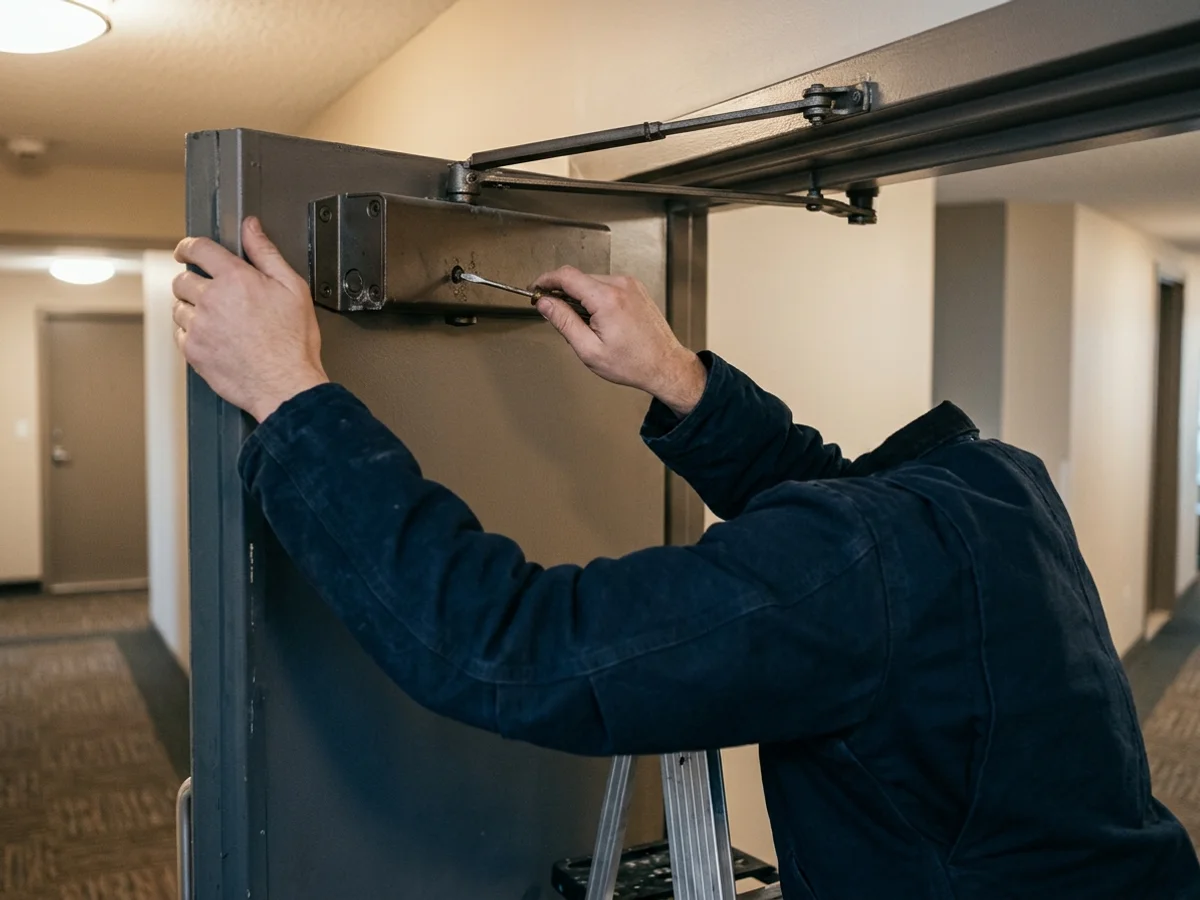
Rated doors that are also exits need fire exit hardware, such as Von Duprin 98/99 devices listed for fire doors, with no dogging. Closers must suit the door and keep it self-closing. See commercial door closer repair for closer work and fire exit door replacement for egress doors.
Keep Fire Doors Compliant
Fire doors wear like any other door. Closers leak, hinges sag and gaps open up. A commercial door maintenance contract checks every rated door on a schedule and produces a written NFPA 80 report after each visit, so you are ready for the fire marshal walkthrough before it happens.