24/7 LIVE GTA DISPATCH ACTIVE
Door Repair B2B Commercial Only

Commercial Door Closer Repair Toronto, ON | Dorma, LCN & Hager Service

By Toronto Commercial Door Repair Crew |

Door closers are the most-replaced hardware on any commercial opening, and Toronto freeze-thaw cycles make them leak, slam or fail to latch. Service covers surface-mounted, concealed overhead and floor closers from Dorma, LCN and Hager, including the LCN 4040XP and Dorma 8900 series. Technicians adjust sweep, latch and backcheck valves, swap leaking bodies and confirm fire doors self-close and positively latch to NFPA 80.

$350 - $850 per closer
  • Sweep and latch adjustment
  • Leaking closer replacement
  • Arm and drop plate swap
  • Fire-door latch check

Timeline: Same-day typical; crew of 1

Commercial doors only: we do NOT service residential, garage or interior doors.
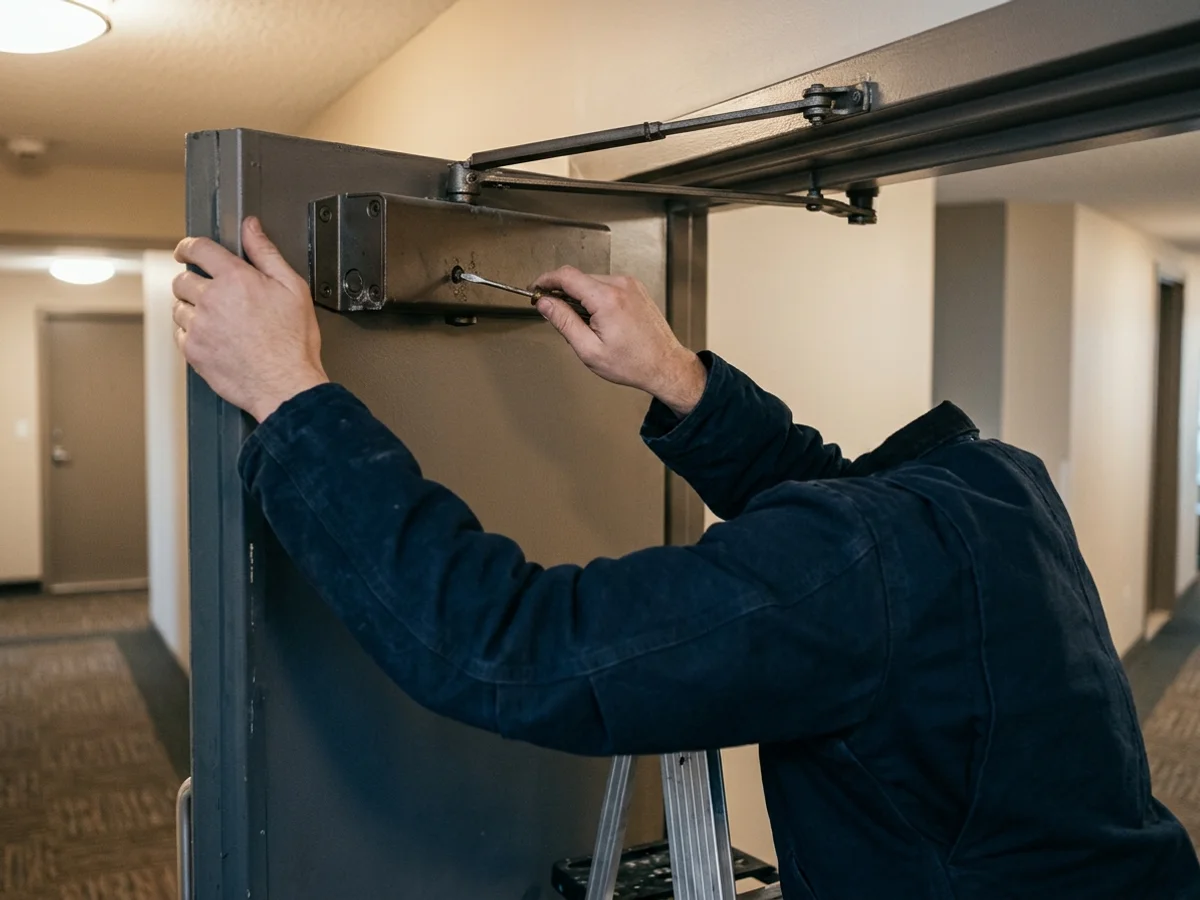
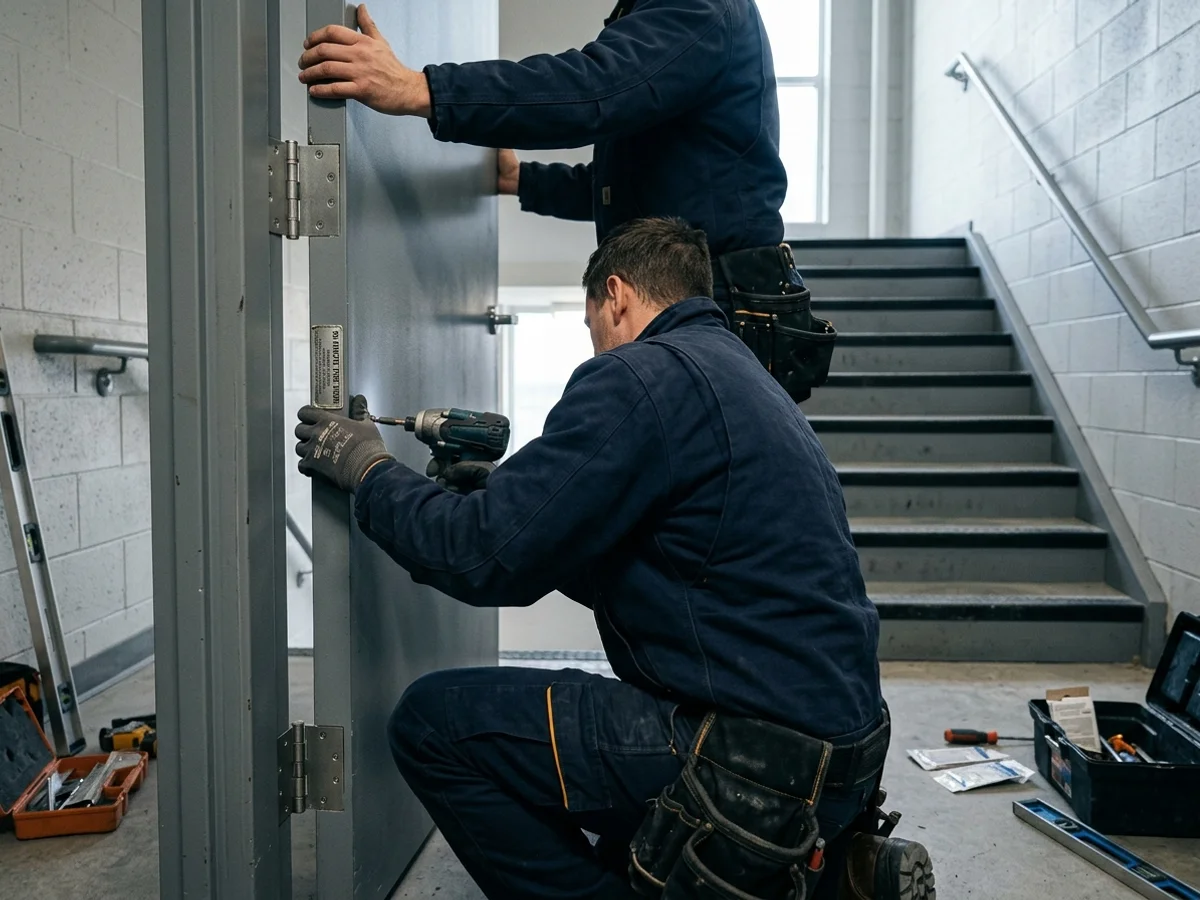
Technician adjusting the valves on an LCN surface closer above a condo corridor fire door CDHA Member / WSIB + $5M CGL 500+ commercial properties
24/7 EMERGENCY DISPATCH
CDHA MEMBER
NFPA 80 TRAINED
WSIB + $5M CGL

What Goes Wrong Before Property Managers Call About Door Closers?

Slamming doors

When the latch speed or backcheck valve drifts, the door slams into the frame. It damages the frame and hardware and catches fingers and heels.

Doors that stop short

A weak or leaking closer stops the door an inch short of the strike. On a fire door that is an automatic inspection failure. On an entrance, it is an unlocked building.

Oil on the closer or the floor

Oil means the seals have failed. A leaking closer cannot be adjusted back into spec and will get worse with every cold night.

Doors that blow open

Without enough backcheck, wind catches exterior doors and slams them open into walls, railings and people, bending arms and hinges.

What Does a Commercial Door Closer Do?

A door closer is a hydraulic device that pulls a door shut and controls how fast it moves. It is the most-replaced piece of hardware on any commercial opening, and for good reason: it works every time the door moves, on every door in the building.

A well-adjusted closer does four jobs. It closes the door every time. It slows the door before it hits the frame. It gives a final push so the latch engages. And on exterior doors, its backcheck stops wind from throwing the door open. When a closer fails at any of those, the opening stops being secure, safe or compliant. Closer calls are the single most common job in our Toronto commercial door repair work.

Types of Commercial Door Closers

Surface-mounted closers

The most common type, mounted on the door or frame with a visible arm. The LCN 4040XP and Dorma 8900 series are standard in Toronto office towers and condos. They come in regular arm, parallel arm and top jamb mountings depending on the door and frame.

Concealed overhead closers

Hidden in the header, these are common on aluminum storefronts and lobby entrances. The Dorma RTS88 is a typical example. They look clean but are harder to inspect, so failures often go unnoticed until the door slams or drifts.

Floor springs

Floor-mounted closers sit under the door, usually on frameless all-glass doors. They carry the weight of the door as well as closing it, so a failing floor spring often shows up as a sagging glass door.

How Toronto Weather Kills Closers

Closers rely on hydraulic fluid moving through small valves. Toronto freeze-thaw cycles thicken and thin that fluid all winter, and exterior doors take wind loads that push the seals hard. Over time the seals fail, the closer leaks and control disappears. That is why closer calls spike in late fall and early spring.

We replace leaking closers rather than refill them. A resealed or topped-up closer rarely survives the next winter, and paying for it twice costs more than replacing it once.

What Closer Service Includes

  • Adjusting sweep, latch and backcheck valves, plus delayed action where fitted
  • Replacing leaking closer bodies with matched Dorma, LCN or Hager units
  • Swapping bent arms, worn shoes and stripped drop plates
  • Re-setting spring power for door size, wind and accessibility
  • Confirming fire doors self-close and positively latch to NFPA 80

Closer Repair Costs

WorkTypical range (CAD)
Adjustment of a sound closer$350 - $450
Surface closer replacement with new arm$450 - $700
Concealed overhead closer service or swap$600 - $850
Building-wide closer workPer-door pricing on a written scope

Most closer jobs are finished in one visit by a single technician. Building-wide work is priced per door on a written CAD scope, and is usually cheaper per opening.

Fire Doors and Closers

Every fire door must close and latch on its own. If a corridor or stairwell door stops short, it no longer holds back smoke and fire, and it will fail inspection. NFPA 80 and the Ontario Fire Code require labelled fire doors to be self-closing and positively latching.

On one North York condo, the board had 18 corridor fire doors failing to latch ahead of a fire marshal walkthrough. The crew replaced six leaking LCN closers, adjusted the rest and documented every door in a written NFPA 80 report. All 18 passed on the re-inspection. For full fire door work, see our fire-rated door installation page.

When the Closer Is Not the Real Problem

A closer cannot fix a door that is sagging on worn hinges or pivots. If the door drags on the threshold or the latch misses the strike, the closer will fight the door until it fails. That is why our technicians check the hinges, pivots and strike on every closer call. If the hinge side needs work, our commercial door hinge repair team handles it on the same visit.

Accessibility and Opening Force

Heavy doors are a barrier for older customers, people using mobility aids and anyone carrying something. Adjusting closer spring power and sweep can bring opening force down while still closing the door reliably. Where wind or door size makes that impossible, a low-energy operator is the right answer under AODA expectations.

Keep Closers in Spec With a Service Contract

Property managers with dozens of corridor and entrance doors get the best value from a commercial door maintenance contract. Closer adjustment is the core of every visit, and each visit ends with a written report and an NFPA 80 compliance report for rated doors.
How Much Does Commercial Door Closer Repair Cost in Toronto?

Commercial Door Closer Repair

$350 - $850

per closer (CAD, before HST)

  • Ranges only, never a verbal number
  • $225 service call credited to same-visit repair
  • Final price confirmed in a written CAD scope

What moves the price

Door type and stile, hardware brand and grade, fire rating, access, after-hours timing and how many openings are done in one visit.

Payment

30% deposit over $2,500, NET-15 for PMs. e-Transfer, cheque, Visa/Mastercard.

Warranty

Workmanship warranty plus manufacturer warranties passed through. Terms on your written estimate.

Insurance

We direct-bill major commercial property insurance claims for break-ins, vandalism and impact damage.

How Does Commercial Door Closer Repair Work, Step by Step?

  1. 1

    Identify the closer

    Brand, series, size and mounting (regular arm, parallel arm, top jamb, concealed or floor) are confirmed, ideally from a photo.

  2. 2

    Adjust or replace

    Sweep, latch, backcheck and delayed action are adjusted. Leaking bodies, bent arms and stripped drop plates are replaced.

  3. 3

    Set for the opening

    Closing force and speed are set for door size, traffic, wind and accessibility so the door closes reliably without being too heavy.

  4. 4

    Latch test and report

    The door is cycled and latch-tested. On fire doors we confirm self-closing and positive latching to NFPA 80 and note it in writing.

No work starts until you approve a written CAD scope, and the $225 service call is credited to a same-visit repair.

Why Do GTA Property Managers Choose Us for Door Closers?

Dorma, LCN and Hager stocked

Common closer bodies, arms and drop plates ride on the truck, so most closer jobs are finished in one visit.

Replace, not refill

A leaking closer rarely survives the next winter. We replace leaking bodies instead of topping them up.

Fire door aware

NFPA 80 trained technicians confirm self-closing and positive latching on every rated door we touch.

Portfolio pricing

Building-wide closer work and service contracts bring per-door cost down and catch failures early.

Sagging doors almost always start at the hinge or pivot. Repairs cover continuous geared hinges, full-mortise ball-bearing butt hinges and offset and intermediate pivots on aluminum, hollow metal and wood commercial doors, with Hager and Roton-style continuous hinge conversions for high-traffic entrances. Technicians re-anchor stripped frame screws, shim hinge jambs and restore clearances so the closer and lock stop fighting the door.

Includes: Pivot set replacement·Continuous hinge conversion·Frame screw re-anchoring·Clearance reset

Timeline: 2-4 hours typical; crew of 1-2

A Richmond Hill retail plaza manager had three entrance doors dragging on the threshold every winter. Worn offset pivots were letting the doors drop. The crew converted all three to continuous geared hinges in one morning, re-set the closers and cleared the thresholds. Tenants kept trading through the install, and the plaza has not logged a sag complaint since.

Request a Commercial Door Hinge Repair quote

Fire-rated doors protect stairwells, corridors, suites and service rooms, and an inspector will check every label. Installation covers 20, 45, 60 and 90-minute hollow metal and wood door assemblies tested to CAN/ULC-S104 and installed per NFPA 80, with labelled frames, fire-rated glazing, listed hinges, LCN or Dorma closers and Von Duprin 98/99 fire exit hardware. Every install includes a written NFPA 80 compliance report.

Includes: Labelled door and frame·Fire exit hardware·Clearance and latch check·Written NFPA 80 report

Timeline: 1 day per opening typical; crew of 2

A North York office tower PM received a fire order listing 11 stairwell doors with painted labels, oversize gaps and failing closers. The crew replaced five non-compliant doors with labelled 90-minute assemblies, corrected the rest, and delivered a written NFPA 80 report for the re-inspection. Tenant stair access stayed open throughout, and the order was closed on the first follow-up visit.

View Fire-Rated Door Installation details

Most commercial door emergencies start as an adjustment nobody made. Quarterly or semi-annual agreements give property managers a scheduled crew for closer adjustment, hinge and pivot lubrication, panic hardware function tests, automatic door safety checks and weatherstripping inspection across every opening. Each visit ends with a written report, including the NFPA 80 compliance report fire marshals ask for. Contract clients get priority dispatch, a 15% parts discount and NET-15 terms.

Includes: Quarterly or semi-annual visits·Written NFPA 80 report·Priority dispatch·15% parts discount

Timeline: Half-day per building visit typical; crew of 1-2

A North York PM moved a three-building portfolio onto a quarterly agreement after a year of surprise invoices. Each visit covers closers, hinges, panic hardware and automatic doors, with an NFPA 80 report ready before the fire marshal walkthrough. Priority dispatch now covers all three addresses, and emergency calls across the portfolio dropped noticeably in the first two quarters.

See Service Contract pricing and options

Commercial Door Closer Repair service area: Toronto (2-hour typical emergency arrival) plus Mississauga , Vaughan , Markham , Brampton , Richmond Hill , Oakville , Scarborough , Etobicoke , North York , Newmarket and 15 more GTA municipalities within about 50km (4-hour typical arrival across the 905). See all service areas

What Clients Report After Door Closers Work

Clients report the same three things: fast arrival, a written scope before work, and invoices that match it.

Gord F. | Vaughan$1,100
"A forklift clipped the vertical rod on our rear exit and the Von Duprin device stopped latching, which left the building unsecured overnight. They came out the same afternoon, replaced the rods and top latch, re-aligned the strike and tested egress before leaving. The insurer's inspector checked that door the following week and had nothing to note. Fair price, clear paperwork, no upsell."
Warehouse owner | Commercial Door Push Bar Repair
Lina R. | Richmond Hill$7,800
"Thermally broken YKK entrance installed two days before our restaurant opening. Square, sealed and the closers were dialled in perfectly."
General contractor | Storefront Door Installation
Harpreet G. | Brampton$990
"Two-hour arrival at midnight, exactly as promised. Store secured."
Retail owner | Emergency Commercial Door Repair

Commercial Door Closer Repair FAQs

How much does commercial door closer repair cost?

Most closer work runs $350 to $850 per closer. An adjustment on a sound closer sits at the low end. Replacing a leaking surface closer with a new LCN or Dorma body and arm lands in the middle. Concealed overhead and floor closers cost more because of access and parts. You get a written CAD scope first.

Can a leaking door closer be refilled?

Not reliably. Oil on the closer means the internal seals have failed. Topping up fluid does not fix the seals, so the closer keeps leaking and loses control, especially after a cold snap. We replace leaking closers rather than refill them.

Why does my door slam?

Usually the latch speed valve is set too fast, or the closer has lost fluid and cannot control the last few inches of travel. If adjusting the valves does not fix it, the closer needs replacing.

Why does my door not close all the way?

Common causes are a weak or leaking closer, latch speed set too slow, a dragging hinge or pivot, or a misaligned strike. We check the whole opening, because a closer fighting a sagging door will never latch properly.

What closers do you work on?

Dorma, LCN and Hager surface-mounted closers, including the LCN 4040XP and Dorma 8900 series, plus concealed overhead closers such as the Dorma RTS88 and floor springs on frameless glass doors. If you have a different brand, send a photo and dispatch will confirm.

Do fire doors need special closers?

Fire doors must be self-closing and positively latching under NFPA 80. The closer must be suitable for a labelled opening, and hold-open features are only allowed when tied to an approved release device. We confirm the closer is appropriate for the label when we service it.

Can you make a heavy door easier to open?

Often, yes. Adjusting spring power and the sweep valve can reduce opening force while still closing the door reliably. Where a door must stay heavy because of wind or size, a low-energy operator is the AODA-friendly solution.

How long does a closer replacement take?

A typical surface closer swap takes one to two hours with a crew of one. Concealed and floor closers take longer. Building-wide closer work is scheduled floor by floor so corridors stay usable.

How often should closers be serviced?

High-traffic entrances and corridor fire doors benefit from semi-annual or quarterly checks. Adjusting a closer before it fails is much cheaper than replacing it after it has slammed a door out of alignment.

Do you document fire door closer work for inspections?

Yes. Fire door work includes a written NFPA 80 compliance report listing each door, what was checked and what was corrected, ready for the fire marshal.

Still have a question about your opening?

Live dispatch answers any hour. Send photos with the form for a faster written scope.

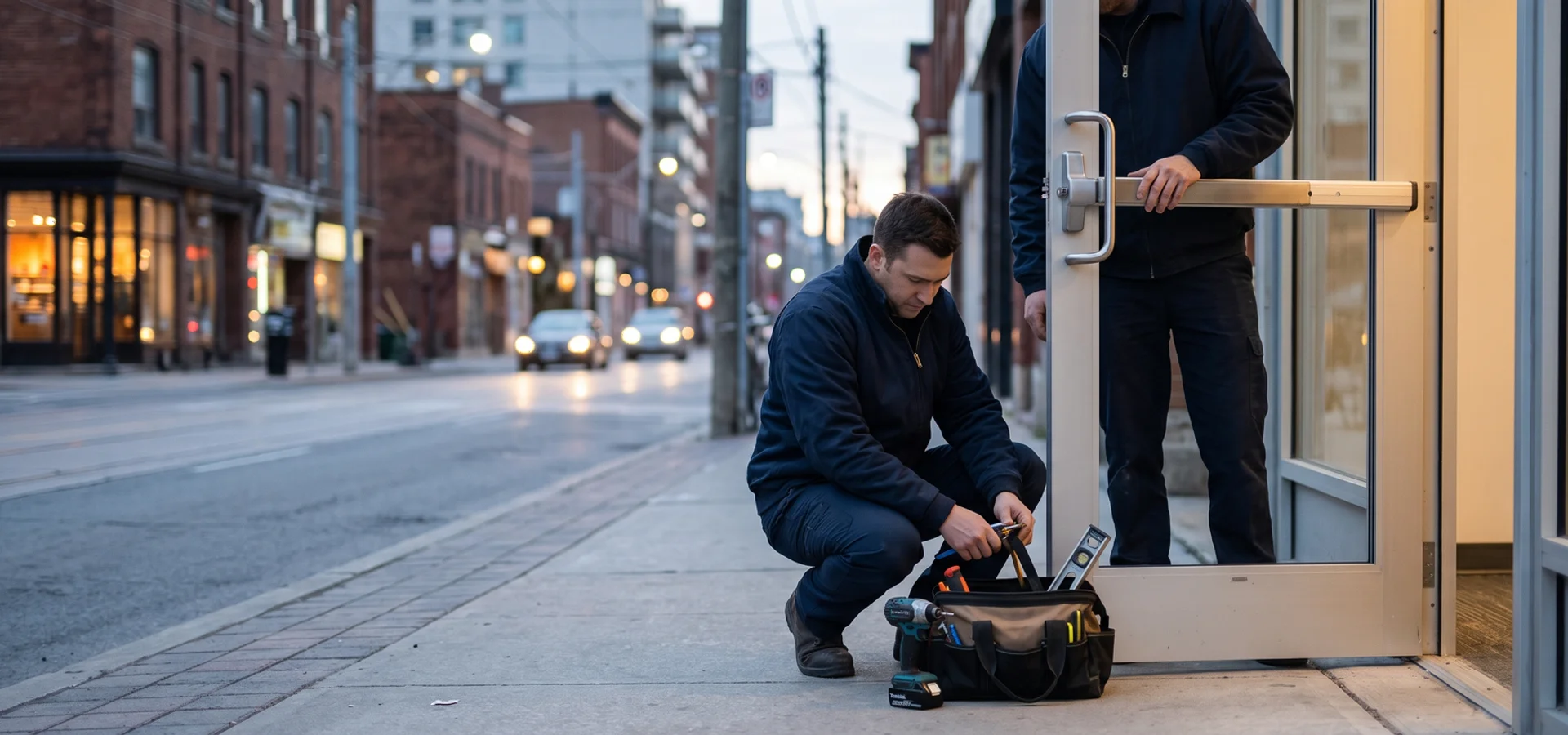
Commercial door crew finishing an entrance install in Toronto
Live dispatch answering now

Ready to Book Commercial Door Closer Repair?

Send the form for a written CAD scope on your door closers job within 2 business hours, or call live dispatch 24/7. Typical range $350 - $850.

  • Written CAD scope first
  • WSIB + $5M CGL
  • Insurance claims direct-billed

Request a Written CAD Estimate

Dispatch desk reply within 2 business hours. No verbal estimates.

No residential inquiries | Written scope before work

Call 24/7(437) 555-0146Written Quote2-hr reply