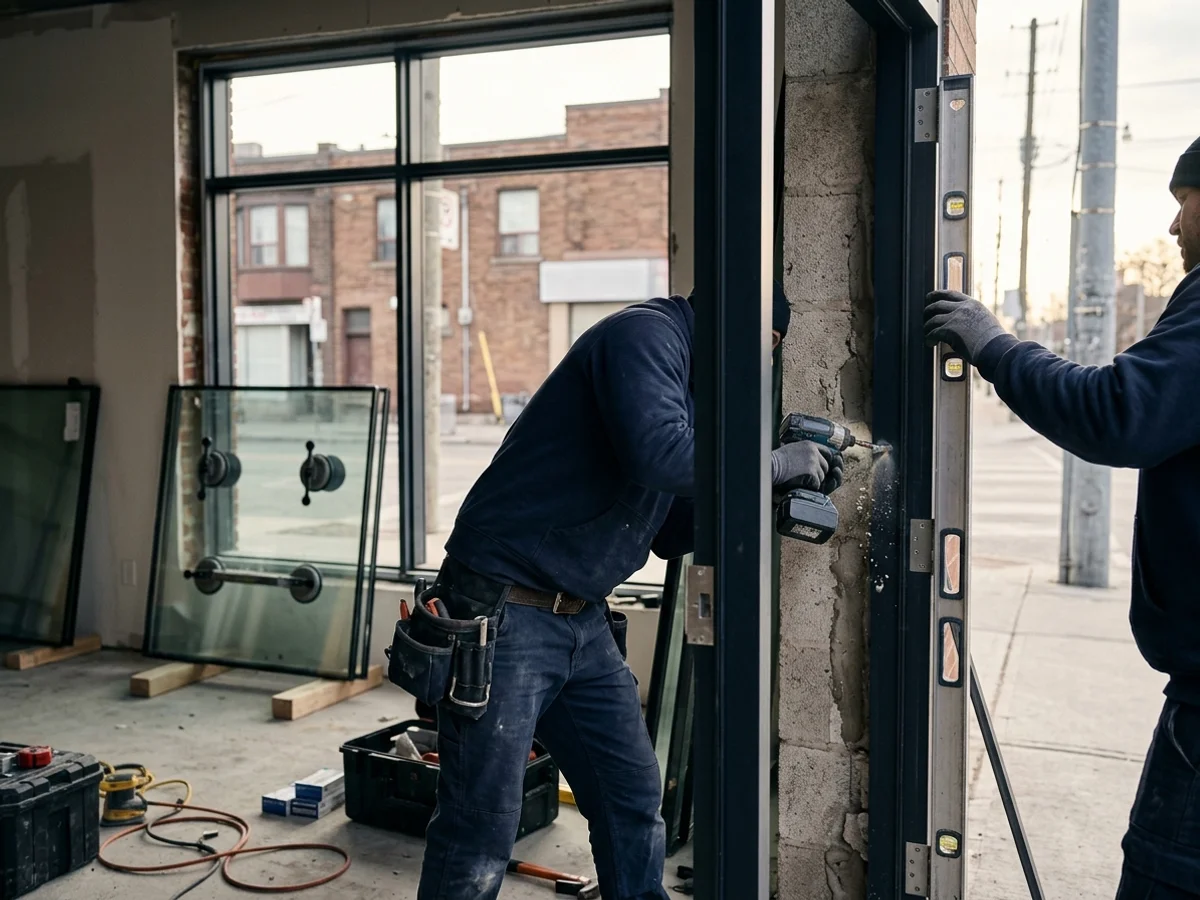
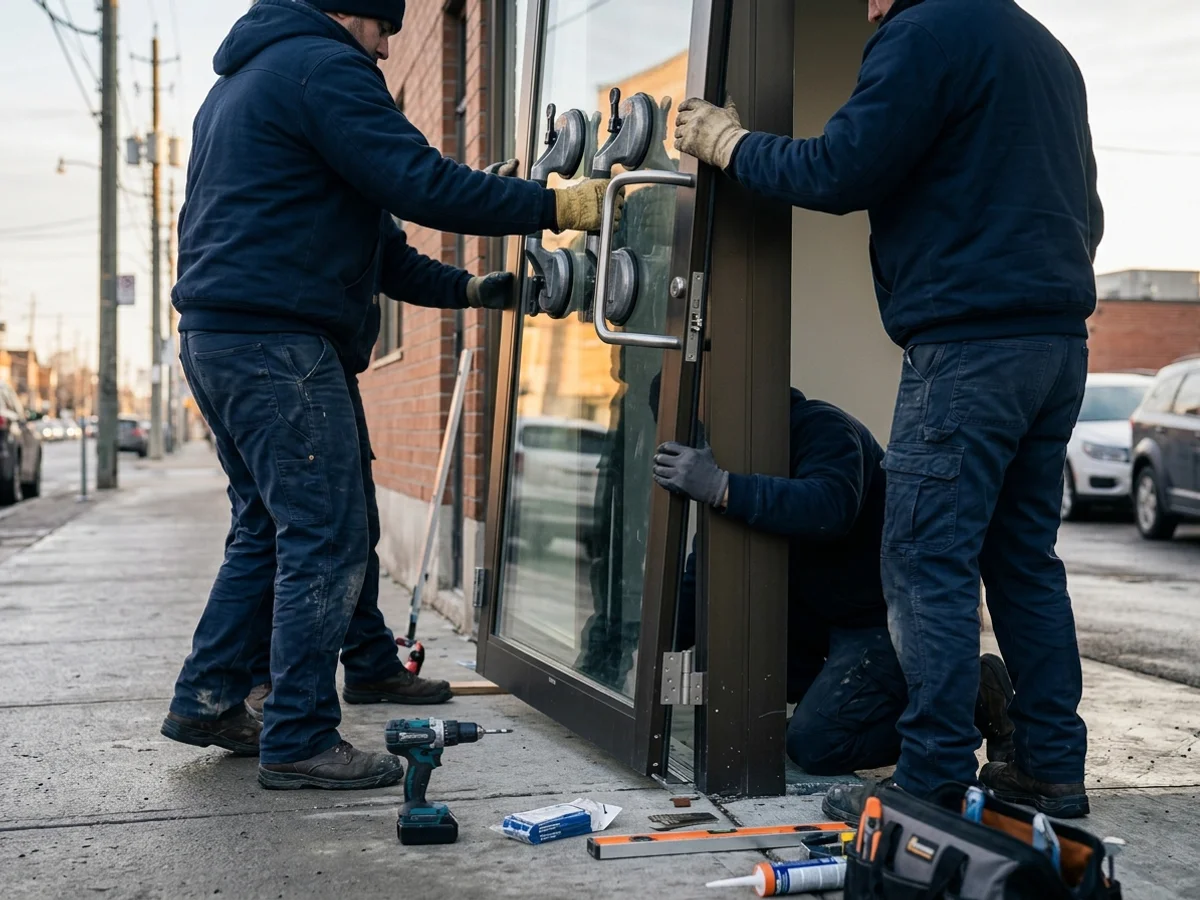
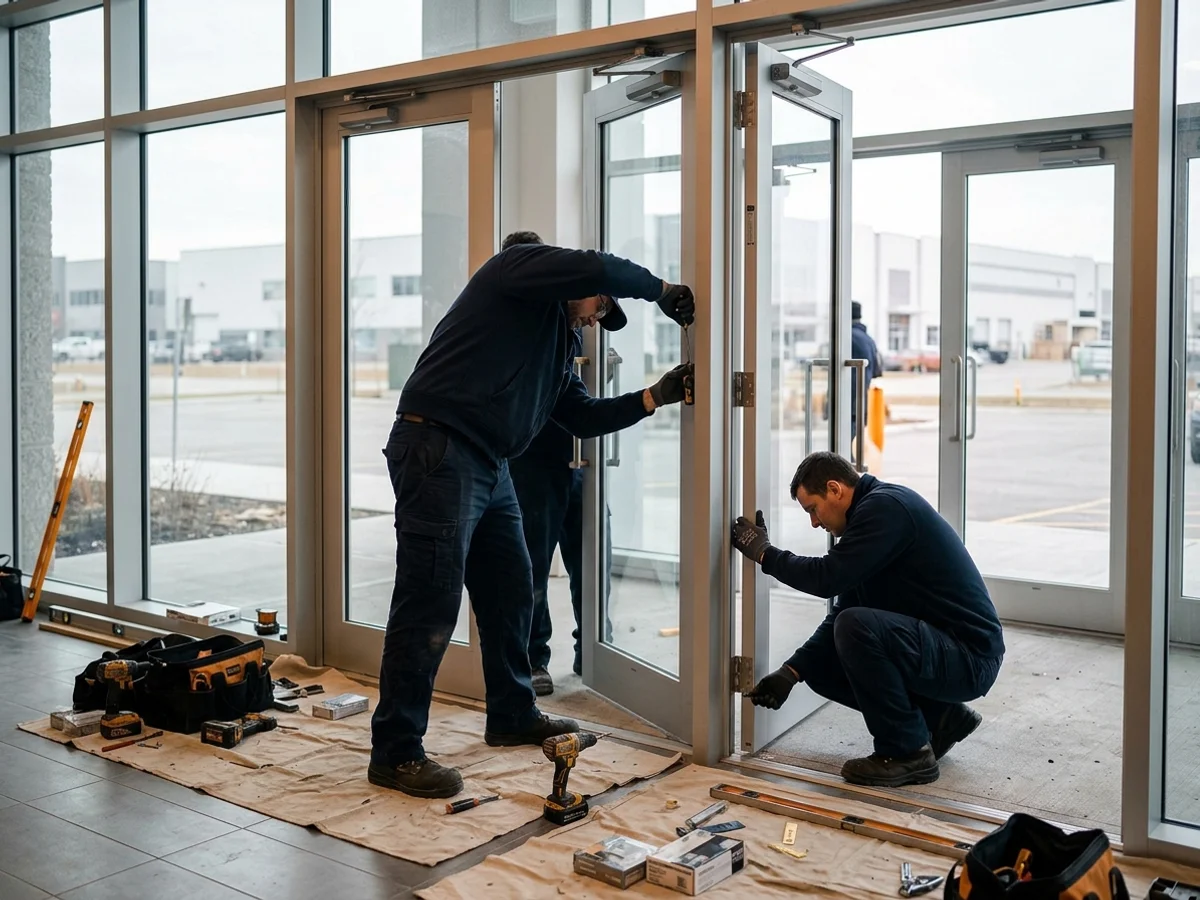
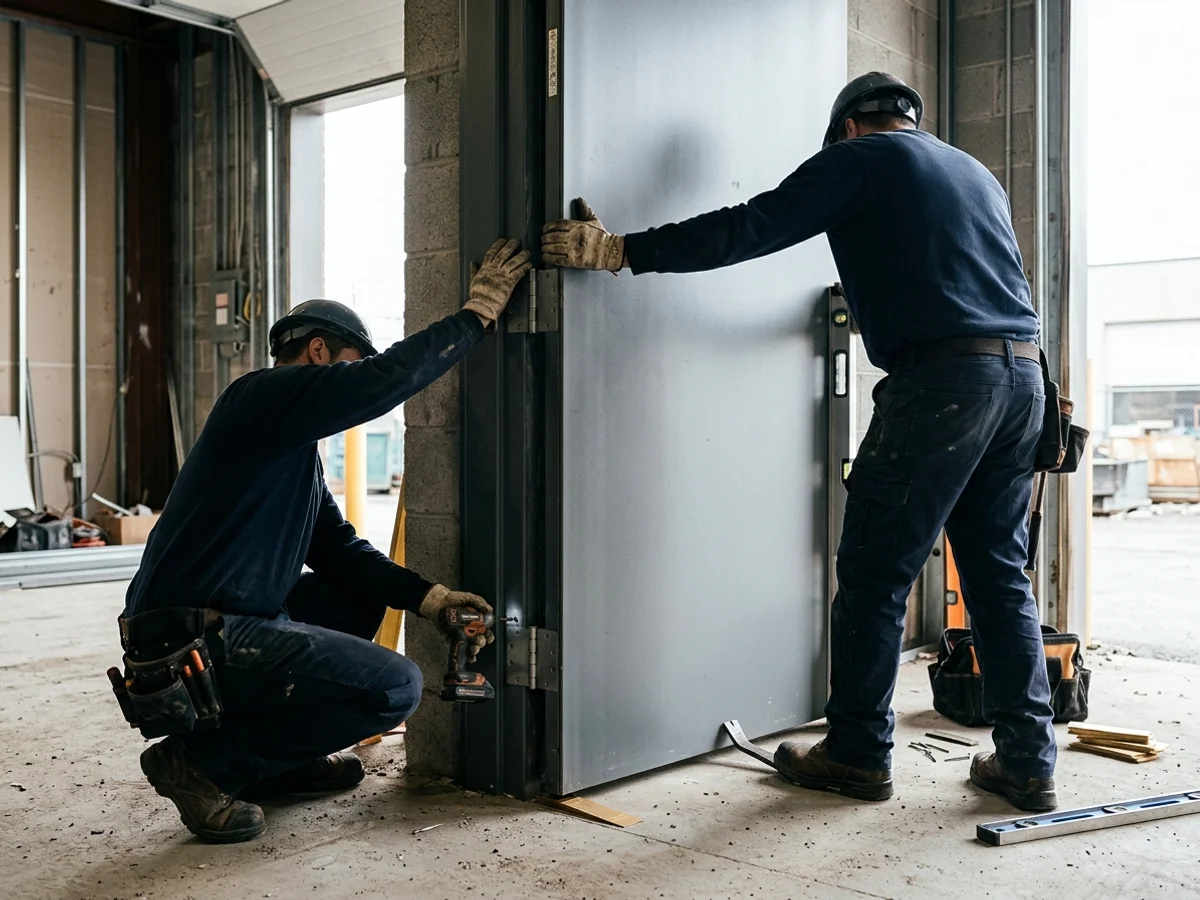
Most commercial door bills in Toronto are not high because doors are expensive. They are high because the wrong fix gets made first, then made again. Here is where the money goes.
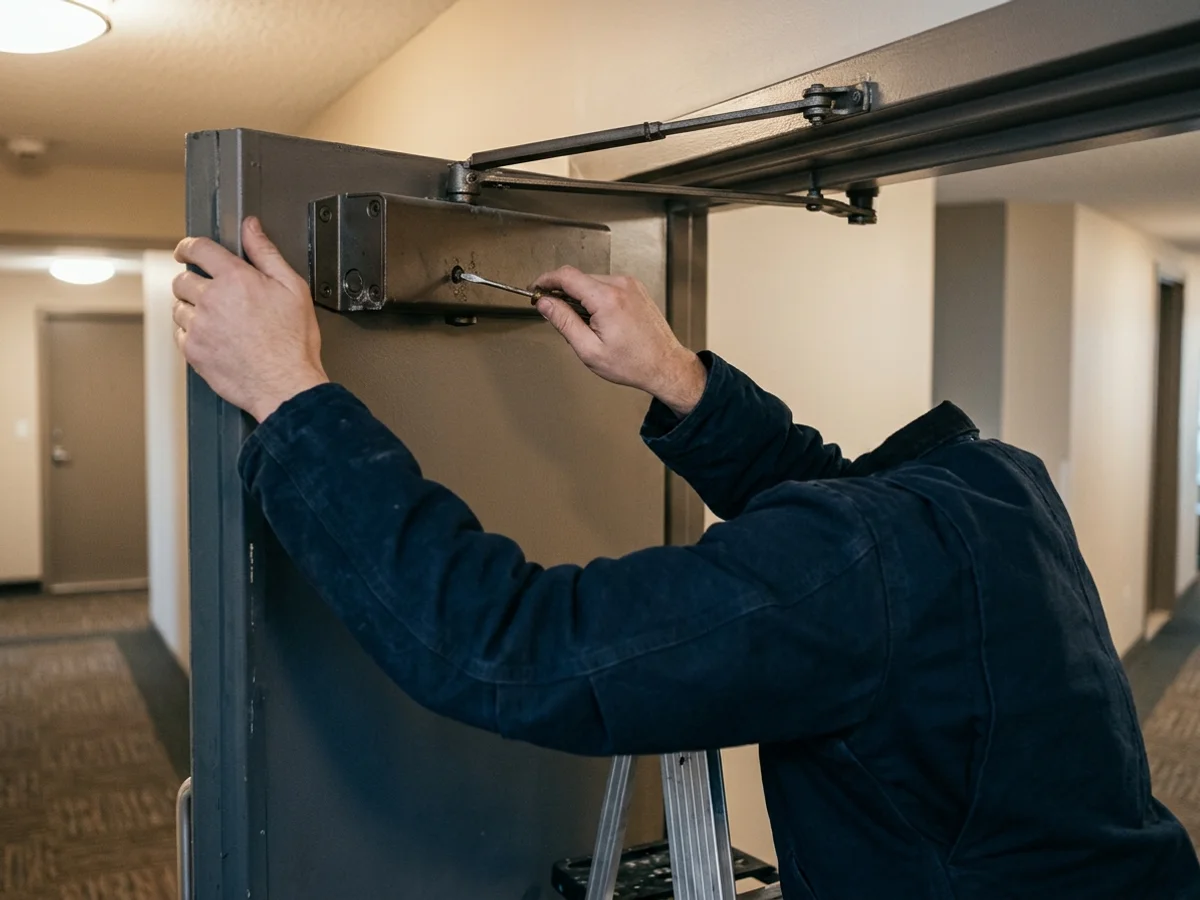
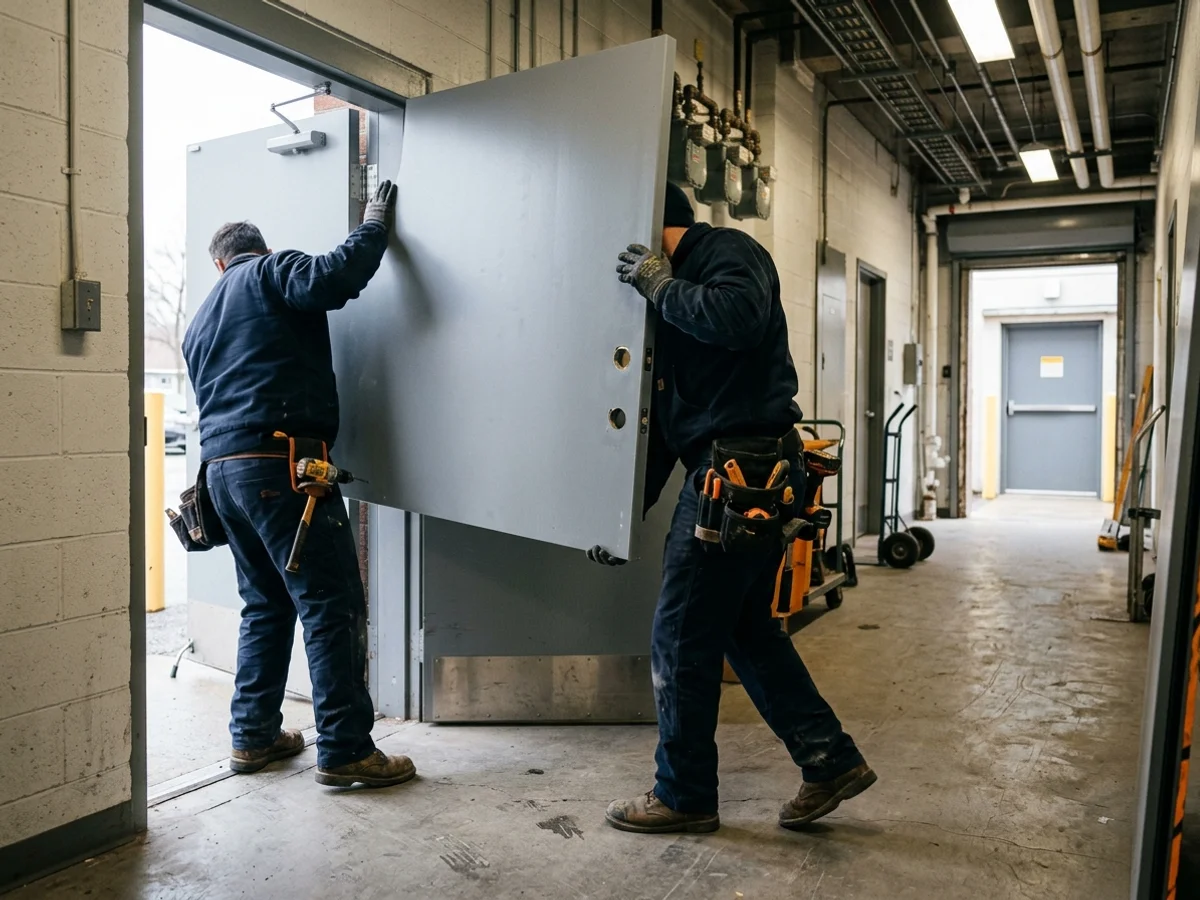
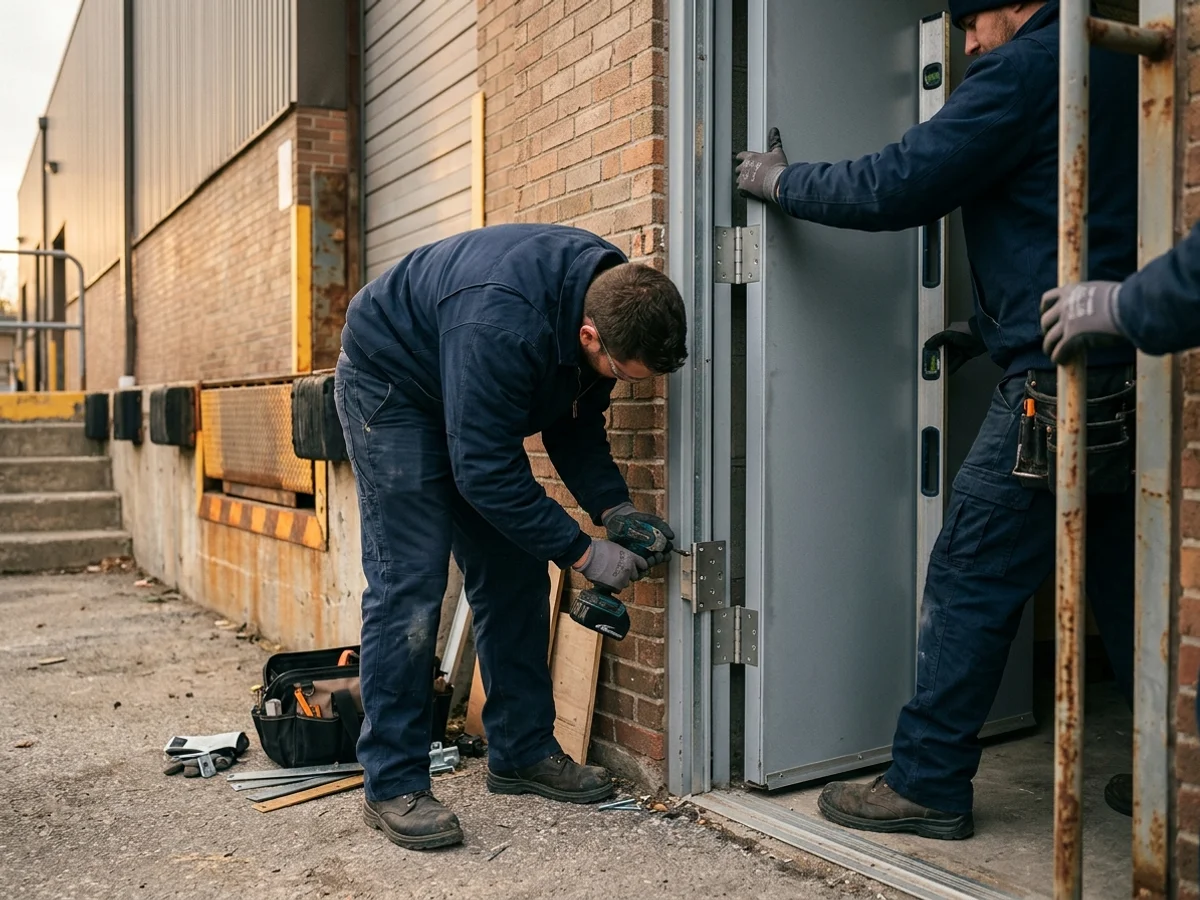
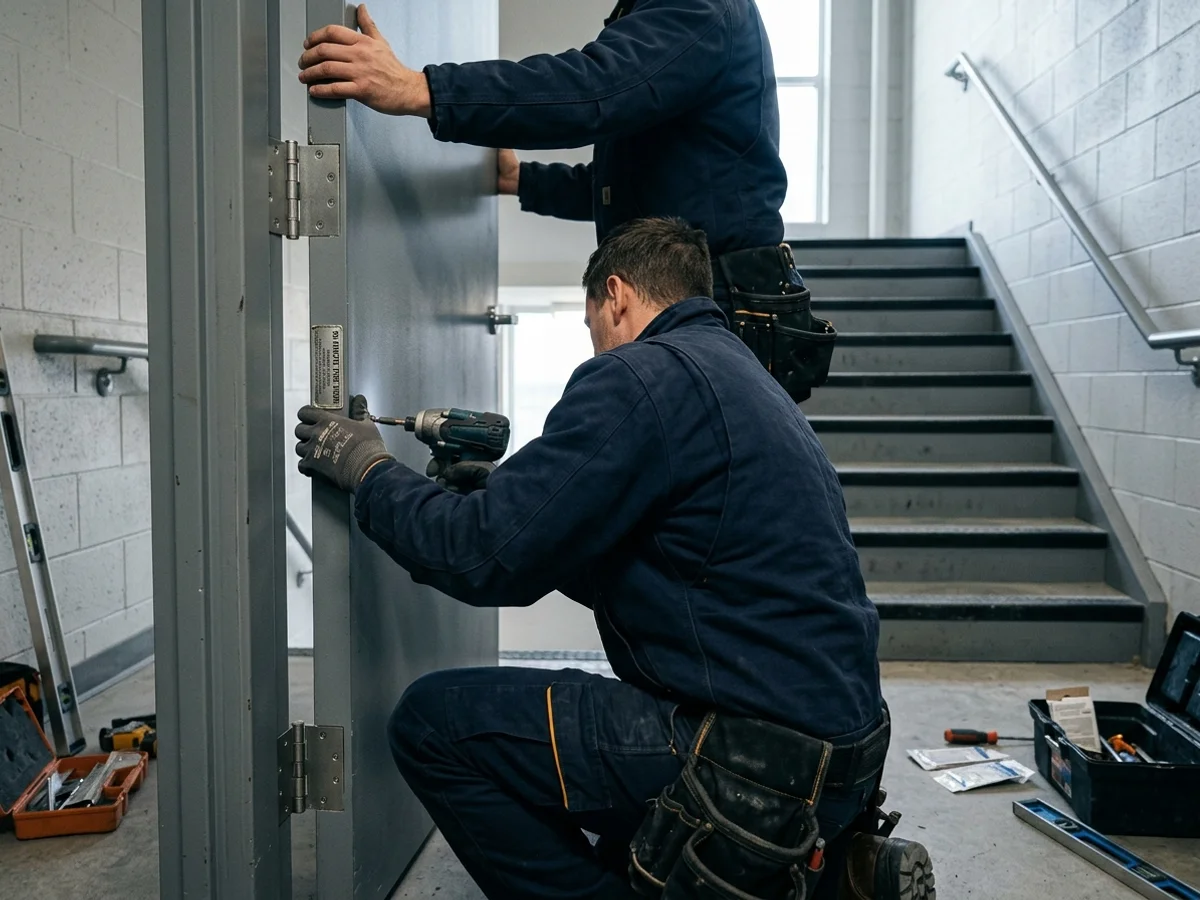
A fire-rated corridor or stairwell door is a tested assembly. When maintenance staff swap in a residential closer, fill an oversize gap with wood trim, paint over the label or drill a hole for a new lock, the door can lose its rating. Under NFPA 80 and the Ontario Fire Code, that door now fails inspection. A failed fire door inspection becomes a fire order, and a fire order often becomes a lease violation for the tenant and a liability problem for the owner. Fixing it properly the second time costs far more than doing it right the first time.
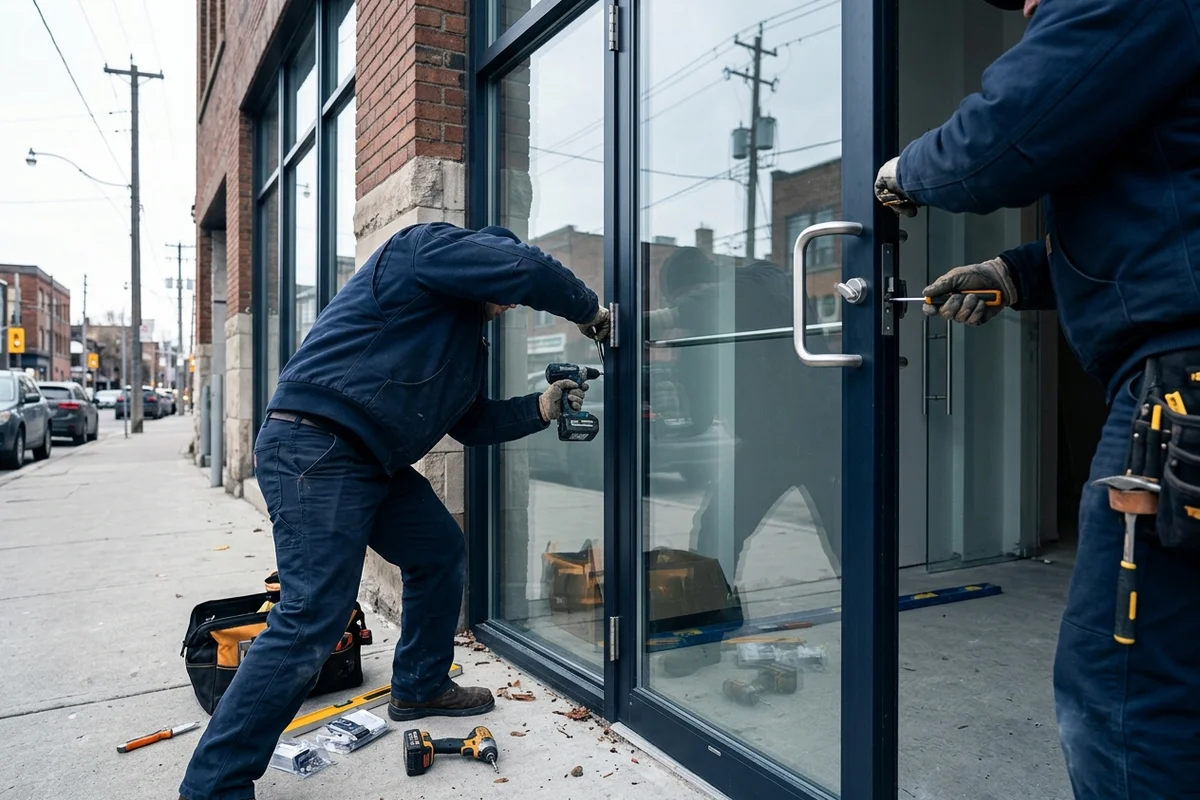
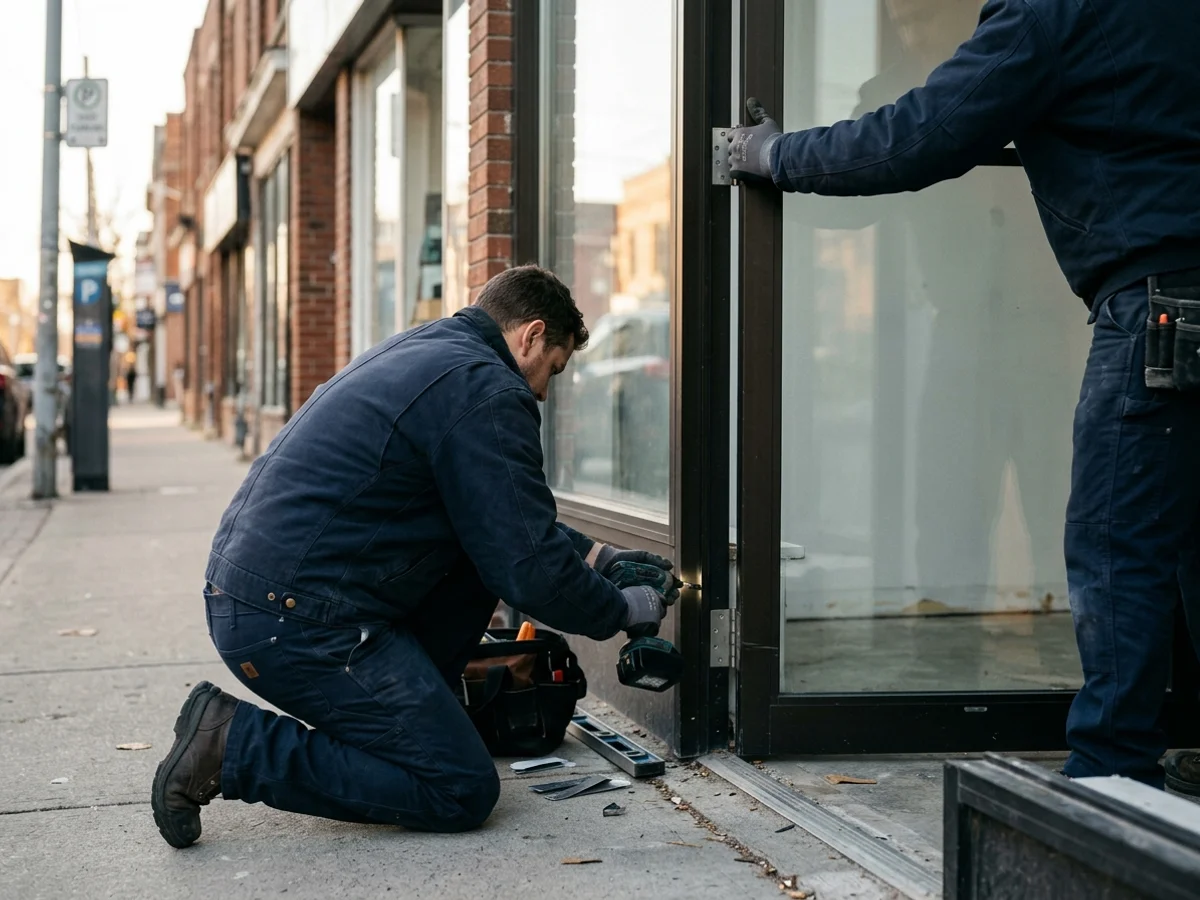
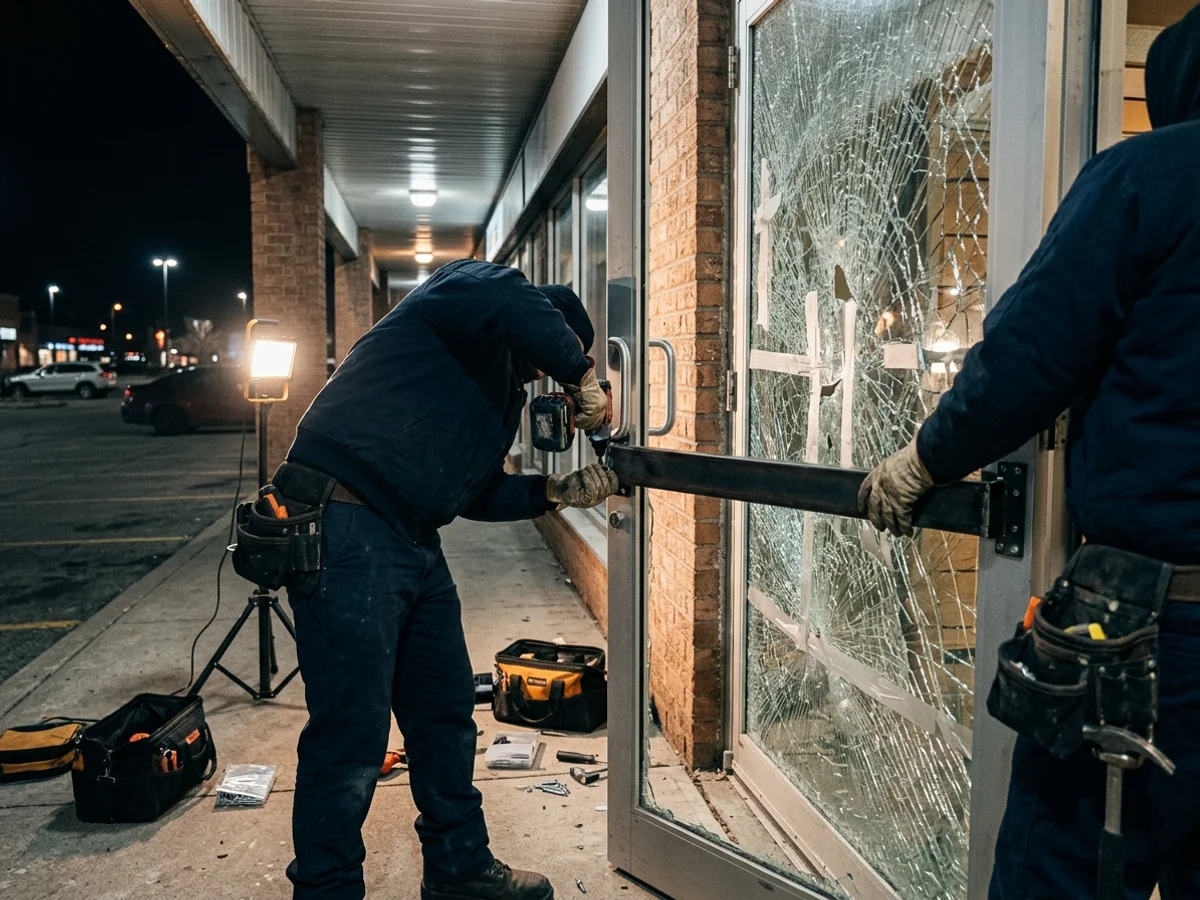
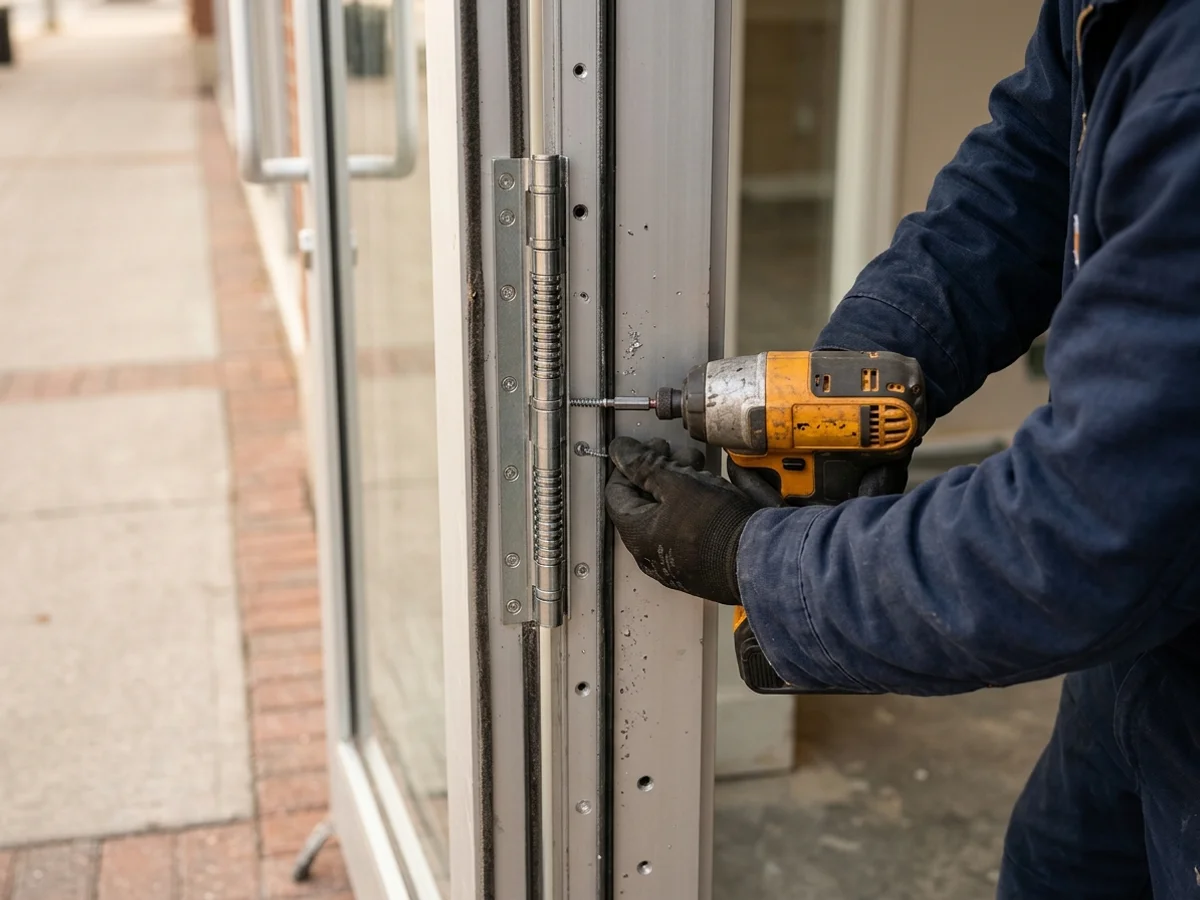
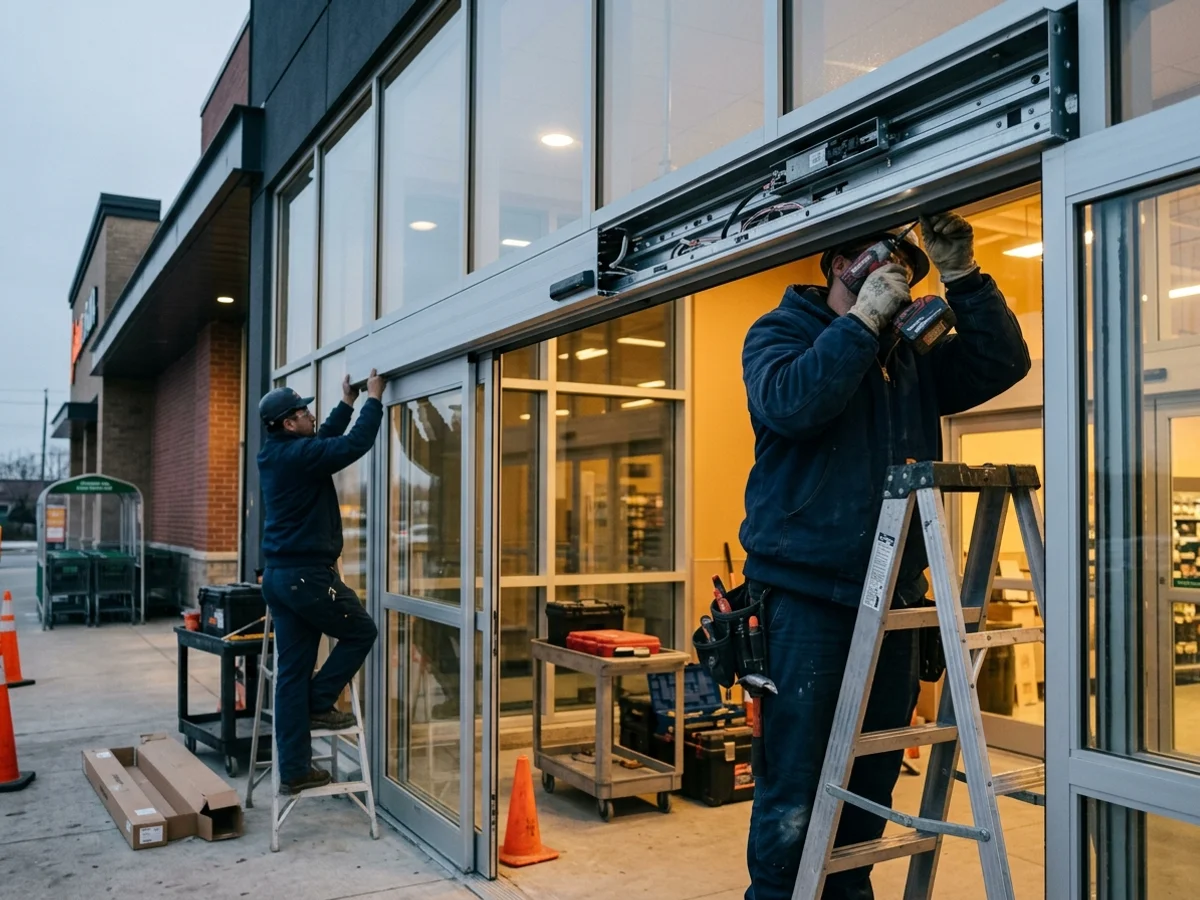
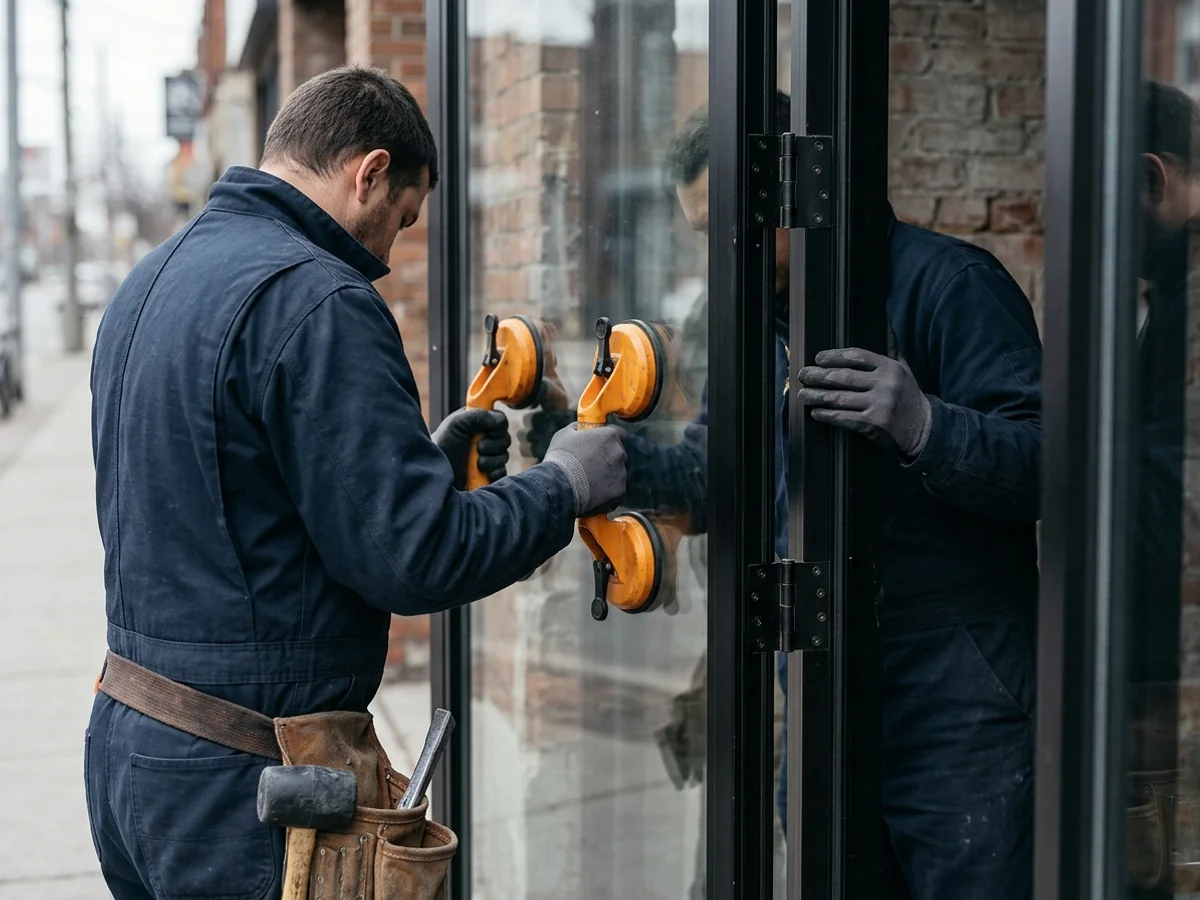
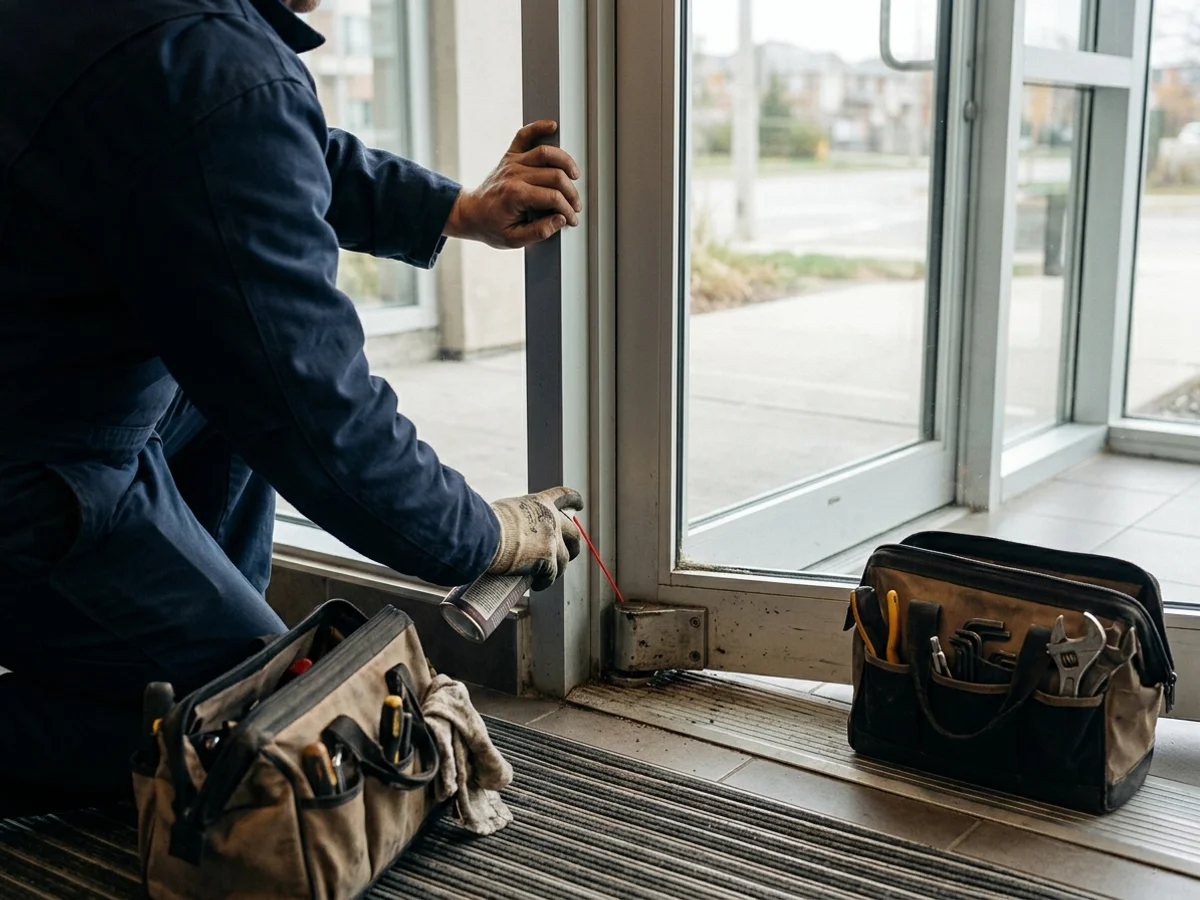
When a storefront pivot fails or a lock will not open at 9am, the store is not just inconvenienced. Walk-in trade stops, staff stand around and, in January, the heat pours out. Retailers tell us a seized entrance during business hours costs anywhere from $200 to $2,000 per hour in lost trade. A contractor who arrives in two hours with the right pivot on the truck is worth more than one who arrives tomorrow with a quote.
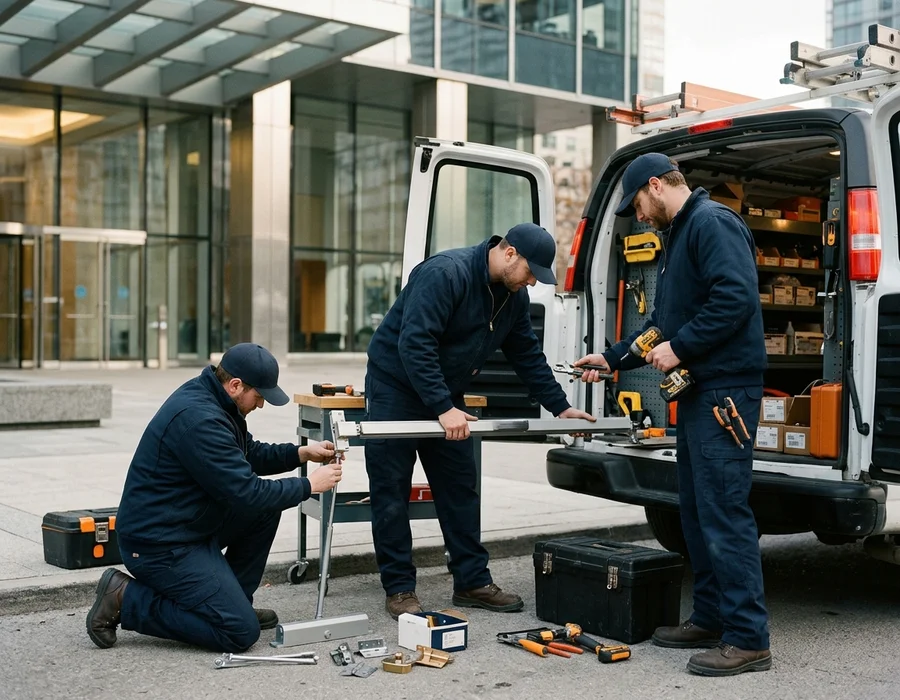
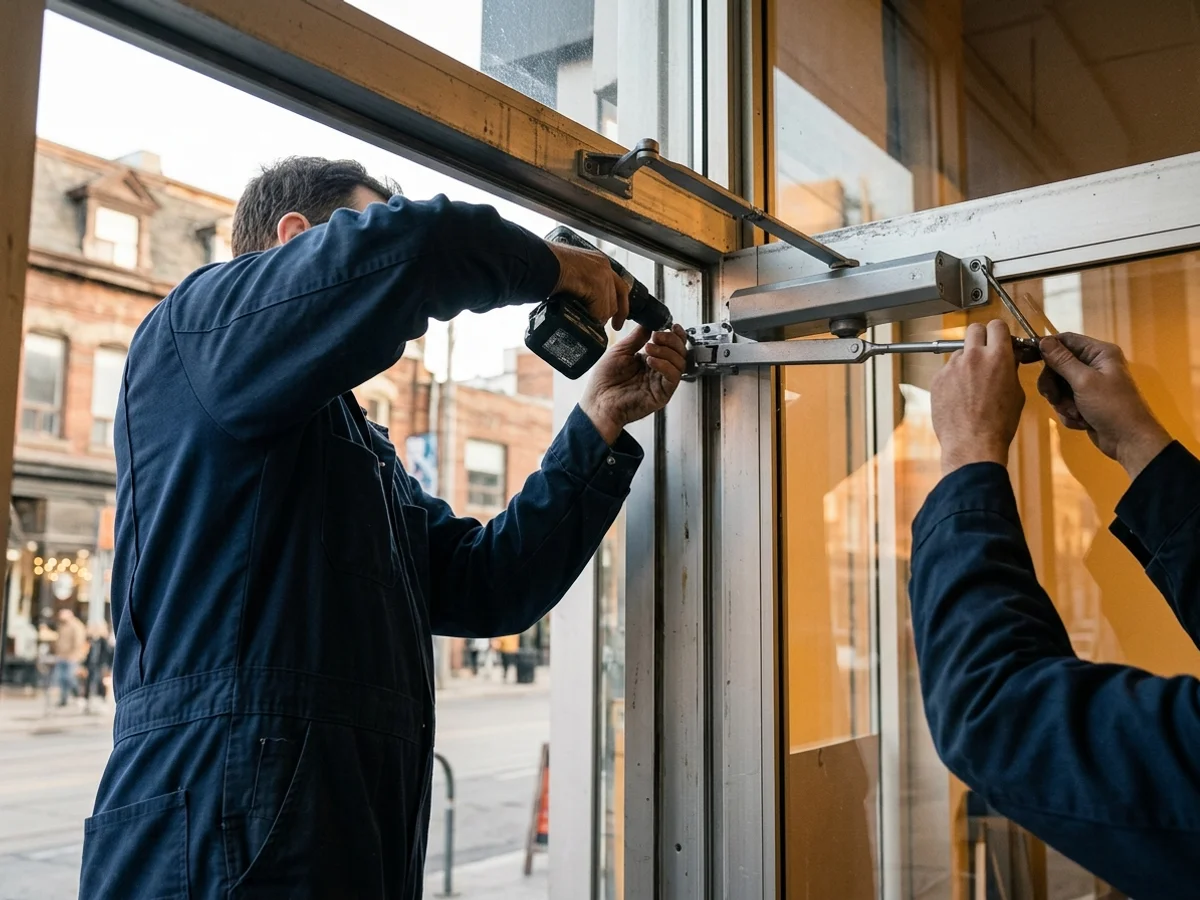
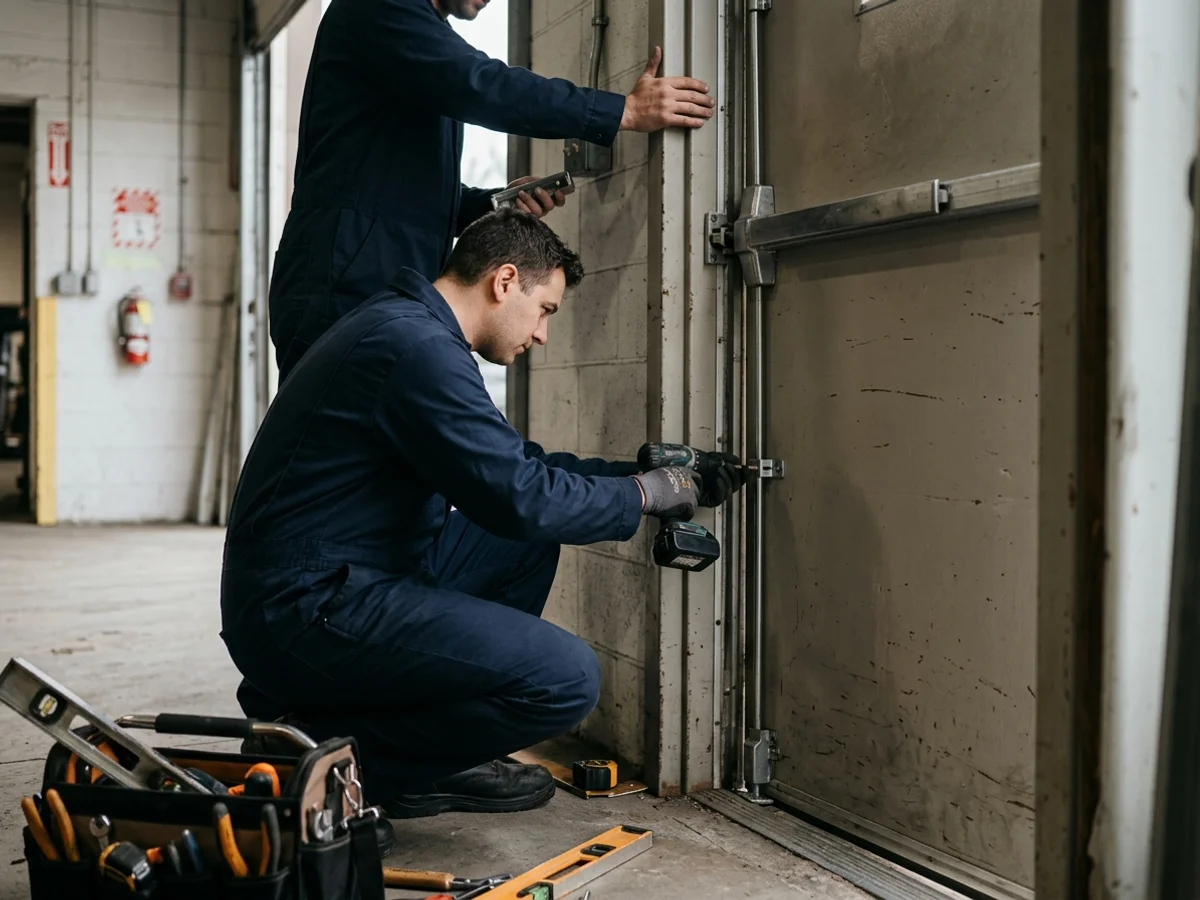
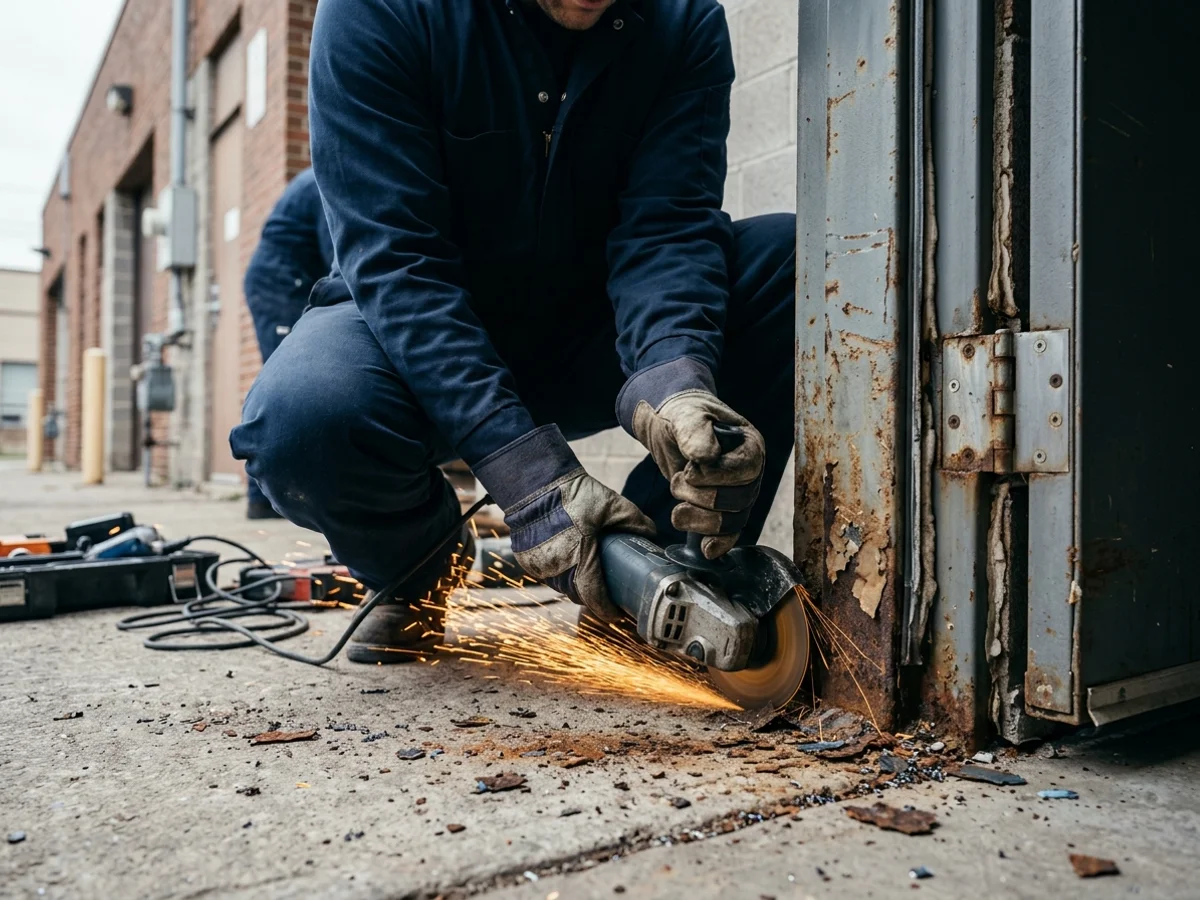
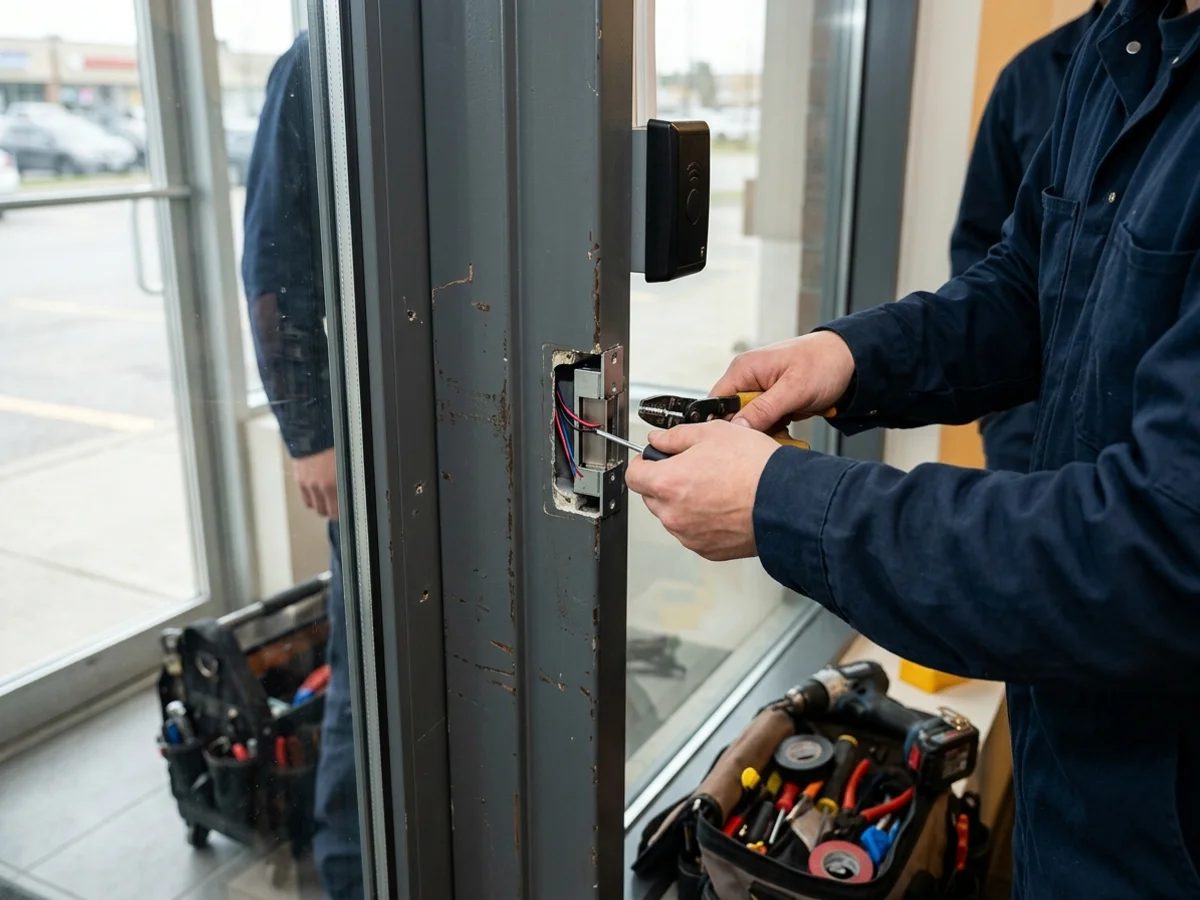
Dorma and LCN closers, Von Duprin exit devices and Adams Rite deadlatches are not sold at a hardware counter. When a general locksmith cannot get the right part, they improvise: a lighter closer, a generic pivot, a strike shimmed into place. Those parts wear out fast, cannibalize the rest of the opening and bring the same door back on the work order within a season. We stock common commercial parts and typically source the rest within 7 business days.
The most common complaint we hear from property managers is a pricing game: a free quote on the phone, then a trip charge or emergency fee that appears only on the invoice. Our approach is the opposite. Ranges are published, the $225 service call is credited to same-visit repairs, and every job starts with a written CAD scope before any work begins.
The compliance gap nobody flags until an inspector walks in
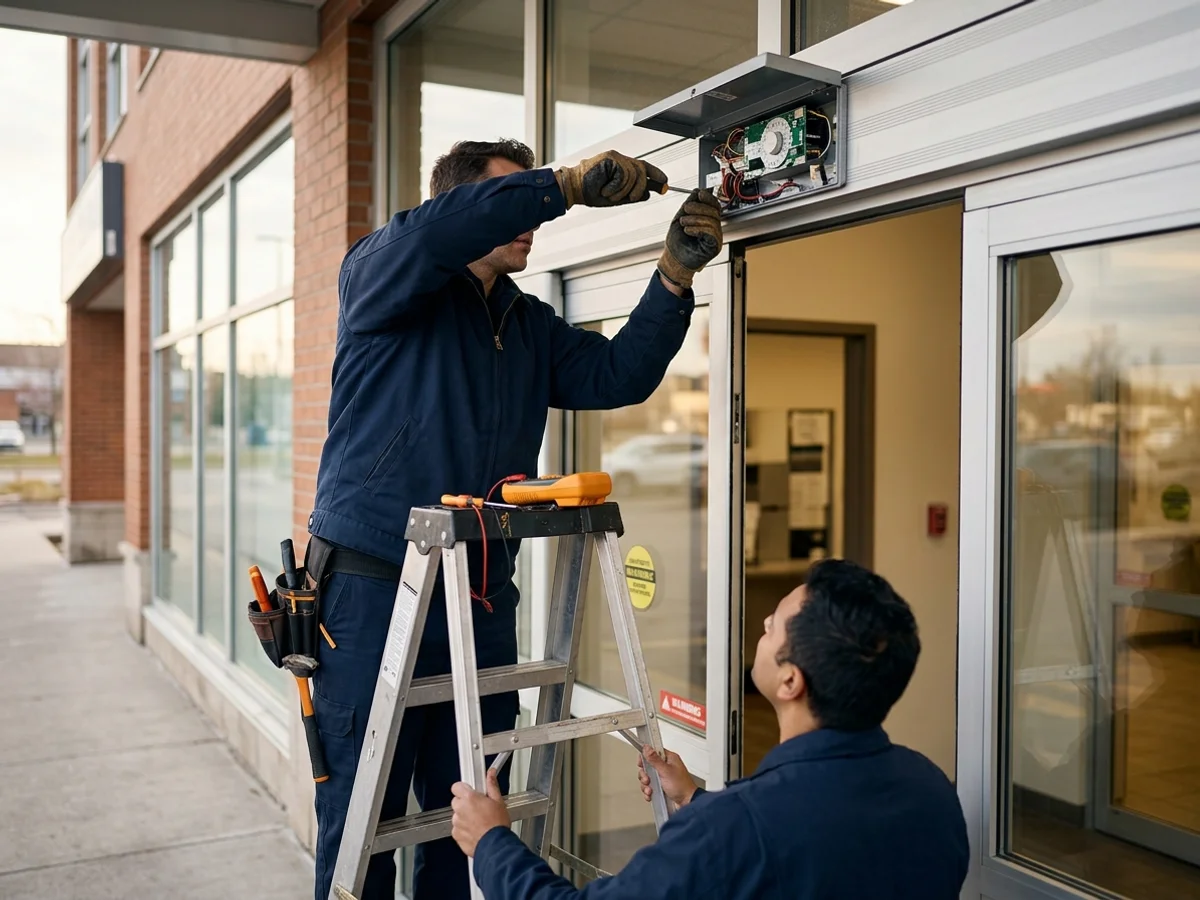
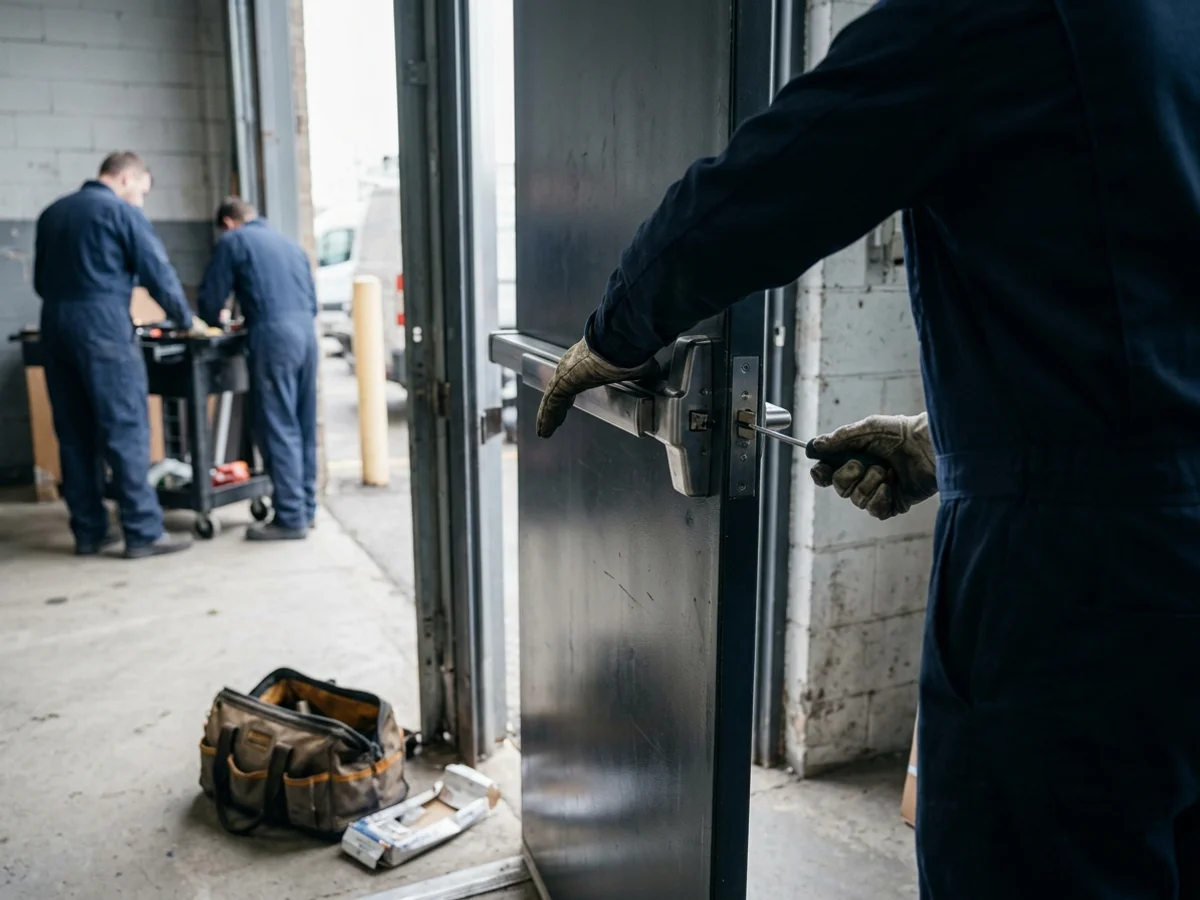
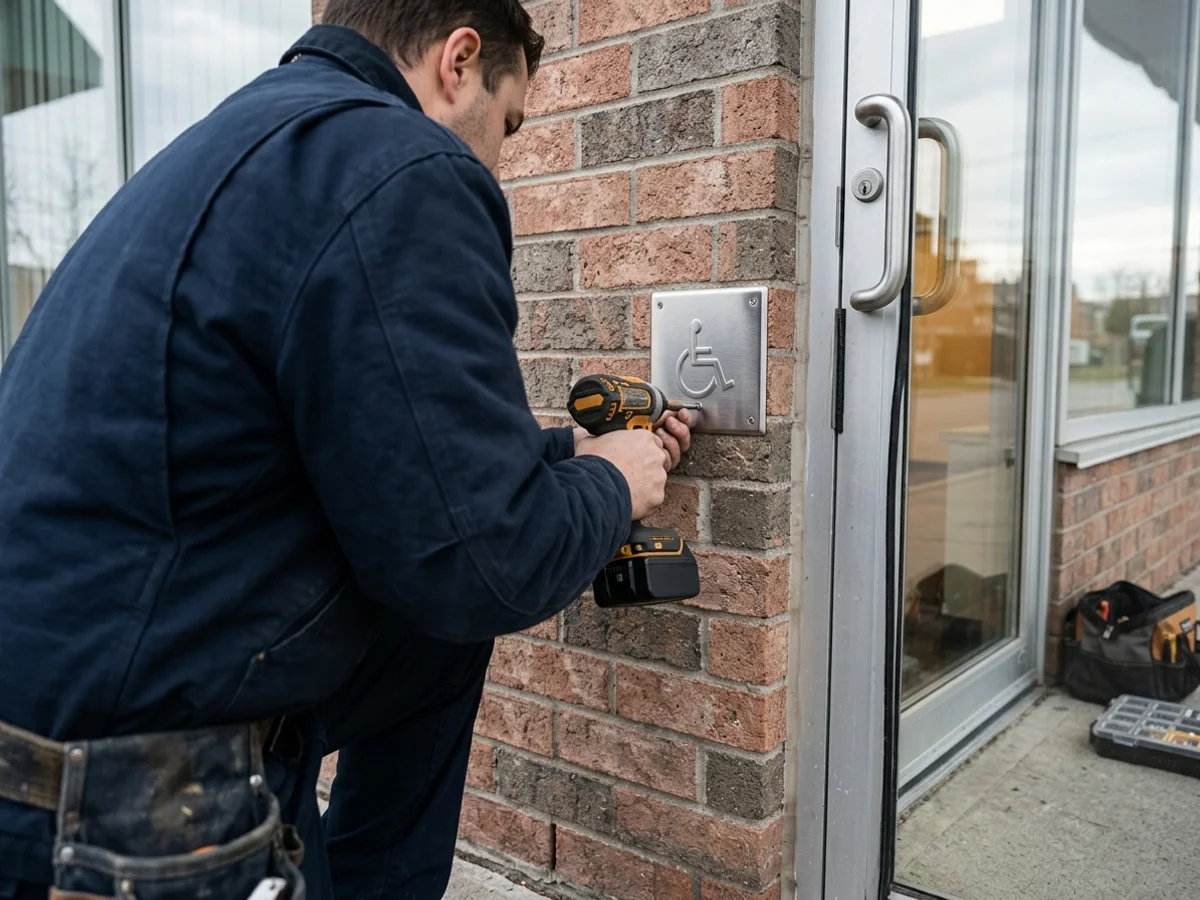
Most building managers do not know their doors are out of compliance until someone tells them. Toronto Municipal Code Chapter 629 requires doors and hardware to be kept in good repair. OBC Part 3 sets egress rules for exits. Fire inspectors test panic hardware and fire door latching first. A door can look fine and still fail all three. We flag those issues in writing on every visit, so you hear about them from us and not from an inspector.
Our crew carries 20+ years of GTA commercial door trade experience, hundreds of jobs annually, and the same contact for every project from first assessment through final close-out.