What Is a Commercial Push Bar?
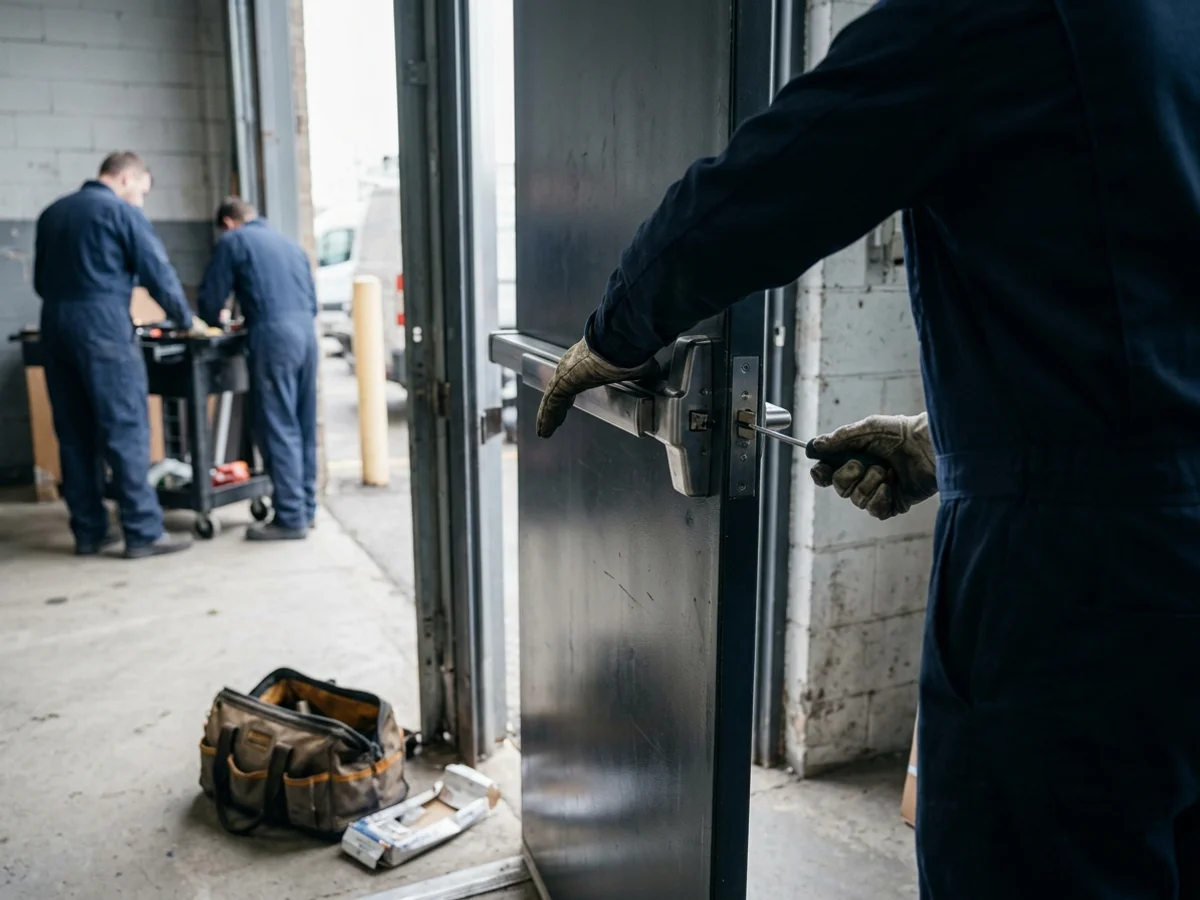
A push bar, also called a panic bar or exit device, is the horizontal bar on an exit door that unlatches the door when pushed. It lets anyone leave a building with one push, without a key or any special knowledge. That is exactly why fire inspectors test it first: in an emergency, a sticky or broken push bar can trap people inside.
Push bars are also security hardware. When the door closes, the latch must engage so the building stays locked from the outside. An exit device that opens freely but does not latch is half a door. As a Toronto commercial door contractor, we test both jobs on every call.
Exit Device Types
Rim exit devices
The latch sits on the edge of the door and catches a strike mounted on the frame. Common on single rear exits and warehouse man doors. The Von Duprin 99 rim device is a standard example.
Surface and concealed vertical rod devices
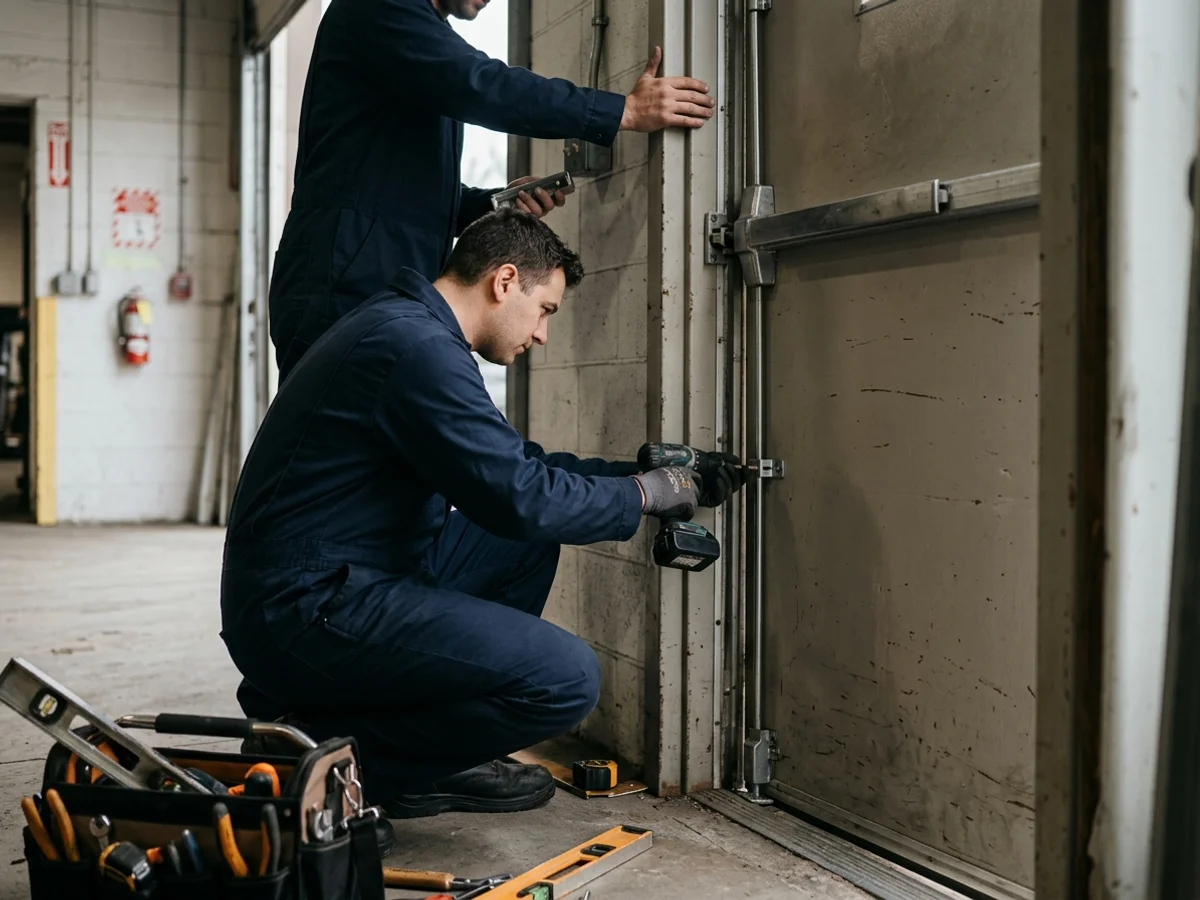
Rods run up, and sometimes down, the door to latch into the head and floor. Used on double doors without a centre mullion. Vertical rods are the most vulnerable part to impact damage from carts and forklifts.
Mortise exit devices
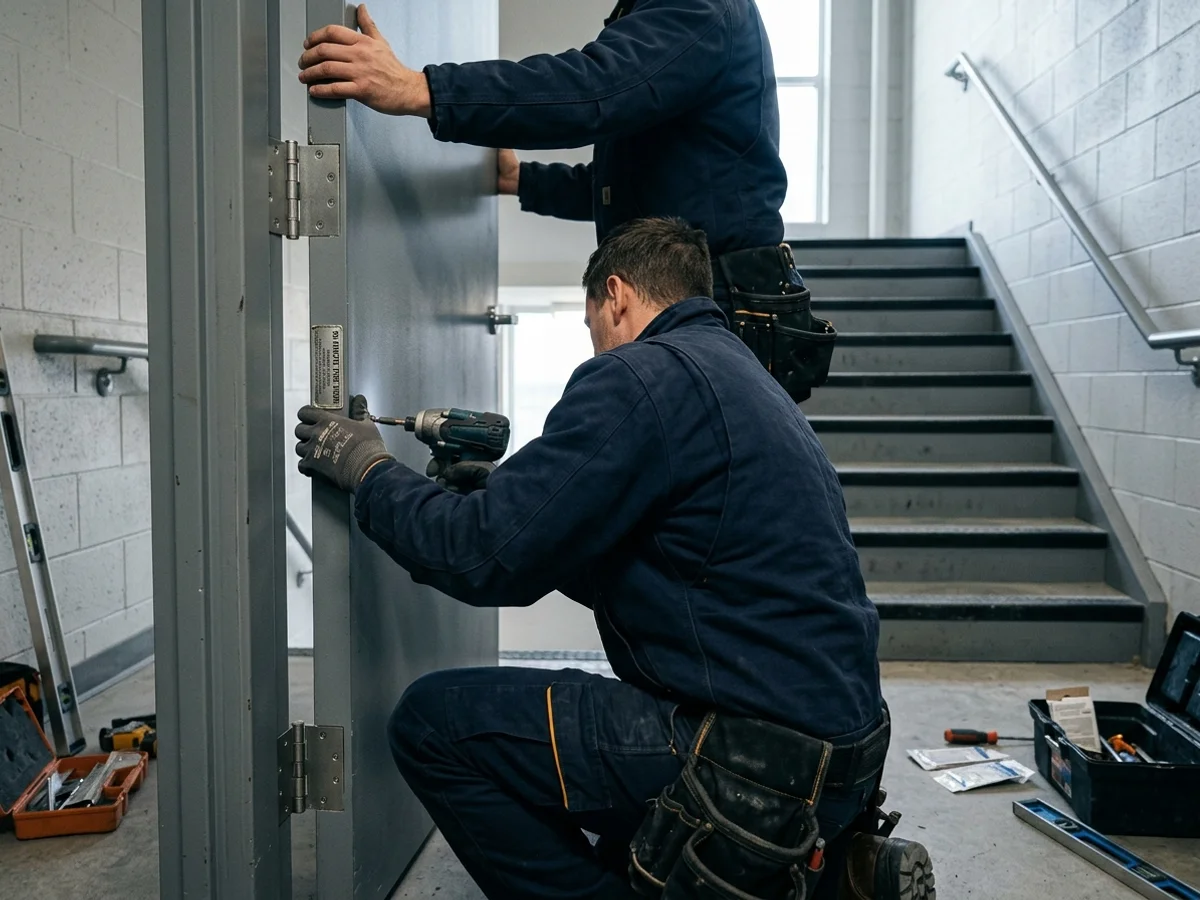
The lock body sits inside the door edge. Common on stairwell and corridor doors in office towers and condos, where they are often paired with fire exit hardware.
Common Push Bar Failures
- Bent vertical rods and worn top latches: the door closes but does not latch
- Shifted strikes: the latch misses the strike after frame movement or a sagging hinge
- Sticky push pads: worn springs and dirty mechanisms need a hard shove to open
- Broken dogging: the latch stays retracted when it should not, or cannot be held when it should
- Impact damage: forklifts and carts bend covers, rods and chassis
Push Bar Repair Costs
| Repair | Typical range (CAD) |
|---|---|
| Strike re-alignment and latch adjustment | $420 - $600 |
| Push pad rebuild or spring replacement | $450 - $750 |
| Vertical rod and latch replacement | $650 - $1,100 |
| New exit device matched to fire label | $900 - $1,400 |
Ranges only. Device type, brand, door label and access all change the final number. You get a written CAD scope first.
Fire Doors, Dogging and the Ontario Fire Code
Panic hardware on fire-rated doors must be fire exit hardware listed for that door label. It must latch every time the door closes. Dogging, which holds the latch retracted, is not permitted on fire doors because it stops them from latching. Chains, padlocks and slide bolts on required exits fail inspection under the Ontario Fire Code and are dangerous.
When we repair panic hardware on a rated door, we check the label, confirm the device suits it and remove dogging that should not be there. If the door or frame itself is past saving, see fire exit door replacement, and for full rated assemblies see fire-rated door installation.
Warehouse and Dock Exits
Industrial exits take more physical abuse than any other door. A forklift that clips a vertical rod can leave a building unsecured overnight. On one Vaughan warehouse, a Von Duprin 99 stopped latching after exactly that. The crew replaced the rods and top latch, re-aligned the strike and re-tested egress the same afternoon. Downtime was under three hours, and the door passed the insurer’s site inspection the following week.
For exits that take repeated hits, we may suggest a heavier device, a concealed rod design or a door with better protection at cart height.
Every Repair Ends With an Egress Test
Before a technician leaves, the door is pushed open from inside, allowed to close on its own and checked for positive latching. On rated doors we confirm self-closing too. If anything does not pass, we fix it before we go. That test is written into your report so you have a record for inspectors and insurers.
Related Hardware
Exit devices rely on the rest of the opening. A weak closer will not push the latch home, and a sagging hinge moves the latch away from the strike. Our technicians look at the whole door on every push bar call. For routine building-wide checks, commercial door repair visits and maintenance contracts include panic hardware function tests.