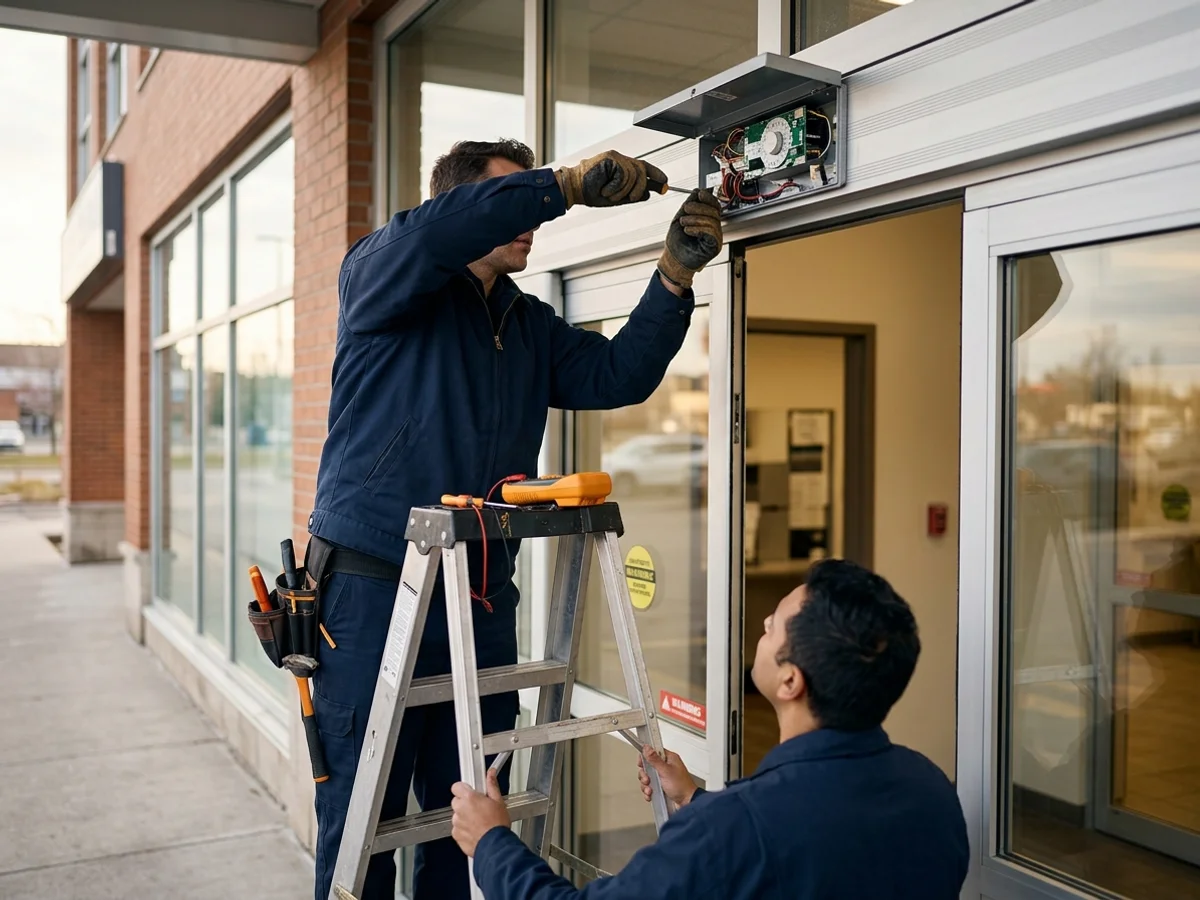
What Does Automatic Door Repair Involve?
An automatic entrance is a door, a motor, a gearbox, a belt, a controller and a set of sensors working together. When any one of them drifts out of spec, the whole entrance starts to misbehave. It hesitates before opening, reverses halfway, stalls, or closes harder than it should. For a grocery store, clinic or office lobby, that is not a minor annoyance. It stops traffic, lets the heat out and puts people at risk.
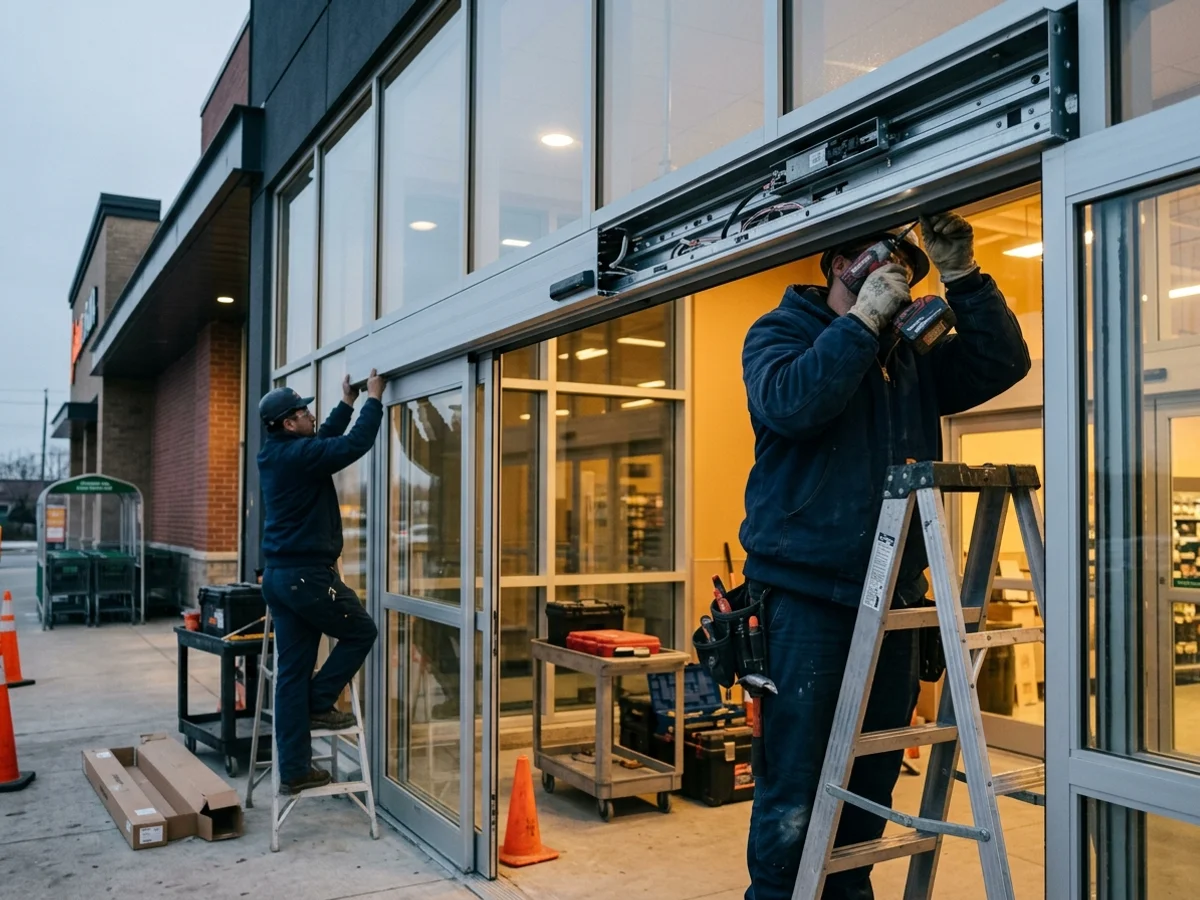
Our technicians repair sliding, swing and revolving automatic doors as part of our commercial door repair service across Toronto and the GTA. We work on Record, Besam and Horton operators, recalibrate or replace BEA and Optex motion and presence sensors, and replace drive belts, gearboxes, motors and controller boards. Every repair finishes with a safety check against ANSI A156.10, the standard for power-operated pedestrian doors.
Types of Automatic Doors We Repair
Sliding doors
Single and bi-parting sliding entrances are the workhorses of grocery stores, hospitals, clinics and office lobbies. They fail most often at the track and floor guide, the drive belt and the sensors. Breakout panels, the emergency swing-out feature, also need to release and re-latch correctly.
Swing doors
Full-power swing operators run main entrances, while low-energy swing operators handle accessible entrances and suites. Swing doors fail at the arm linkage, the gearbox and the presence sensor that keeps the door from swinging into someone.
Revolving doors
Automatic revolving doors are less common but carry the highest safety stakes. Speed control, collapse mechanisms and safety edges all need regular attention, and repairs should only be made by a crew that understands the full system.
Common Automatic Door Faults and What Fixes Them
| Symptom | Likely cause | Typical fix |
|---|---|---|
| Reverses or stalls midway | Dirty or misaligned sensor, salt in floor guide | Clean and recalibrate sensor, clear and re-shim track |
| Opens slowly or hesitates | Stretched drive belt, worn gearbox | Replace belt or gearbox, reset speeds |
| Slams or closes too fast | Controller drift, worn closing check | Recalibrate or replace controller board |
| Will not open at all | Motor, controller or power fault | Diagnose, replace failed component |
| Breakout panel will not re-latch | Bent hardware, worn detents | Adjust or replace breakout hardware |
How Much Does Automatic Door Repair Cost?
Most automatic door repairs in Toronto fall between $800 and $3,500. The spread depends on the part and the operator:
- Sensor recalibration and track work: low end of the range
- Drive belt or gearbox replacement: middle of the range
- Controller board, motor or multiple parts: upper end of the range
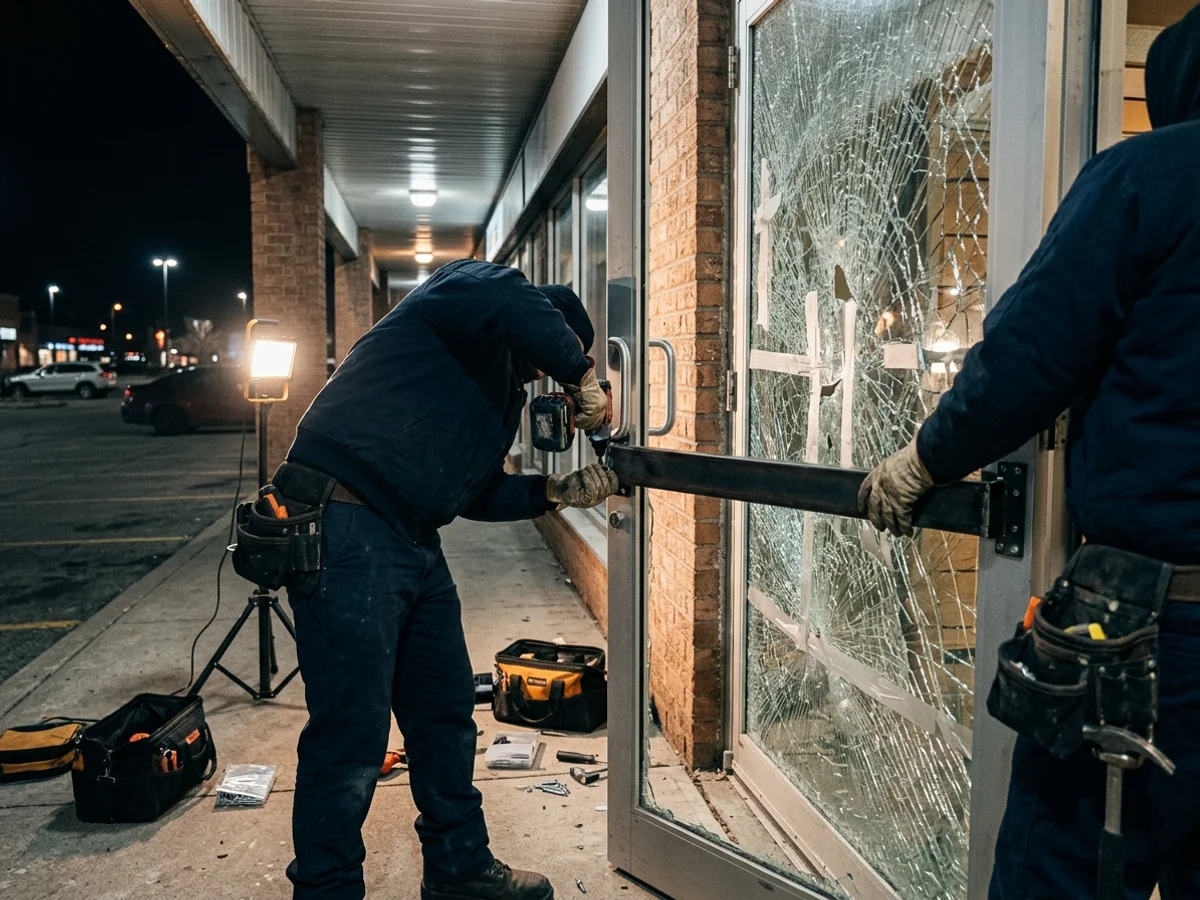
Automatic doors are priority calls, so after-hours visits are common. Your written CAD scope spells out the parts, the labour and the range before we order anything. If a vandal or a vehicle caused the damage, we direct-bill major commercial property insurance claims.
When Should You Call for Automatic Door Repair?
Do not wait for the door to stop completely. Book a visit when you see:
- The door pauses or hesitates before opening
- It reverses with nobody in the way
- You can hear grinding, clicking or the motor straining
- It closes faster or harder than it used to
- Staff are switching it to hold-open to keep traffic moving
- Ice or salt is visibly building up in the floor guide
Small faults become expensive ones. A stretched belt makes the motor work harder. A dragging floor guide wears the gearbox. Fixing the first problem early keeps the repair at the low end of the range.
Winter Is Automatic Door Season in Toronto
Every January our dispatch board fills with automatic door calls. Salt crust and grit in floor guides make sliders drag. Ice in thresholds stops breakout panels from re-latching. Cold air and warm lobbies fog sensor lenses. The operator responds the way it is designed to, by stopping or reversing for safety.
A winter check before the first big storm cleans the track, protects the sensors and resets force settings. On one Markham medical building, the main slider was reversing on every third cycle. Salt in the floor guide and a fogged BEA sensor were the cause. The crew cleaned and re-shimmed the track, swapped the sensor and reset force settings the same afternoon, and the building added quarterly automatic door checks to its service contract.
Safety, Liability and ANSI A156.10
An automatic door that closes too fast or misses someone in the threshold is a liability exposure for the property owner and the tenant. ANSI A156.10 sets the safety zones sensors must cover, the speeds the door may move at and the force it may apply. After every repair we walk the safety zones, test the breakout panels and record the settings.
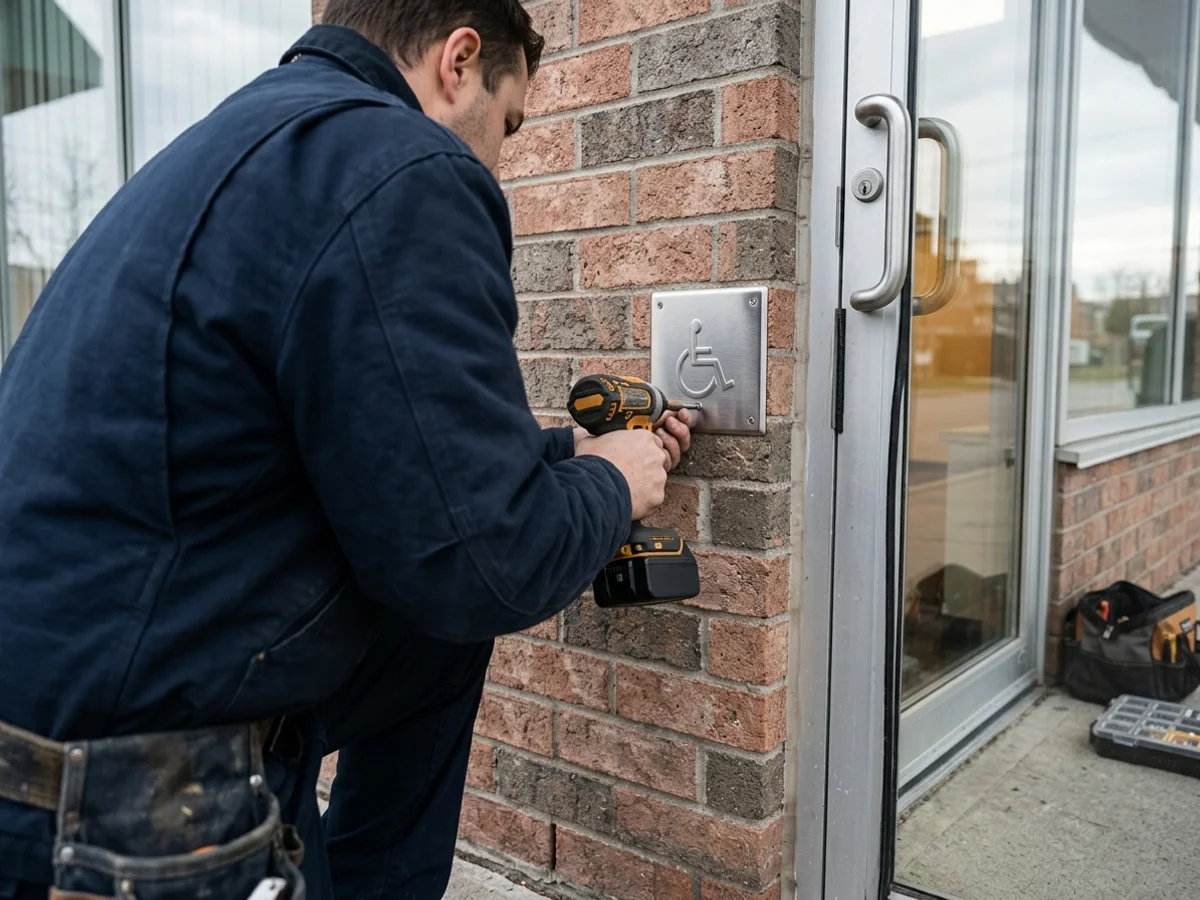
For accessible entrances, low-energy operators fall under ANSI A156.19 and need to work with AODA expectations for barrier-free access. If your building needs accessible entrances added, see our handicap door operator installation page.
Repair or Replace?
If the operator is sound and parts are available, repair is almost always the better value. Replacement starts to make sense when an older unit needs a motor, gearbox and controller at the same time, or when parts are discontinued. We will give you both options in writing. New entrance packages are covered on our automatic sliding door installation page.
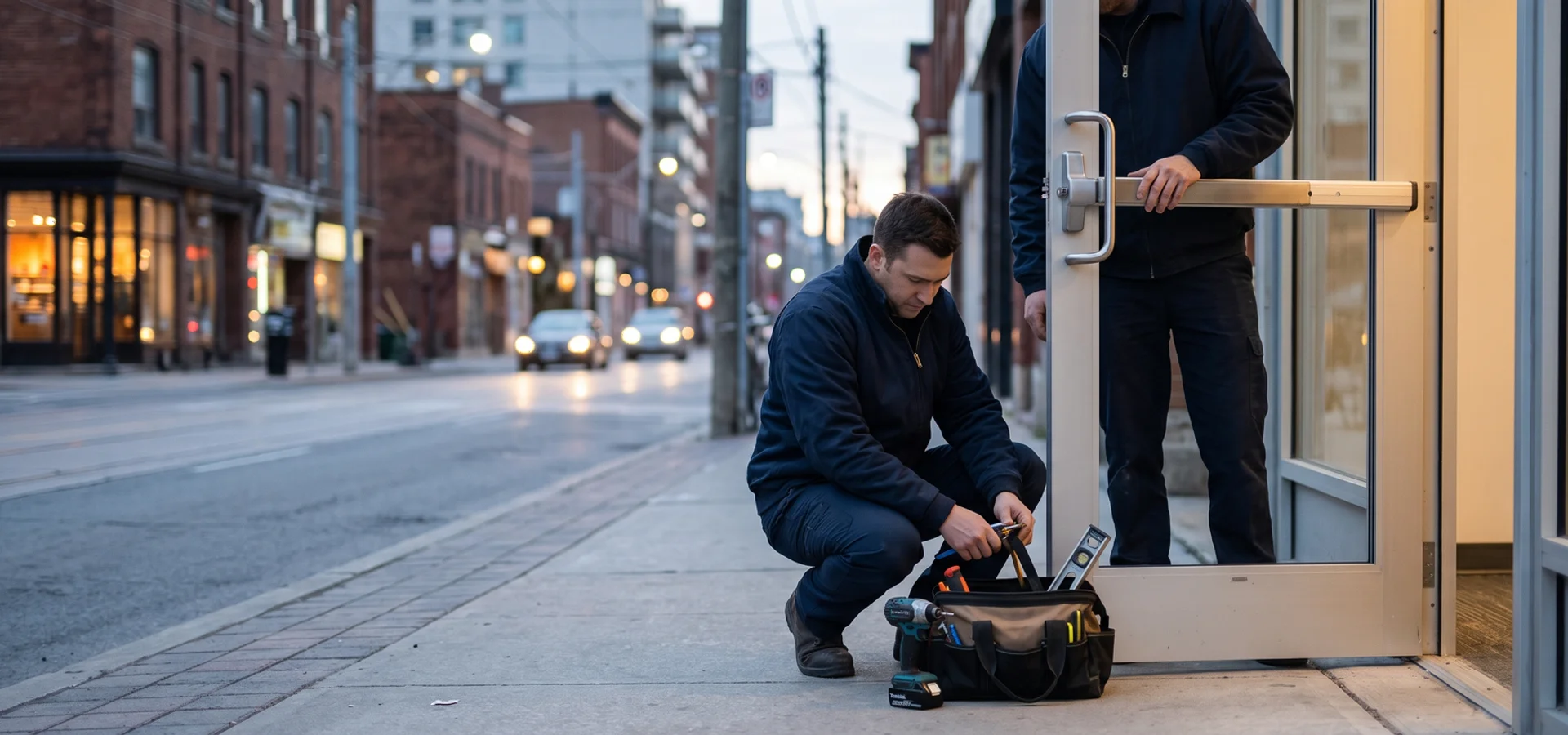
If the door is stuck open or will not lock after hours, treat it as an emergency. Our emergency commercial door repair crews can secure the entrance the same night and return with parts.