What Is a Hollow Metal Door?
A hollow metal door is a steel door built from two steel skins over a core, hung in a steel frame. Despite the name, it is not empty inside. The core might be honeycomb, polystyrene, polyurethane or steel stiffeners, depending on what the door needs to do.
Hollow metal doors and frames are everywhere in commercial buildings: stairwells, corridors, service rooms, mechanical rooms, rear exits, loading docks and warehouse man doors. They are tough, fire-rateable and easy to fit with commercial hardware, which is why most back-of-house openings use them. They also make up a large share of the commercial door repair calls we answer in Toronto, which shapes how we specify new ones.
Choosing the Right Package
Gauge
- 18-gauge: the standard for most interior commercial doors
- 16-gauge: heavier and more durable, preferred for exterior, warehouse and high-abuse openings
Core
- Honeycomb: economical, good for interior doors
- Polystyrene or polyurethane: insulated, preferred for exterior doors
- Steel-stiffened: strongest, common on high-abuse and some rated doors
Finish
Galvanneal A60 steel is the standard for exterior doors and frames in the GTA. Road salt and water attack steel at grade, and the zinc coating slows corrosion while taking paint well.
Frame type
- Welded frames: set before the wall is finished and often grouted in masonry. Strongest option for new construction.
- Knockdown frames: assembled on site and slipped over finished drywall. Useful for renovations and fit-outs.
Hollow Metal Cost Guide
| Package | Typical range (CAD, installed) |
|---|---|
| Interior 18-gauge door, knockdown frame, basic hardware | $1,800 - $2,800 |
| Exterior 16-gauge insulated galvanneal, welded frame | $2,800 - $4,200 |
| Fire-rated door and labelled frame with exit hardware | $3,500 - $5,800 |
Each opening is priced on a written CAD scope with gauge, core, frame, rating and hardware confirmed.
How We Install
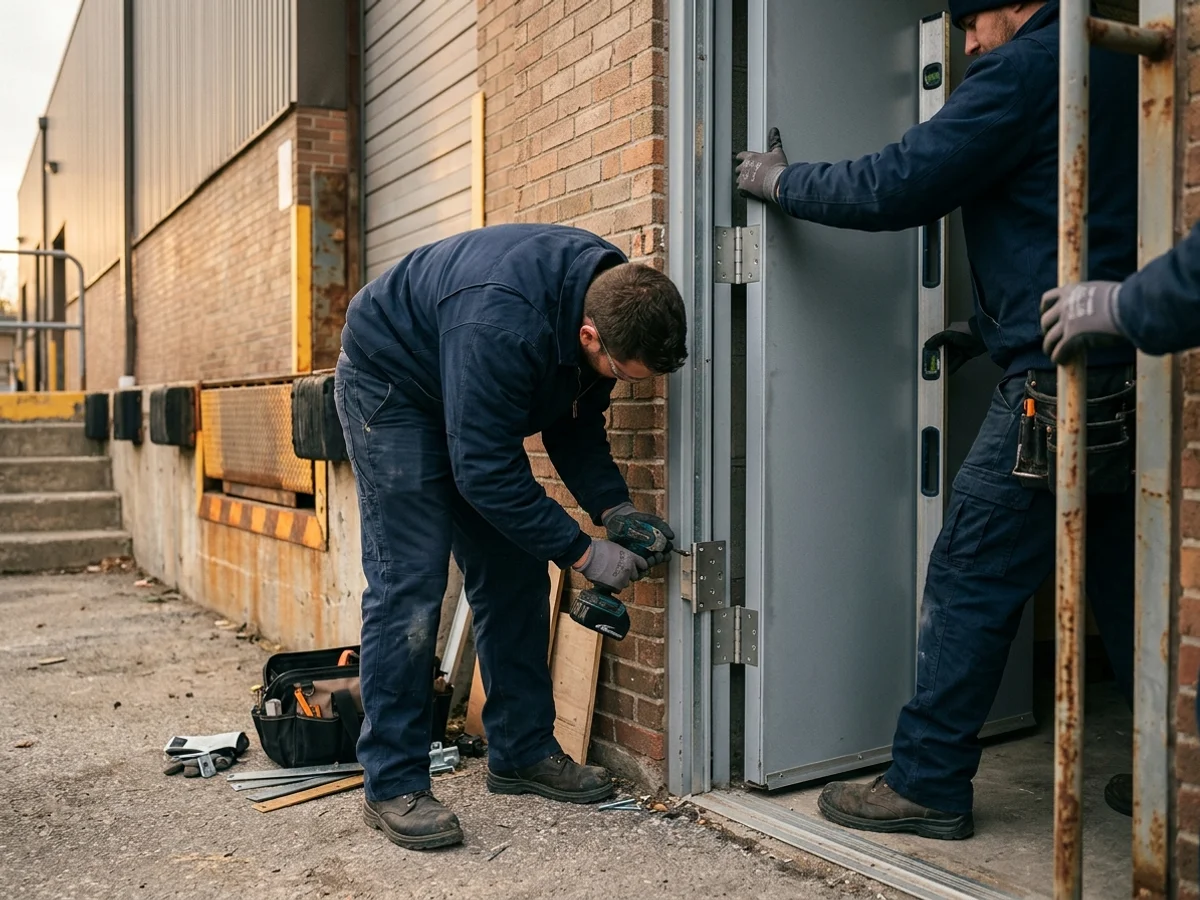
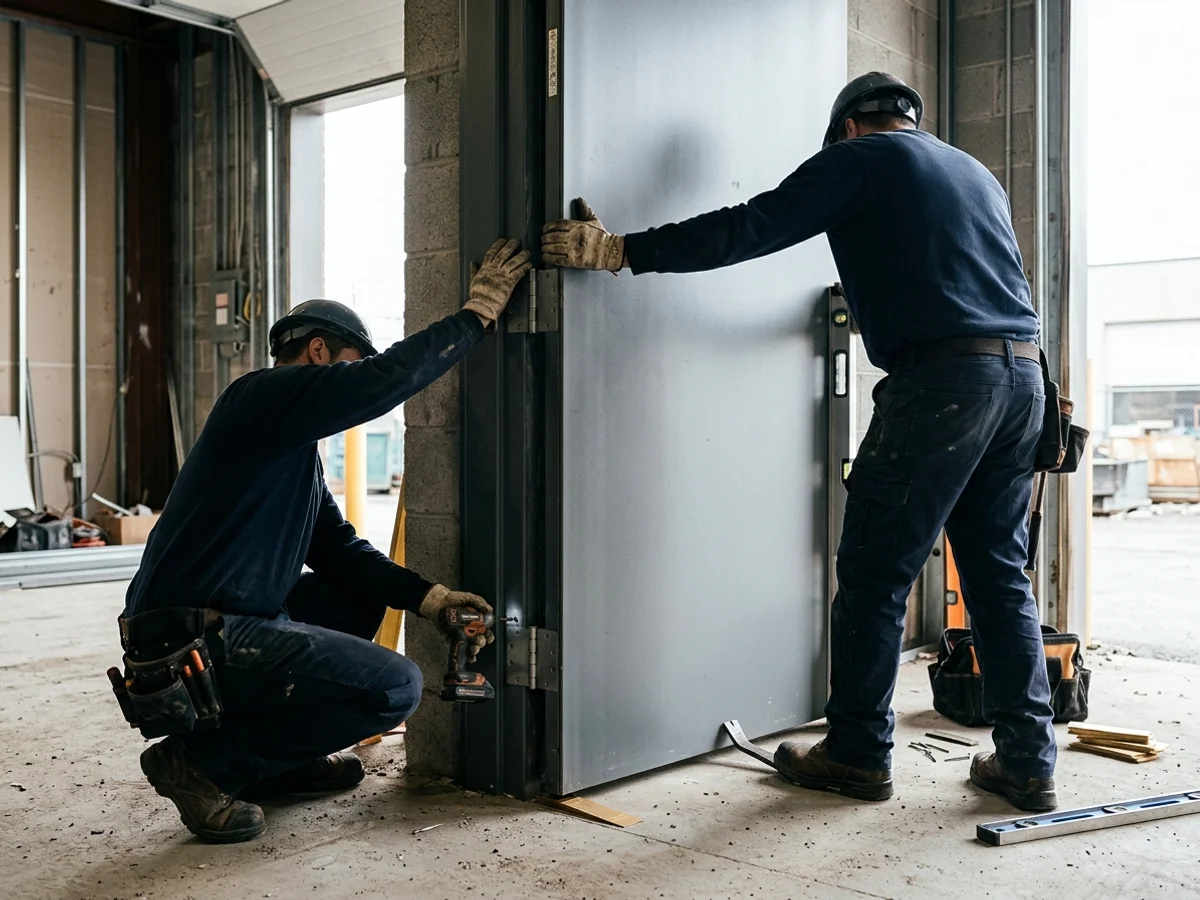
On new construction, welded frames are set, plumbed and anchored while walls are open, then grouted in masonry where specified. Doors are hung after finishes. On retrofits, existing frames are removed or knockdown frames are installed over finished drywall to avoid opening walls.
Doors are hung on Hager butt hinges or continuous hinges and fitted with LCN closers and Von Duprin or Yale hardware as specified. Exterior doors get sweeps and weatherstripping. Every opening is adjusted and tested for closing and latching before handover.
On one Concord industrial property, eight exterior man doors across two buildings were replaced with galvanneal hollow metal packages. The crew set new welded frames, hung insulated 16-gauge doors with continuous hinges and Von Duprin exit devices, and finished in four working days while tenants kept shipping.
Fire-Rated Hollow Metal
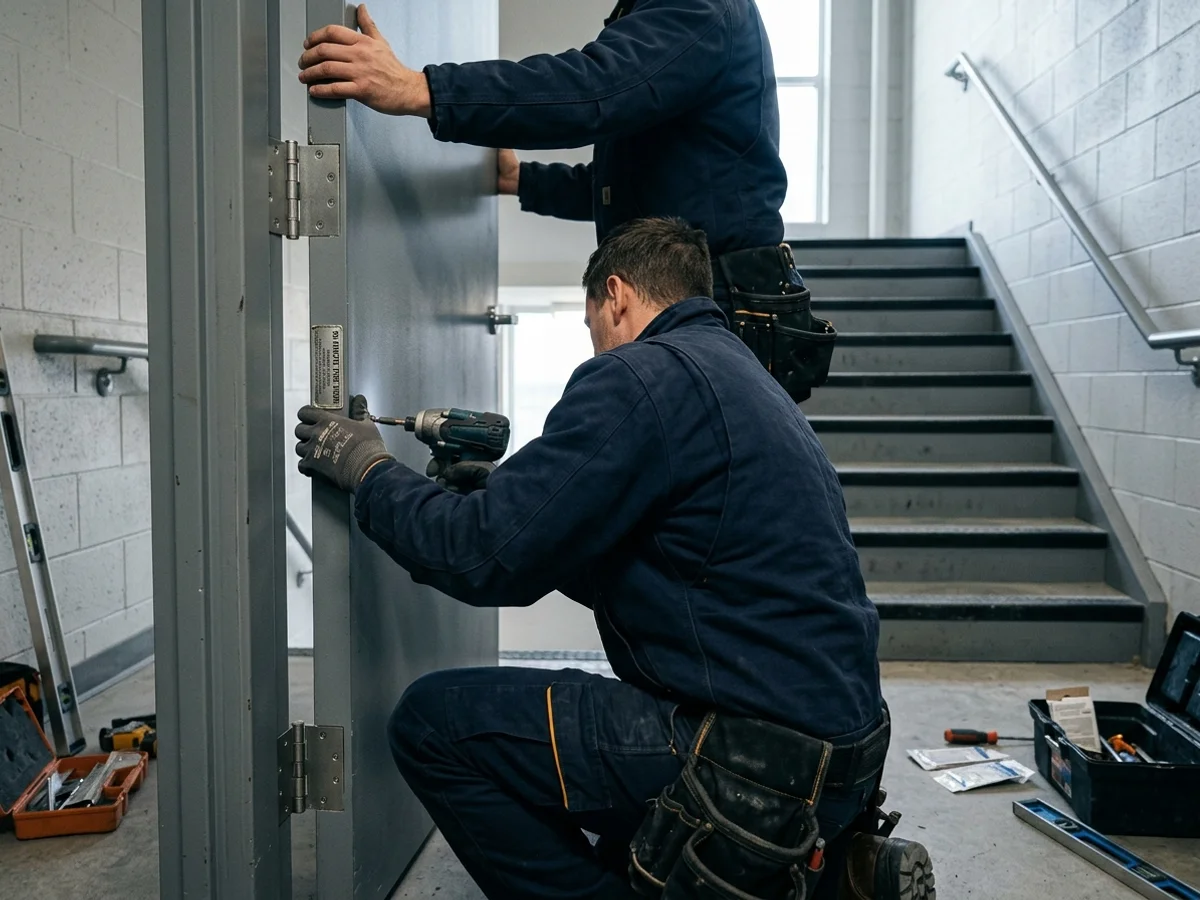
Stairwells, corridors and many service rooms require rated openings. We supply labelled doors and frames tested to CAN/ULC-S104 and install them per NFPA 80 with listed hardware. Labels are protected during install and documentation is provided for inspectors. See fire-rated door installation for ratings and requirements.
Replacing Existing Hollow Metal
If the frame is sound and only the door is damaged, a direct swap is faster and cheaper. See commercial steel door replacement. If the frame has rusted at grade or been pried, see commercial door frame replacement.