Accessible Entrances for Commercial Buildings
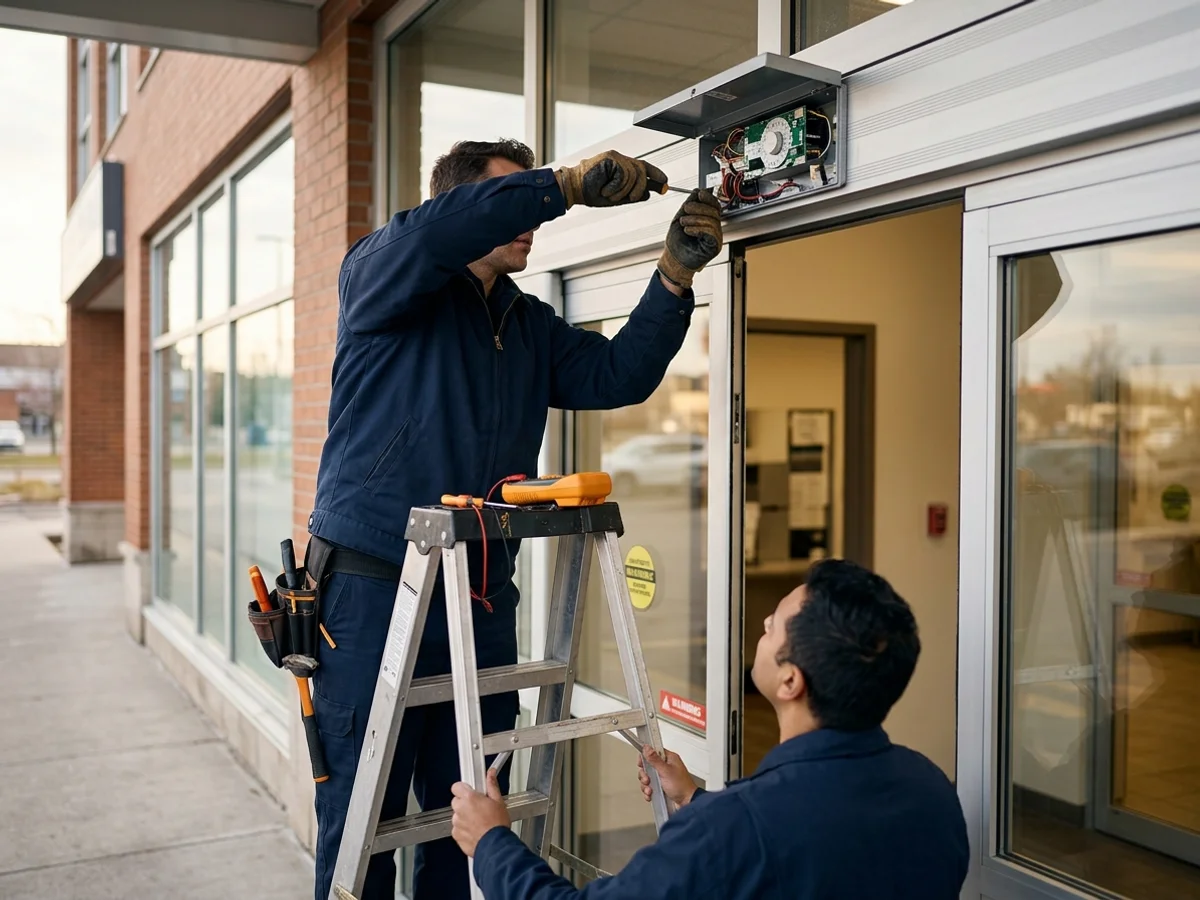
A handicap door operator turns a manual swing door into a power-assisted one. Press a push plate or wave at an actuator and the door opens on its own, holds, then closes. For wheelchair users, people with walkers, parents with strollers and anyone carrying something, it is the difference between a welcoming entrance and a barrier.
In Ontario, accessibility is shaped by the Accessibility for Ontarians with Disabilities Act (AODA) and the barrier-free design requirements in OBC 3.8. We install operators that work for your visitors, fit your door and integrate with your security, and the same crews that handle our commercial door repair across Toronto keep them adjusted.
Operator Types
Low-energy operators
Open slowly and with limited force, as defined by ANSI A156.19. Because they move gently, they usually do not need safety sensors. They are the standard choice for clinic suites, office entrances, condo lobbies and most retail.
Full-power operators
Open faster for heavy traffic and are governed by ANSI A156.10, which requires safety sensors to protect people in the swing path. Used at busy main entrances.
Actuators and Buttons
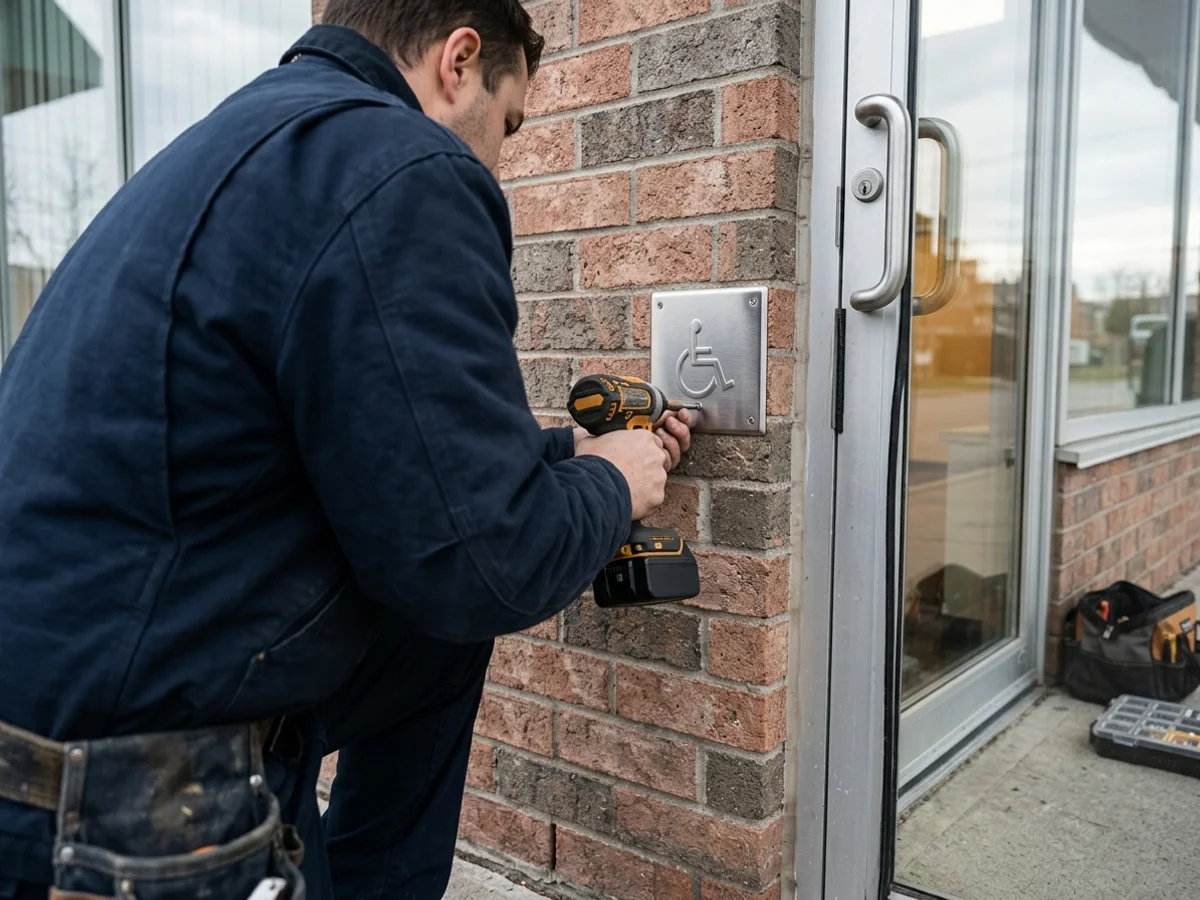
- Stainless steel push plates: hardwired, the most common option
- Bollard-mounted buttons: stand-alone posts outside entrances, ideal where walls are too far from the approach
- Wireless actuators: battery-powered plates that avoid running wire through finished walls
- Touchless sensors: wave-to-open options for clinics and food service
Placement matters as much as the hardware. Under OBC 3.8 barrier-free design, actuators must be reachable from the approach, usable from a seated position and clear of the door swing.
Operator Installation Cost Guide
| Package | Typical range (CAD) |
|---|---|
| Low-energy operator, two hardwired push plates | $2,800 - $3,800 |
| Low-energy operator, wireless or bollard actuators | $3,400 - $4,500 |
| Operator integrated with electric strike or card access | $3,800 - $5,500 |
| Full-power operator with safety sensors | $4,500 - $5,500 |
Your written CAD scope confirms the operator, actuators and integration before ordering.
Working With Locks and Access Control
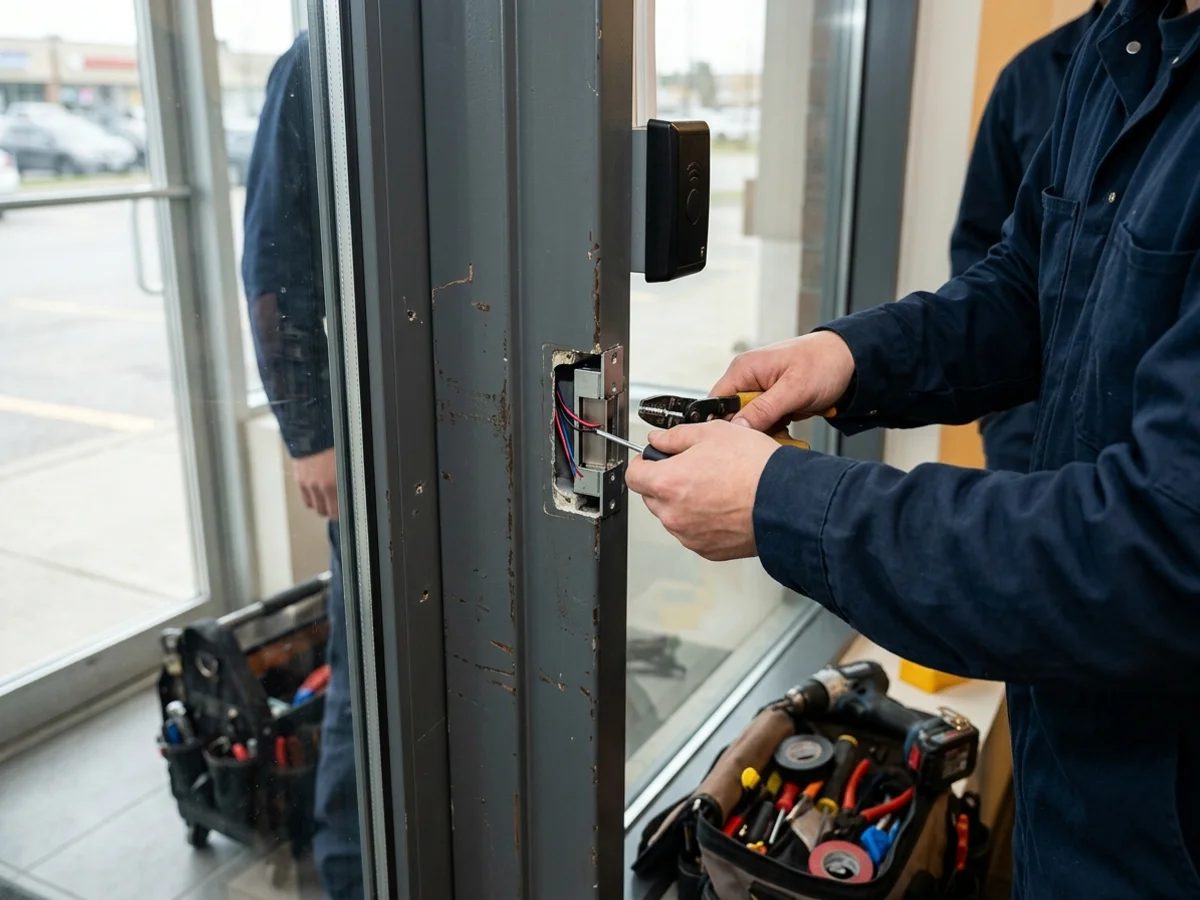
An operator has to cooperate with the lock. If the door has an electric strike or card access, the operator must release the strike before it opens and must never open a door that should be locked. We wire the operator into the access control system so it opens only when it should.
On one Markham medical building, a PM needed accessible entrances on two clinic suites after a tenant complaint. The crew installed low-energy operators with wireless push plates and wired them to the existing electric strikes. Both entrances were working by end of day, and the PM received an AODA checklist for the file. For electrified locking hardware, see commercial door access control installation.
Getting the Door Ready
An operator cannot fix a door that sags, drags or has a closer set far too heavy. We check hinges, closer and frame during the survey and correct problems before mounting the operator. A healthy door means a longer-lasting operator.
Bigger Entrances
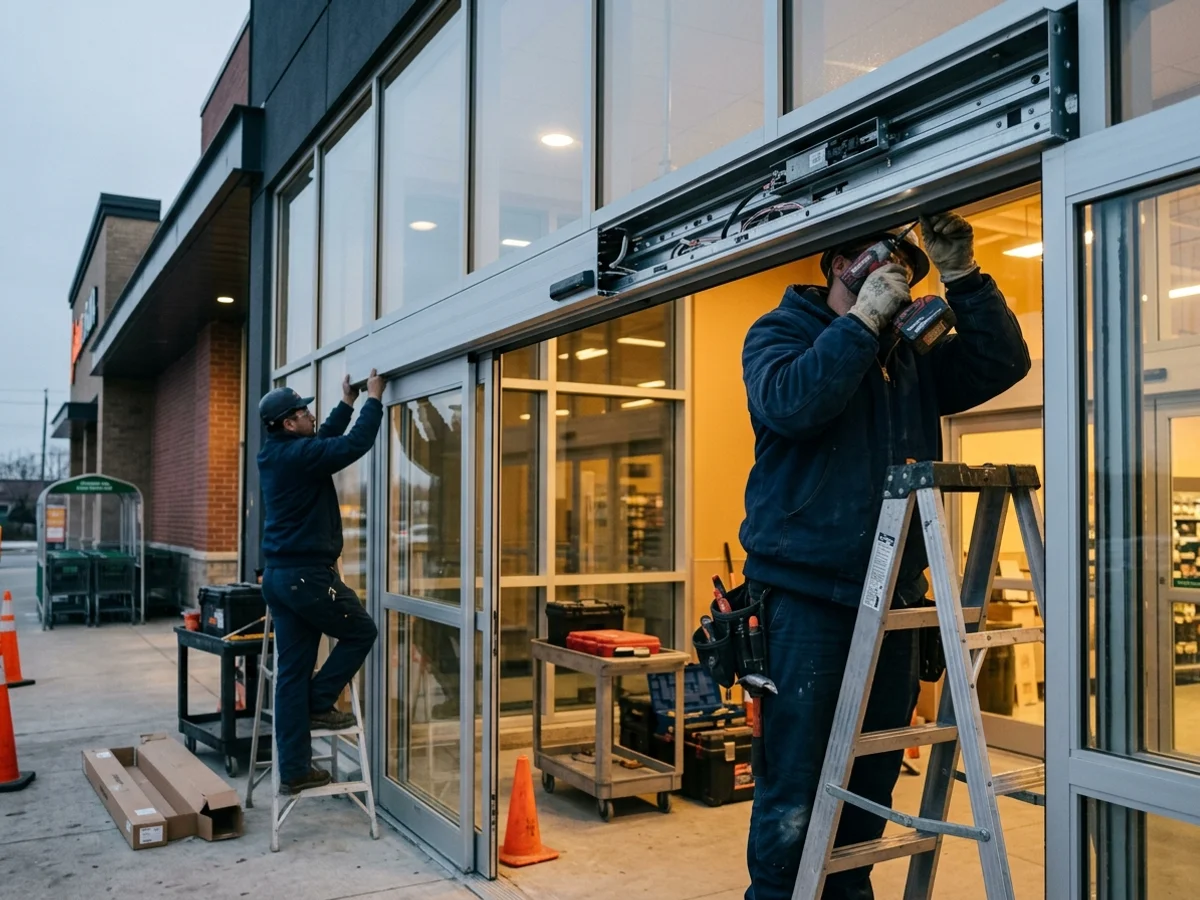
For high-traffic entrances where swing doors are not ideal, an automatic sliding entrance may be the better option. See automatic sliding door installation. For servicing existing operators, see automatic door repair.