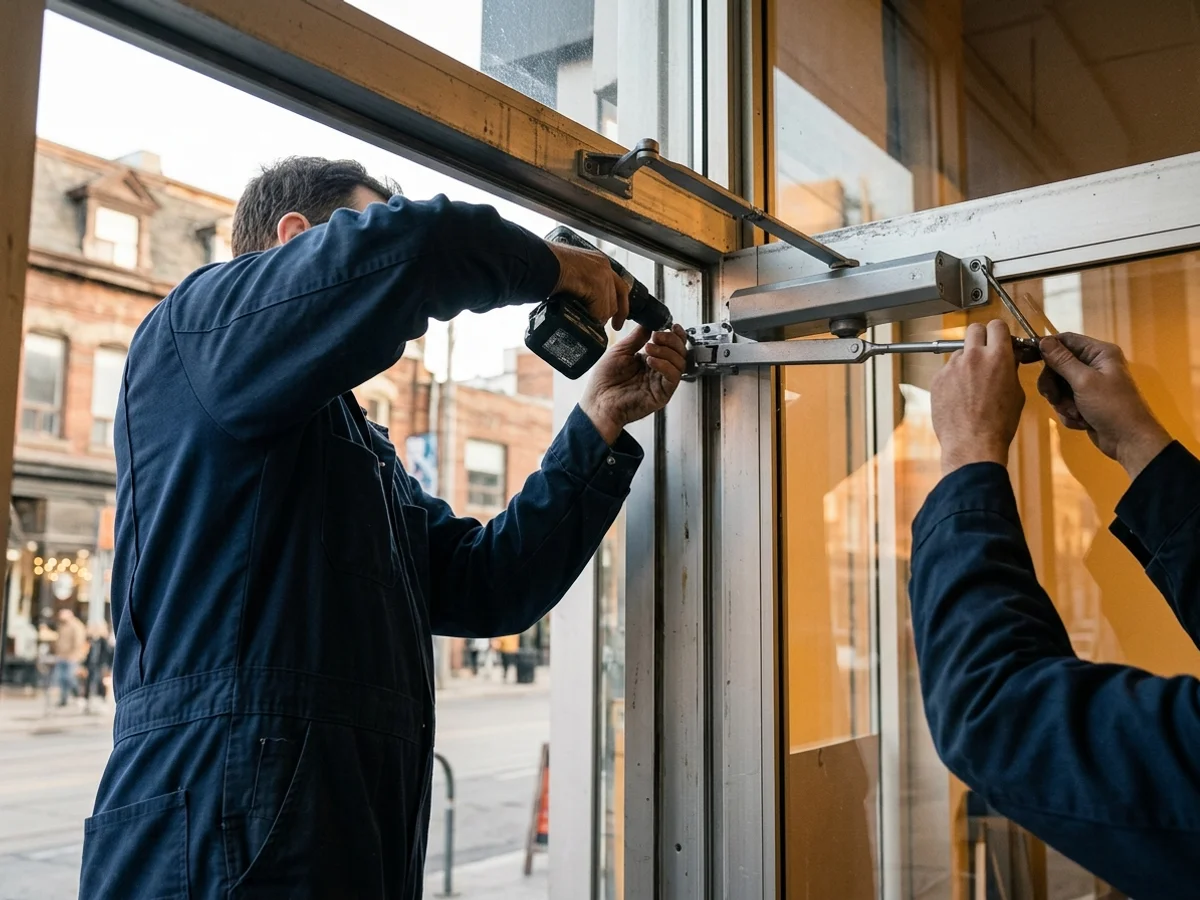
What Does Commercial Door Service Cover in Toronto?
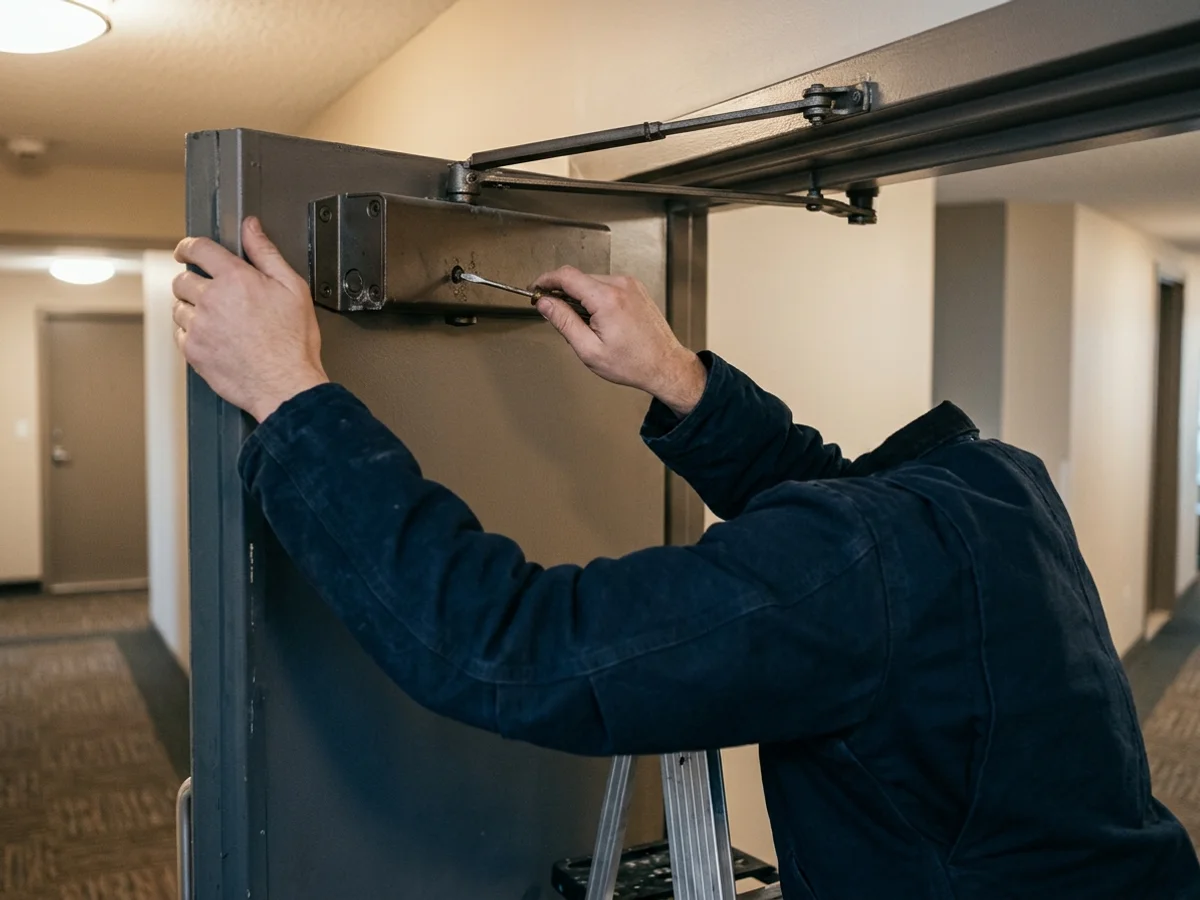
Commercial door service is the visit you book when a door is not doing its job: it will not latch, it drags on the threshold, it slams, or the panic bar sticks. In Toronto, most of those calls come from storefronts, office towers, condo entrances and warehouse admin doors, and most of them trace back to the same few parts. Hinges and pivots wear. Closers leak. Exit devices get bent. Weatherstripping tears.
A single commercial door is a system. The hinge or pivot carries the weight, the closer controls the swing, the lock or exit device holds the door shut, and the frame and strike line everything up. When one part fails, the others work harder until they fail too. That is why a good service visit looks at the whole opening, not just the part that broke first.
Our technicians work only on commercial doors, the same focus behind all of our commercial door repair across Toronto and the GTA. On a typical visit they will:
- Diagnose hinge, pivot and closer wear on Dorma, LCN and Hager hardware
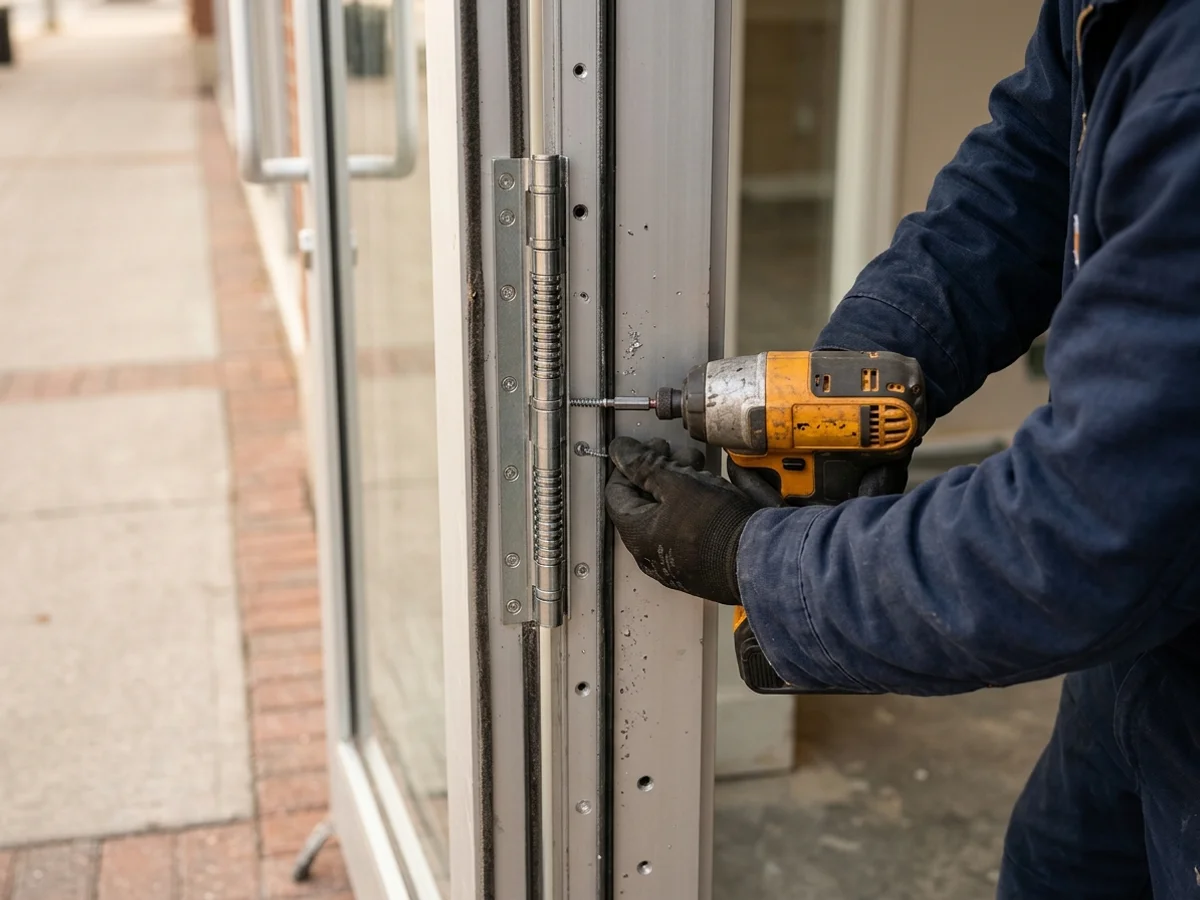
- Re-align sagging aluminum entrance doors and re-set offset pivots
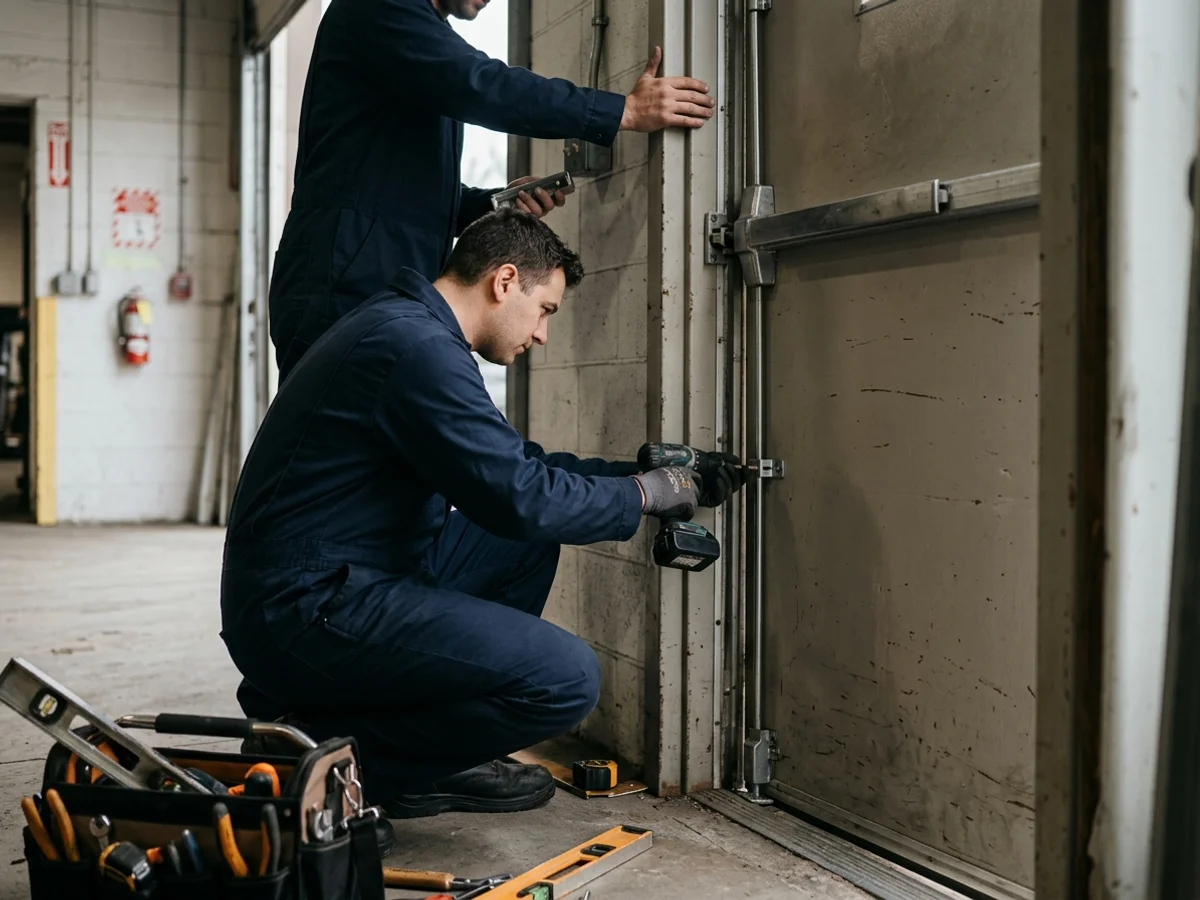
- Reset or repair Von Duprin and other panic bars and check free egress
- Re-time Adams Rite cylinders and deadlatches on storefront doors
- Check thresholds, sweeps and weatherstripping for drafts and drag
- Tighten or re-anchor stripped hinge and frame screws
Why Commercial Doors Fail Faster Than You Expect
A busy storefront door can cycle hundreds of times a day. An office tower lobby door can cycle thousands. Add Toronto winters, road salt tracked in on boots and freeze-thaw cycles that thin closer fluid, and commercial hardware wears out on a schedule nobody plans for.
Hinges and pivots
Offset pivots and butt hinges carry the full weight of the door. As the bearing wears, the door drops on the latch side. The fix might be a new pivot set, a re-anchored top hinge or a conversion to a continuous geared hinge on doors that keep failing. See our commercial door hinge repair page for details on conversions.
Closers
A closer that leaks oil cannot control the door. It slams, bounces off the strike or stops short of latching. Toronto freeze-thaw cycles are hard on closer seals, and a leaking body is replaced rather than refilled. Our commercial door closer repair page covers Dorma, LCN and Hager service in depth.
Locks and exit devices
Bent vertical rods, worn latch bolts and misaligned strikes are the usual culprits when a rear exit will not latch. On fire-rated doors, a door that does not positively latch is an inspection failure. The push bar repair page explains how we test egress before leaving.
What a Typical Repair Visit Looks Like
Most commercial door repairs are finished in one visit by a crew of one or two. The technician arrives with common parts, inspects the opening and gives you a written CAD scope before starting. If you approve it, the work usually happens on the spot.
| Repair type | Typical range (CAD) | Typical time on site |
|---|---|---|
| Closer adjustment or replacement | $350 - $850 | 1 - 2 hours |
| Pivot set or hinge repair | $280 - $950 | 2 - 4 hours |
| Panic bar repair and egress test | $420 - $1,400 | 2 - 4 hours |
| Multi-component repair, one opening | $450 - $1,200 | 2 - 5 hours |
These are ranges, not quotes. Door type, hardware brand, access and after-hours timing all move the number, and your written scope confirms it before any work.
The $225 Service Call, Explained
Every visit has a $225 minimum service call. It covers travel, diagnosis and the first part of the job. When we complete the repair on the same visit, the $225 is credited to the repair. You are not paying for a diagnosis and then paying again to fix the door.
This matters because the most common complaint we hear from property managers is about pricing games: a free quote that becomes an $800 trip charge once the truck shows up. Our approach is the opposite. You see the range before we come out, and you see the written scope before we start.
When Do You Need Commercial Door Service?
Book a service visit when you notice any of these:
- The door drags on the threshold or leaves marks on the floor
- The door slams, or stops short and does not latch
- Oil on the closer body or on the floor under it
- A gap at the top or latch side that lets daylight or cold air through
- The panic bar sticks, or the door can be pulled open after it closes
- Staff or tenants are propping the door open to avoid fighting it
Waiting usually costs more. A worn pivot left alone will wreck the closer, then bend the arm, then crack the stile on an aluminum door. Catching it early keeps the repair in the low end of the range.
Commercial Door Service for Property Managers
If you manage a condo, office tower or retail plaza, one-off repairs add up. Our crews keep every door in a shared tracker, log every ticket and part, and close tickets fast. On one Toronto Community Housing portfolio, two technicians ran a weekly route across 12 mid-rises and closed every ticket within 48 hours.
Many property managers move to a commercial door maintenance contract after a season of service calls. Quarterly or semi-annual visits catch closer and pivot wear before it becomes an emergency, and each visit ends with a written report.
DIY or Handyman vs a Commercial Door Contractor
A handyman can tighten a screw. The trouble starts when a commercial door needs a part. Dorma, LCN, Von Duprin and Adams Rite hardware is built to ANSI/BHMA Grade 1 standards and is not sold at a hardware counter. Generic parts often fit poorly, wear fast and, on a fire-rated door, can put the label at risk.
A commercial door contractor carries the right parts, knows how a Division 8 opening is supposed to work, and can document the repair for your insurer or fire inspector. When a door protects your inventory, your tenants or an exit route, that difference is worth the call.
Toronto Codes That Touch a Simple Repair
Even a routine repair can bring code into play. Fire-rated doors must self-close and positively latch under NFPA 80 and the Ontario Fire Code. Exit doors must open freely without keys. Toronto Municipal Code Chapter 629 property standards require doors and hardware to be kept in good repair. Our technicians flag these issues on the written scope so you can deal with them before an inspector does.