Why Businesses Switch to Automatic Sliding Doors
An automatic sliding entrance does three things a manual door cannot. It moves heavy traffic without anyone touching a handle. It opens fully for wheelchairs, walkers, strollers and carts. And when it is specified properly, with a vestibule, it keeps winter air out of the building far better than a swing pair.
For Toronto grocery stores, clinics, medical buildings, office lobbies and big-box retail, those three things add up to happier customers, warmer staff and lower heating bills. We install complete sliding entrance packages from Record, Besam and Horton, commissioned to ANSI A156.10 and ready for years of service. The same crews that handle our commercial door repair across Toronto look after the operator once it is running.
Sliding Entrance Configurations
Single slide
One moving panel slides past a fixed sidelite. Good for narrower openings, suite entrances and moderate traffic.
Bi-parting
Two panels part from the centre. They clear a wide path quickly and are the standard choice for grocery stores, hospitals and busy lobbies.
Vestibule pairs
Two sliding entrances with a space between them. The outer doors close before the inner doors open on most cycles, which dramatically reduces drafts. For Toronto winters, vestibules are the single most effective upgrade for a cold entrance.
Telescopic sliders
Multiple panels stack to give a wider clear opening in a narrow wall space, useful where sidelite room is limited.
What Is Included in a Package
- Operator header and track from Record, Besam or Horton
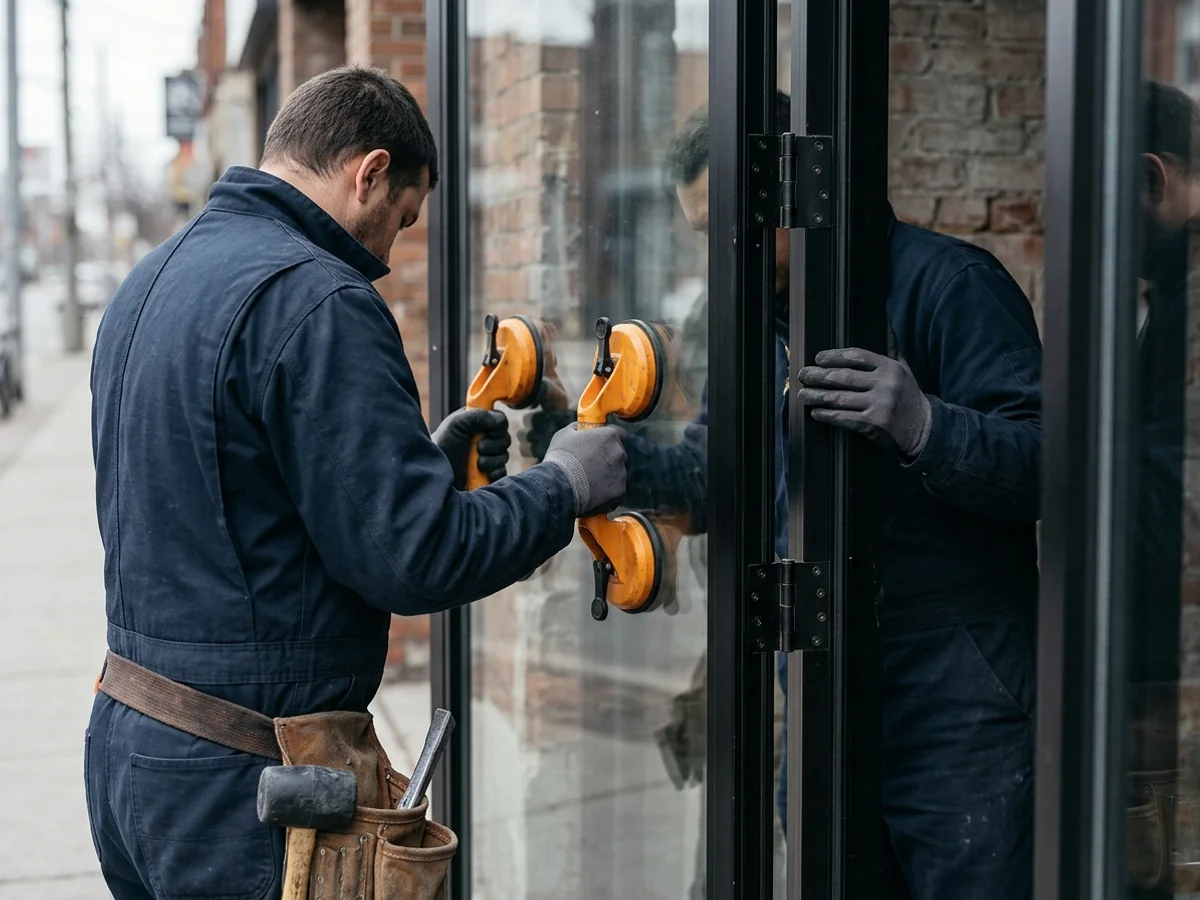
- Sliding and fixed panels with tempered, laminated or insulated glass
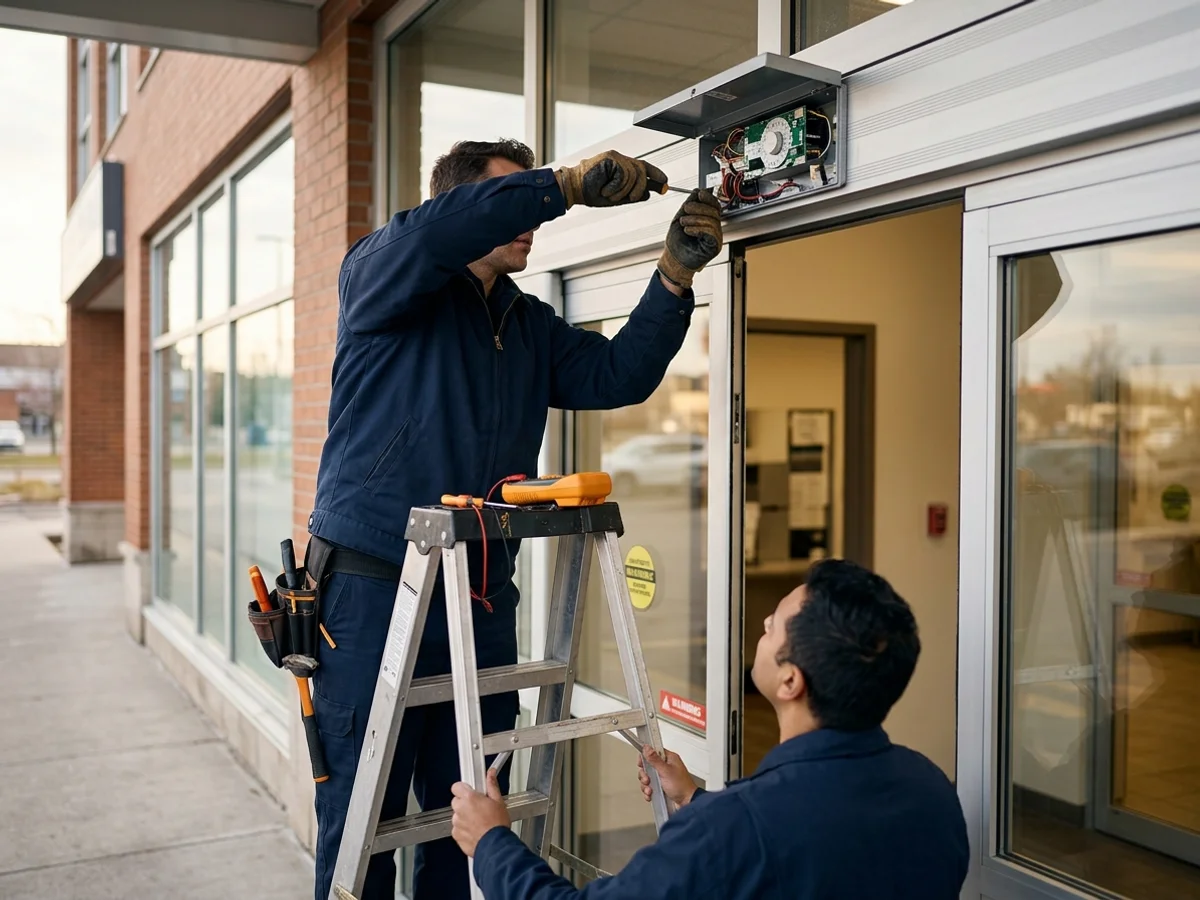
- BEA or Optex motion and presence sensors
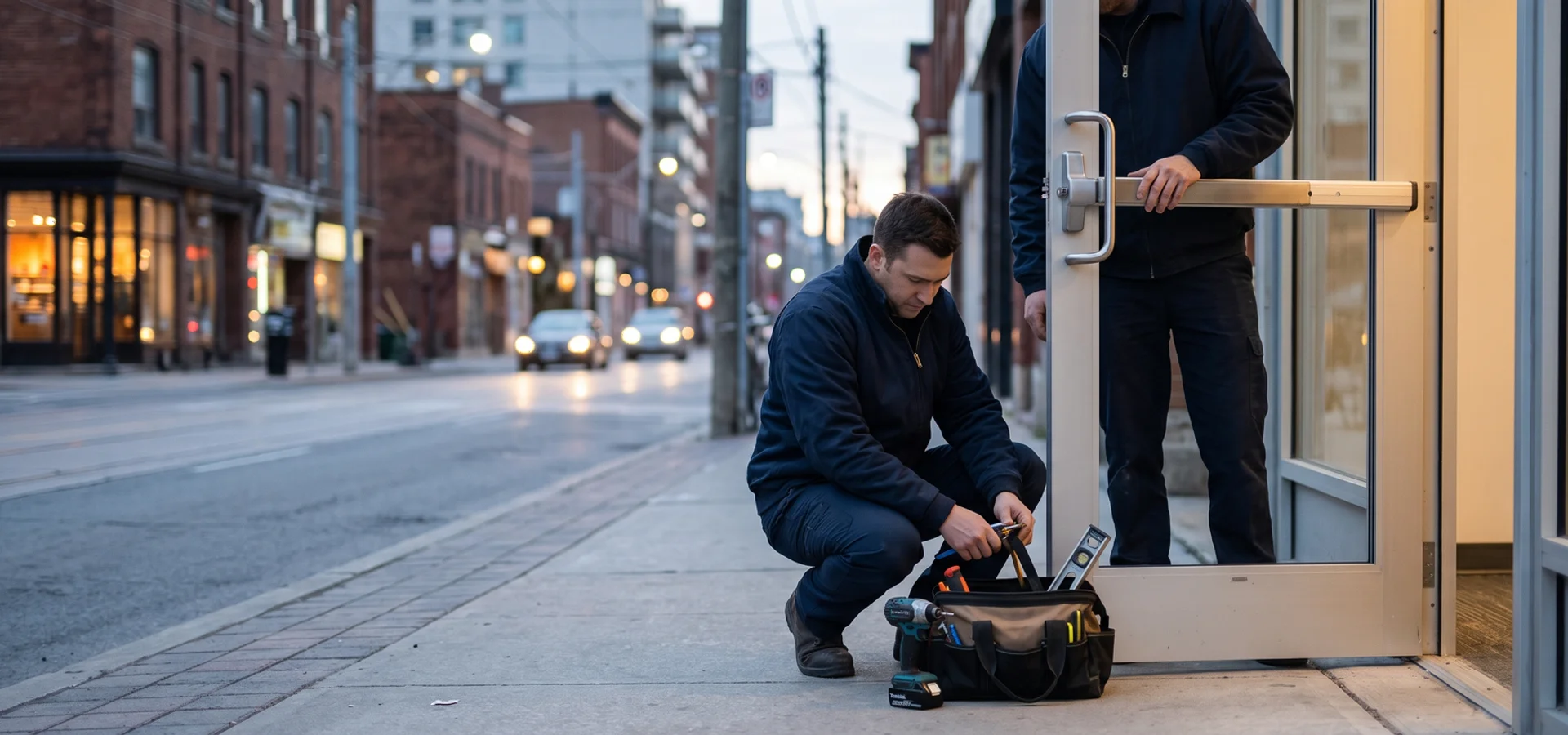
- Breakout panels for emergency egress
- Night lock and key switch, with optional battery backup
- Commissioning to ANSI A156.10 and staff walkthrough
Installation Cost Guide
| Package | Typical range (CAD, installed) |
|---|---|
| Single slide, standard opening | $4,500 - $6,500 |
| Bi-parting, standard opening | $6,500 - $9,500 |
| Wide bi-parting or insulated glass | $8,500 - $12,000 |
| Vestibule pair | Priced per entrance on a written scope |
Your written CAD scope lists the brand, glass, finish, options and confirmed lead time before anything is ordered. Electrical work is coordinated separately with your electrician.
How an Install Runs
We start with a site survey: opening width and height, header space, floor condition, power and traffic. From that we recommend a configuration and give you a written scope. Once ordered, the install itself usually takes one to two days on site with a crew of two or three.
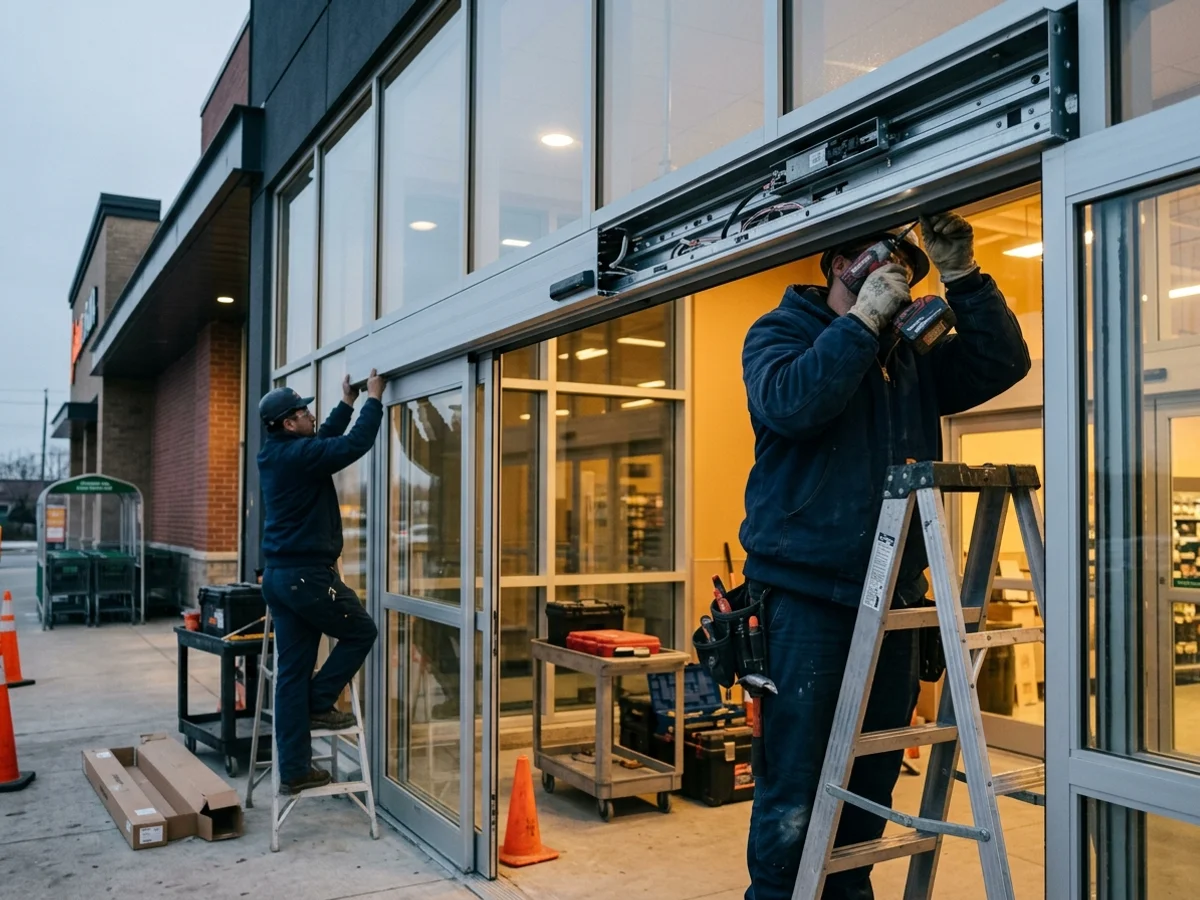
For retail and grocery clients, overnight installs are common. On one Brampton grocery, a worn swing pair was replaced with a bi-parting Besam entrance between closing and opening. The crew installed the header and panels, commissioned the sensors and handed over at 7am. Staff reported far fewer drafts at the checkout lanes that winter.
Safety and Commissioning
Every entrance is commissioned to ANSI A156.10, the standard for power-operated pedestrian doors. That means setting the sensor safety zones so the doors never close on someone in the threshold, setting opening and closing speeds, and testing breakout panels. We walk your staff through night lock, key switch and breakout operation before we leave.
Accessibility
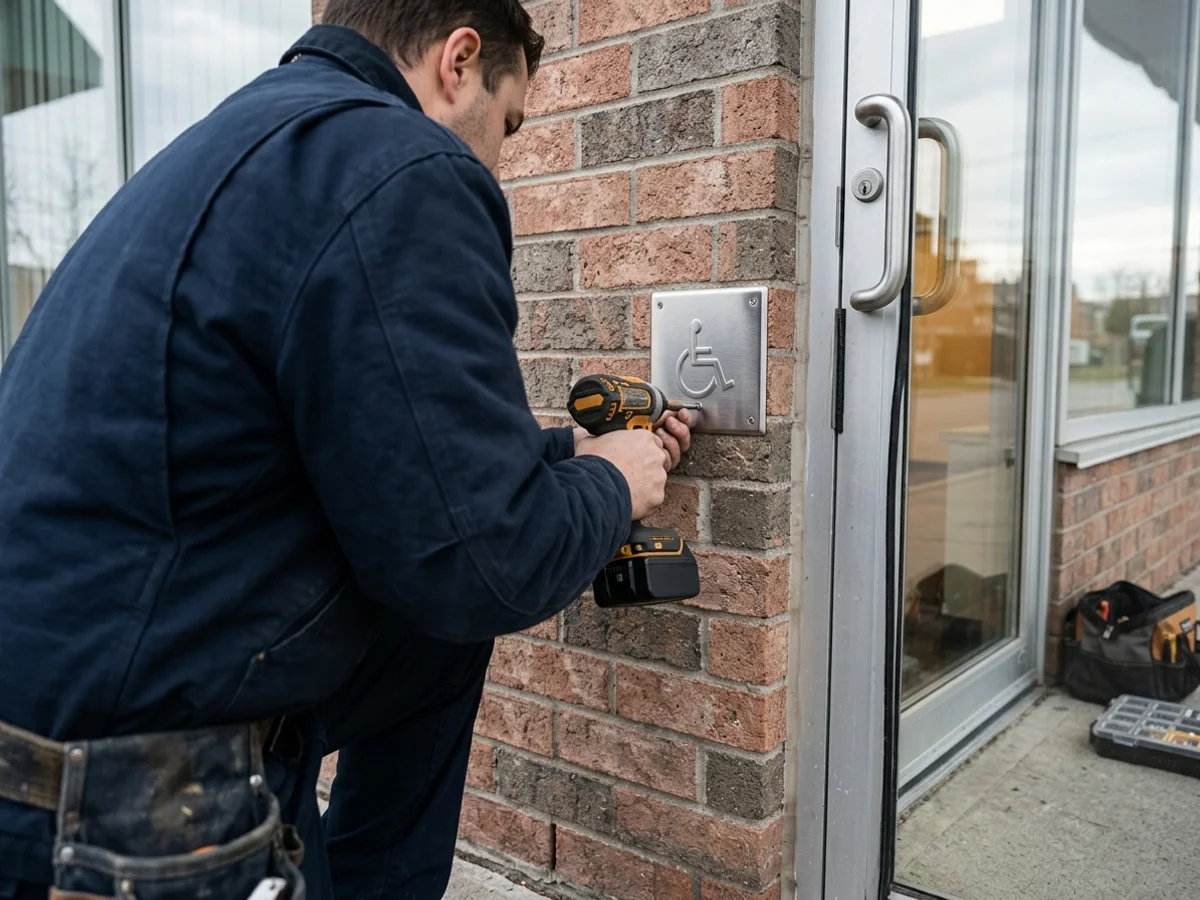
Automatic sliders are among the most accessible entrances available because they require no force and open wide. Sensor patterns can be set for slower users, which matters at clinics and seniors buildings. For swing doors that need an accessible operator instead, see handicap door operator installation.
After the Install
Automatic entrances need regular attention, especially in winter. Our automatic door repair team services the same brands we install, and many clients add the entrance to a quarterly plan. If glass is damaged later, see commercial glass door replacement.